

ESSAY TWO: INTRODUCTION
88 Queer Films from the New Hollywood (1968–1980) is the second half of a two‑part series charting the evolution of Queer Cinema across nearly five decades. This volume traces queer representation from the introduction of the MPAA rating system in 1968 through the end of the New Hollywood era—also known as the Hollywood Renaissance or the American New Wave—in 1980.
The companion essay, 85 Queer Films Made Under the Hays Code (1934–1968), explores queer expression under the strict oversight of Joseph Breen, examining how filmmakers navigated censorship from 1934 until the Code’s collapse in the late 1960s.
Spanning roughly thirteen years and encompassing the entire 1970s, 88 Queer Films from the New Hollywood captures a transformative moment in American cinema. A new generation of filmmakers emerged, and for the first time in studio-era history, the director—rather than the studio system—became the primary authorial force. Within this creative upheaval, queer themes surfaced with new boldness, ambiguity, and complexity.
The watershed year of 1967 gave us “The Graduate” and “Bonnie and Clyde,” while 1969 gave us “Easy Rider.” The seventies gave us such masterpieces as “Chinatown,” “The Godfather Parts I and II,” “Dog Day Afternoon,” and “Apocalypse Now.”
Unfortunately, just like the death of the old studio system was marked by such catastrophic undertakings as “Star,” “Doctor Dolittle,” and “Tora, Tora, Tora,” as the New Hollywood entered its second decade, the arrogance of this new batch of directors started to manifest itself in gigantic financial failures that dwarfed their predecessors. Amongst these were Martin Scorsese’s “New York, New York” at the end of 1977 and Francis Ford Coppola’s “One from the Heart” which was finally allowed a limited release in early 1982 after a series of delays. However, it was the disastrous release of Michael Cimino’s “Heaven’s Gate,” the follow-up to his Oscar-winning “The Deer Hunter,” at the end of 1980, that marked the end of this era for most people. The power and money transferred back to the studios, and for the past four decades, the producer, not the director, has been the guiding force in Hollywood.
I have decided to end this essay, somewhat ironically, with the German premiere of writer/director Frank Ripploh’s landmark German queer movie “Taxi zum Klo.” It too place at the Hof International Film Festival in West Germany in November of 1980. With its raw documentary style, Taxi embodied the New Hollywood ethos. Yet, as it received its American premiere at the New York Film Festival in 1981, documented cases of what would eventually be known as HIV/AIDS were appearing across the country. What, on first view, appeared to be fresh and groundbreaking, now seemed irresponsible and dangerous – a toxic dinosaur from another era.
But first, a recap. Here is a Table from Essay One outlining sixteen seminal queer films released during the transition from the Hays Code to the MPAA rating system in 1967-1968, and how Queer Cinema played an essential role in the collapse of the Hays Code.
| ESSAY TWO – TABLE 1 88 Queer Films from the New Hollywood Sixteen Queer‑Themed Films at the Hays → MPAA Transition |
| The Leatherboys (Essay 1) British Lion-Columbia Produced by Raymond Stross. 1964 Hays Code Era SUBMITTED TO THE HAYS OFFICE Approved without cuts. Released with a Code seal. Only one of two, PCA-approved, overtly queer-themed films to be screened in the US before the Code’s collapse in 1968. An early queer cinema landmark and a sign of the Production Code’s waning power in the mid-1960s. |
| The Pawnbroker (Essay 1) Allied Artists Producer: Ely Landau – The Landau Company 1964 – 1965 Hays Code Era SUBMITTED TO THE HAYS OFFICE Rejected outright by the PCA. Eli Landau and Allied Artists APPEAL the verdict to the MPAA The MPAA board votes 6-3 to overturn the PCA’s decision. The ruling was one of a series of injuries to the Production Code that would prove fatal within three years. |
| My Hustler (Essay 1) Andy Warhol’s The Factory. 1965 Hays Code Era NOT SUBMITTED TO THE HAYS OFFICE Released independently with no seal of approval. Screened at the Filmmaker’s Cinematheque and The Hudson Theatre in New York City and in various arthouse cinemas across the country. |
| The Producers (Essay 1) Embassy Pictures Produced by Joseph E. Levine 1967 (LA in 1968) Hays Code Era SUBMITTED TO THE HAYS OFFICE Approved without cuts. Released with a Code seal. The Producers arrived in late 1967 with benign queens Roger De Bris and Carmen Ghia. Producer Joseph E. Levine, nevertheless, chose to submit the film to the Hays Office, fully aware that the Production Code’s authority was rapidly eroding. |
| The Fox (Essay 1) Claridge Pictures, in conjunction with Warner Bros.-Seven Arts. Produced by Raymond Stross. 1967 (LA in 1968) Hays Code Era NOT SUBMITTED TO THE HAYS OFFICE Released independently with no seal of approval. Marketed adults only. Later retro-rated R under the MPAA. |
| Reflections in a Golden Eye (Essay 1) Warner Bros-Seven Arts 1967 Hays Code Era SUBMITTED TO THE HAYS OFFICE Approved without cuts. Released with a Code seal. Only one of two, PCA-approved, overtly queer-themed films to be screened in the US before the Code’s collapse in 1968. |
| Portrait of Jason (Essay 1) Film-Markers’ Distribution 1967 Hays Code Era NOT SUBMITTED TO THE HAYS OFFICE Released independently with no seal of approval. Shirley Clarke’s avant-garde documentary of Jason Holliday. |
| The Detective TCF 1968 MPAA Era M (Mature audiences). Openly depicts homosexuality. |
| The Sergeant Warner Bros. – Seven Arts 1968 MPAA Era M (Mature audiences) One of the first studio films to address homosexuality directly. |
| The Killing of Sister George Cinerama Releasing Corporation 1968 MPAA Era X (17 or under, not admitted). Explicit lesbian relationship. One of the first films to receive an X rating. |
| No Way to Treat a Lady Paramount 1968 MPAA Era M (Mature audiences). The equivalent of today’s PG or PG-13. Dark comedy/thriller. |
| The Boston Strangler TCF 1968 MPAA Era R (Restricted) Under-17s are only admitted with a parent or guardian in attendance. Violence and overt references to homosexuality in the Boston demimonde. It would have been impossible under the Hays Code. |
| Rachel, Rachel Warner Bros-Seven Arts 1968 MPAA Era M (Mature audiences). Themes of repression and sexuality – including homosexuality. |
| 2001: A Space Odyssey MGM 1968 MPAA Era G (later PG) Major studio release. HAL 9000’s queer-love for Dave usually goes under the radar. |
| Midnight Cowboy United Artists 1969 MPAA Era X (later R). Male Hustler relationship. Won Best Picture. A landmark in the MPAA era. |
| The Damned Warner-Seven Arts 1969 MPAA Era X (later R). Themes of violence, incest, overt homosexuality, and Helmut Berger in drag managed to get Visconti’s film, like Midnight Cowboy, Last Summer, and The Killing of Sister George, an X-rating from the MPAA. Later, it was released as an R, after 12 minutes of offending footage was removed. For decades, this eviscerated version was the only version available for screening. Visconti’s complete 154-minute vision is now the standard for screenings, DVD/Blu-ray editions and streaming presentations. |
| A 2025 Translation M no longer exists. Today’s equivalent is PG or PG-13. R remains the same; Under 17 accompanied by a parent or guardian. X (17 or under, not admitted) has now been replaced by the more respectable-sounding NC-17. Today’s X signifies ADULT CONTENT or what might have been called pornography back in 1967-68-69 during the Hays → MPAA Transition |
ESSAY TWO – THE ESSENTIALS
- In 1970, the first movie in which (almost) all the characters are gay men was released, echoing “The Women” – in more ways than one – over thirty years earlier: The Boys in the Band.
- In 1969, a gay man directed the only Oscar winner for Best Picture to get an X-rating from the MPAA. The movie is about a gay hustler and his tubercular best friend: Midnight Cowboy.
- In 1962, audiences saw the inside of a gay bar in “Advice and Consent.” In 1968, they saw the inside of a lesbian bar in The Killing of Sister George. Cheers!
- Between 1968 and 1971, Italian Cinema gave the world four gay classics: Bertolucci’s The Conformist, Visconti’s The Damned, & Death in Venice, and De Sica’s The Garden of the Finzi-Continis. Film would never look the same under the influence of cinematographer Vittorio Storaro and art director Nando Scarfiotti.
- Visconti also gave us the monumental Ludwig about the gay Bavarian king who built all those astonishing castles along the Rhine. Unfortunately, a vague script, excessive running time and some severe cutting removed almost all traces queerness from the movie. It remains an Oscar-nominated costume spectacle, and little else.
- The other famed queer Italian directors of this period, Franco Zeffirelli and Pier Paulo Pasolini, were more circumspect. The former avoided gay themes while his masterful adaptation of Verdi’s La Traviata (1982) lies outside the time period for this essay. Meanwhile, Pasolini alluded to queerness in a crescendo of films that tried to outdo one another in shock value. Only with Teorema (1968), did querness come into the foreground.
- Beginning in 1968, Queer Cinema and the New German Cinema merged seamlessly in one masterpiece after another, thanks to the genius and astonishing productivity of actor/writer/composer/art-director/director/producer/ Rainer Werner Fassbinder: The Bitter Tears of Petra von Kant and Fox and His Friends.
- In 1972 and 1974, the irrepressible John Waters, and his gorgeous star Divine, took the New York art scene by storm with Pink Flamingoes and Female Trouble, respectively
- Also in 1972, one of the seminal American movies of the seventies about the rise of fascism in Nazi Germany had a gay character in the leading role and was based on the works of two gay writers. Thanks to two gay songwriters, it had some of the most significant musical numbers to ever grace the silver screen: Cabaret.
- In 1975, director Sidney Lumet gave us his gay masterpiece, Dog Day Afternoon with Al Pacino in one of the all-time great screen performances.
- In 1975, famed documentary filmmakers David and Albert Maysles focused their cameras on Big and Little Edie Bouvier. Forgotten by Long Island society and living in squalor, Jackie Bouvier Kennedy Onassis’s first cousins captured the hearts of gay men everywhere, who, from the outset, began to champion the documentary Grey Gardens as the masterpiece it is recognized as today. Over the years, it has become a gay cult classic, giving birth to countless gay franchises. Money does make the world go ’round.
- In 1975, John Hurt appeared as Quintin Crisp in the BBCs landmark queer film The Naked Civil Servant.
- In 1975, producer/director Clint Eastwood gave us “Faggot,” the first queer canine, in The Eiger Sanction.
- In 1975, Belgian director Chantal Akerman explored queer and feminist sensibilities in the iterative life of a single mother turned prostitute in Jeanne Dielman. Readers of “Sight and Sound” magazine have recently voted it the best movie of all time.
- In 1976, the notoriously queer British director Derek Jarman made his directorial debut with Sebastiane, a film he codirected with Paul Humfress.
- In the mid-1970s, Australian director Peter Weir, American director Brian De Palma and Italian director Dario Argento, all straight as an arrow, gave us three classic horror movies filtered through a queer lens: Picnic at Hanging Rock, Carrie, and Suspiria.
- In 1978 in London, and 1980 in Berlin, directors Ron Peck (Nighthawks) and Frank Ripploh (Taxi zum Klo), respectively, used raw documentary-like realism to explore the lives of two men who are schoolteachers by day and openly gay at night, navigating the tension between professional respectability and an uninhibited personal life.
- In 1980, gay composer John Corigliano wrote his monumental Oscar-nominated score for director Ken Russell’s Altered States – he would later win the statuette for The Red Violin (1999).
THE QUEER HALL OF SHAME
1968-1980
Unfortunately, liberation and new social norms allowed overt homophobia to show its ugly face in a vast number of movies from this period. I have listed fifteen of the worst offenders in Table 2. These are queer movies without merit, and they are not included in the general discussion. All are rated F. Let’s christen Table 2 The Queer Hall of Shame. I am happy to say that most of this unfortunate batch would not be made today!
| ESSAY TWO – TABLE 2 THE QUEER HALL OF SHAME |
| The Choirboys (1977) Robert Aldrich F Blaney (Michael MacKezie Willis) is a young gay man who is cruising MacArthur Park in LA. The cops are there as well. When Blaney opens the police van’s door, he mistakenly thinks that Officer Lyles (Don Stroud) is waiting for him. Lyles, a Vietnam veteran, is in the middle of a PTSD flashback and shoots him in the face. The death of the fag” gets a big cheer and a big laugh from the audience. |
| Cruising (1980) William Friedkin F Steve (Al Pacino) is a rookie cop who goes underground to investigate a serial killer of gay men in NYC. Ted is Steve’s gay next-door neighbor (Don Scardino). Gregory is Ted’s jealous boyfriend (James Remar). Ted is murdered. Did Gregory do it? Did Steve do it? We will never know. If you are a gay character in this movie, you are either the murder victim or the killer! Cruising Through Eighty-Five Queer Films – TheBrownees |
| The Betsy (1978) Daniel Petrie F From the Harold Robbins best Seller. Loren Hardeman (Paul Ryan Rudd), the heir to Bethlehem Motors, is queer. Loren kills himself – it is Harold Robbins! The death of “the fag” gets a big cheer and a big laugh from the audience. |
| Valentino (1977) Ken Russell F Was Valentino (Rudolf Nureyev) queer? His wife, Natacha Rambova (Michelle Phillips), and her lover, Alla Nazimova (Leslie Caron), were. Rambova was a highly influential costume designer and art director, but you would never know from this sham of a biopic. Likewise, Nazimova was one of the most influential figures on stage and screen in the early decades of the last century. Russell’s worst film, it cannot even be enjoyed as camp. The audience either walked out or slept their way through the movie. |
| A Different Story (1978) Paul Aaron F Both Meg Foster and Perry King are in gay relationships (with Valerie Curtain and Peter Donat). They meet, cohabit, and fall in love happily ever after. The old you-can-switch-at-any-time scenario Not a single photo of Foster with Curtain or King with Donat exists. The audience was unimpressed. |
| Windows (1980) Gordan Willis F Emily Hollander (Talia Shire) is the subject of a lesbian obsession of Andrea Glassen (Elizabeth Ashley), her next-door neighbor. Virulently homophobic movie, it was the only outing as director by legendary cameraman Gordon Willis. He and his two leading ladies should have known better. Luckily, nobody saw it. |
| The Eiger Sanction (1975) Clint Eastwood F Miles Mellough is a flamboyant queer villain with a dog named Faggot. The Cinema’s first Queer Canine is a tiny little rascal – you know, the breed of dog only an effete homosexual would own – who vigorously humps the legs of any male who comes in contact with his master. Jack Cassidy portrays Mellough in the manner of his Columbo villains, but with a queer twist. Eastwood’s character leaves Mellough and Faggot in the hot Arizona desert to fry. Everybody cheers! The Eiger Sanction (1975) Cinema’s First Queer Canine (F) – TheBrownees |
| Vanishing Point (1971) Richard C. Sarafian F Barry Newman’s Kowalski, a car delivery driver, is driving from Denver to San Francisco. Two men are hitchhiking while standing next to a broken-down car with a “Just Married“ sign on the back. Kowalski picks them up, and they attempt to rob him at gunpoint. The two exceptionally sleazily queers are played by gay British actor Arthur Malet (“Mary Poppins”) and the ultra-creepy Anthony “the skull” James (“In the Heat of the Night”). Kowalski manages to overpower them and throw them out of the car. Everybody cheers! Vanishing Point: A Film Directed by Richard Sarafian – TheBrownees |
| The Anderson Tapes (1971) Sidney Lumet F Anderson (Sean Connery), after spending ten years in prison, decides to rob a wealthy apartment complex. He hires a gay antique dealer to point out, with a very limp wrist, the most expensive pieces to rob. On paper, the guy’s name is Haskins, but you would never know from the movie where he is simply known a ”The Fag.“Hamming it up and mincing all over the place, heterosexual actor Martin Balsam uses every Nellie mannerism in the book to give a cringeworthy performance. “The Fag” is apprehended by the police. Everybody cheers! The Anderson Tapes (1971) Queer Film (F) – TheBrownees |
| Freebie and the Bean (1974) Richard Rush F Our heroes, police officers Freebie (James Caan) and “the Bean“ (Alan Arkin), are on the lookout for a transvestite robber. Their first encounter with him/her is in a bathtub, where he/she is lisping and preening, and you can see that he/she disgusts them. The transvestite, unnamed, is played by noted female impersonator Christopher Morley. After he shoots Bean, seriously injuring him, he is chased by Freebie, who corners him in a public bathroom. They fight it out with Morley, having briefly incapacitated Caan, taking time to look in the mirror and freshen up! Freebie, however, recovers and manages to grab a gun, which he then empties into “The Transvestite” where just one bullet would have done. And the audience cheers! Not because of the villain’s demise but because ”the fag” is dead. Freebie and the Bean (1974) Queer Film (F) – TheBrownees |
| Looking for Mr. Goodbar (1977) Richard Brooks* F Theresa (Diane Keaton) meets Gary (Tom Berenger) in a bar and brings him back to her apartment. When Gary is unable to perform sexually, Theresa responds with patience but ultimately asks him to leave. Instead of departing, he erupts in rage and fatally stabs her—a shocking climax that reframes the film’s supposed moral message. Among the films in The Queer Walk of Shame, Looking for Mr. Goodbar may be the most insidious. It cloaks itself in the prestige of serious art, presenting itself as a profound meditation on the sexual freedoms of the Disco era. Yet beneath that veneer lies a reactionary narrative that weaponizes moral panic. Earlier, we glimpsed Gary in a gay club, dancing and kissing his older male partner. This brief but telling moment establishes his conflicted sexuality and deep self-loathing. The film revisits this thread only to position Gary’s repression and violence as the ultimate danger. After two hours of heterosexual escapades—casual hookups, fleeting romances, and Theresa’s own search for identity—the story reserves its harshest judgment not for the straight milieu it has been dissecting, but for queer desire. The result is a troubling bait-and-switch: the film pretends to critique the excesses of heterosexual liberation, but its final condemnation lands squarely on a marginalized community that has played little role in the preceding narrative. In doing so, Goodbar reinforces destructive stereotypes, conflating queer identity with pathology and violence, while masquerading as a cautionary tale about modern morality. *Director Richard Brooks wrote the novel The Brick Foxhole in 1945. One of the first American novels to deal with homosexuality, it was adapted to the screen under the title Crossfire in 1947 by writer John Paxton and director Edward Dmytryk, with the book’s homophobia being replaced by antisemitism. Brooks also wrote the screenplay for the Jules Dassin film noir prison breakout movie Brute Force (1947), and in 1958, he directed the queer film Cat on a Hot Tin Roof. Richard Brooks, who was married to actress Jean Simmons from 1960 to 1980 and directed her in The Happy Ending (1969), passed away in 1992 at the age of 79. Looking for Mr. Goodbar (1977) Queer Film (F) – TheBrownees |
| Drum (1976) Steve Carver F Antebellum New Orleans. Mid-19th century. DeMarigny is a wealthy Frenchman who forces enslaved men to fight for entertainment. He desires Drum (Ken Norton) sexually, but Drum rejects him, leading DeMarigny to harbor resentment. John Colicos’ DeMarigny is a loathsome excuse for a human being who harbors queer desires. In the slave revolt, Drum castrates DeMarigny. The audience erupts in cheers! |
| Can’t Stop the Music (1980) Nancy Walker F Directed by Nancy Walker and produced by flamboyant impresario Allan Carr, Can’t Stop the Music was conceived as a glittering disco extravaganza and a fictionalized origin story of the Village People. Instead, it arrived already dated, collapsing at the box office in spectacular fashion. The irony is that the Village People themselves barely register. The film sidelines them in favor of three leads—Steve Guttenberg, Valerie Perrine, and Bruce Jenner—who embody camp-adjacent “gay tropes” without the film ever daring to utter the word gay. This coy avoidance underscores the hypocrisy at the heart of the project: a movie built on queer-coded fantasy that refuses to acknowledge queerness outright. But the film’s gravest offense isn’t its dishonesty—it’s its tedium. What should have been camp is instead a slog. The glitter never sparkles, the jokes never land, and the musical numbers drag on with numbing predictability. For a film that promised excess, it delivers only monotony. In the end, Can’t Stop the Music isn’t outrageous or scandalous—it’s simply dull. Utterly, irredeemably boring. And that, for a supposed disco spectacle, is the ultimate betrayal. The audience snoozes – we will never get this time back again! Can’t Stop the Music (1980) Queer Film (F) – TheBrownees |
| Scarecrow (1973) Jerry Schatzberg F Max Millan (Gene Hackman), a hot-tempered ex-convict, and Francis Lionel “Lion” Delbuchi (Al Pacino), a childlike former sailor, meet hitchhiking in California. Despite clashing personalities, they decide to travel together, pooling their savings to open a car wash in Pittsburgh. They visit Max’s sister, but their antics land them in a prison farm for a month. Max blames Lion, and their friendship strains. Lion is brutally sexually assaulted by another inmate named Riley, leaving him physically injured and emotionally scarred. Actor Richard Lynch plays Riley. Max later beats Riley to a pulp before he and Lion head off to Pittsburgh. The character of Riley is never seen again. The sexual assault is shocking. No movie has done more to conflate gay identity with pathology and violence than “Scarecrow”. After Max beats up Riley, there’s always a massive cheer from the audience! |
| Z (1969) Costa-Gavras F A thriller about the fall of an elected democratic government in an unnamed country – which is obviously Greece – and the establishment of a military junta, was feted by one award ceremony after another and one film critics association after another in the Winter of 1969/1970. However, few seemed to have noticed, or if they did, they didn’t seem to care, that this is a homophobic film in which the main villain, Vago (Marcel Bozzuffi) – the man who strikes down Deputy Gregoris Lambrakis (played by Yves Montand) with a club from a speeding van – is a homosexual and convicted pedophile who trades sexual favors with other gay deviants such as the newspaper editor. These scum of the Earth perverts are contrasted with our handsome, intellectual and heterosexual heroes, Montand and the examining magistrate Jean-Louis Trintignant. Vago is convicted in court for his role in the assassination, and he goes to prison briefly. However, the new regime releases him almost immediately once the coup consolidates power. The audience does NOT get to cheer. Z (1969) Queer Film (F) – TheBrownees |
| The Music Lovers (1971) Ken Russell F The Music Lovers (1971), director Ken Russell’s operatic biopic of gay composer Pyotr Ilyich Tchaikovsky (played by gay actor Richard Chamberlain), dramatizes the composer’s disastrous marriage to Nina (Glenda Jackson), his suppressed homosexuality, and the emotional storms that fed his music. Perhaps Russell’s most flamboyant film—and that’s saying something—The Music Lovers is a landmark of early 1970s queer cinema, but for all the wrong reasons. Its frank, stylized depiction of Tchaikovsky’s sexuality is notable, yet the film is essentially one vulgar, over-the-top Russell fantasia after another. It’s MTV avant la lettre: all sensation, no modulation. The notorious “1812 Overture” montage—a delirious collision of sexual frustration, nationalistic bombast, and pure Russell excess—is strictly for the director’s most devoted cultists. Glenda Jackson’s Nina is put through an astonishing degree of cinematic humiliation. You feel for her. The train sequence alone should qualify as grounds for an artistic malpractice suit. Chamberlain, meanwhile, gives what can only be described as a non-performance: all ham, no depth. The screenplay, such as it is, comes from Melvyn Bragg. The one unqualified triumph is Douglas Slocombe’s cinematography, which is ravishing even when the film around it is not. The audience feels assaulted. https://thebrownees.net/the-music-lovers-1971-queer-film/ |
| Big Wednesday (1978) John Milius F John Milius’ epic coming-of-age buddy sports comedy-drama film had everything going for it. An homage to the time he spent surfing in Malibu during his youth, he and his friends George Lucas and Steven Spielberg famously agreed to exchange a percentage point for Big Wednesday, Star Wars and Close Encounters of the Third Kind prior to the release of the three films throughout 1977-1978. It sounded great on paper, but while the waves were spectacular – kudos to cinematographer Bruce Surtees – the acting was not, and the film bombed at the box office. The film traces the lives of buddies Jan-Michael Vincent, William Katt and Gary Busey from 1962 to the Vietnam War draft of 1965 to the “Great Swell of ‘74”. In their attempts to dodge the draft, they feign homosexuality, insanity and all kinds of medical ailments. Handled with the right tone, these scenes could have been funny, but Milius bungles it, and they end up as some of the most homophobic cinematic moments of a very homophobic decade. I liked what Janet Maslin said in The New York Times: Barbara Hale is quite unconvincing as Mr. Katt’s mother. This is a faux pas of no mean eminence; after all, Miss Hale actually is Mr. Katt’s mother The audience stayed away in droves. |
SOURCE MATERIAL
All eighty-five movies listed are narrative features. Of these, 25 (37%) are original screenplays, while 43 films (63%) were adapted from another medium.
Source material in the latter category includes novels by Christopher Isherwood, F. Scott Fitzgerald, Frederick Forsyth, William Goldman, James Leo Herlihy, Stephen King, Thomas Mann, Philip Roth, and William Makepeace Thackeray. There is a song by Bobbie Gentry, as well as plays by Mart Crowley, Charles Dyer, John Van Druten, Joe Orton, and Rainer Werner Fassbinder.
88 QUEER FILMS FROM THE NEW HOLLYWOOD
– ONE OF THE MOVIES LISTED WON BEST PICTURE
– NINE MORE WERE NOMINATED IN THIS CATEGORY
LGBTQ+ CHARACTER: is the queer character in the movie and, in parentheses, the ACTOR who plays him/her.
LGBTQ+ is anyone in front of (actor) or behind (director | screenwriter | source of material, usually the novel or play on which the movie is based | production designers and costume designers – the latter two function sometimes being served by the same individual) who was known to be queer in real life.
1. No Way to Treat a Lady (1968)
B-
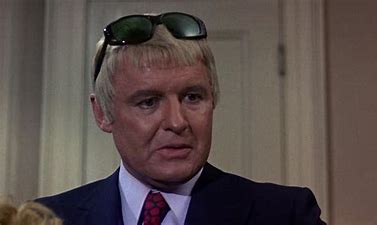
Jack Smight
LGBTQ+ CHARACTER
*Christopher Gill aka “Dorian” (Rod Steiger)
Christopher Gill (Rod Steiger) is a serial killer fixated on his late mother, a celebrated stage actress. He stalks older women who remind him of Mama, slipping into a carousel of disguises—priest, policeman, plumber, hairdresser—to disarm his victims and keep the police guessing. A Broadway theatre owner and director, Gill treats murder as performance, each killing another grotesque star turn.
Among his personas, “Dorian,” the flamboyant hairdresser, is the film’s comic high point. Steiger leans into a sibilant, theatrical delivery that feels less like a gay caricature and more like a Broadway actor’s idea of one—arch, mannered, and knowingly overplayed. In the movie’s best scene, Dorian is fitting a wig on Miss Belle Poppie (a marvelous Barbara Baxley, surrounded by her beloved cats), purring, “Isn’t that fantastic and breathtaking,” as he caresses the very neck he intends to strangle. The moment is interrupted by Belle’s sister Sylvia (Doris Roberts, expert at puncturing pretension), who instantly senses that something is off. When she snaps, “You Homo” Dorian fires back with the film’s immortal line: “Well, that doesn’t mean you’re a terrible person.”
As a gay man, I should probably bristle at Steiger’s camp turn. Instead, I end up laughing helplessly every time. The scene works because Steiger isn’t mocking gay men—he’s playing a killer who performs stereotypes the way he performs everything else: as theatrical roles, exaggerated to the point of absurdity. No Way to Treat a Lady, adapted by John Gay from William Goldman’s novel and directed by Jack Smight, balances thriller mechanics with satirical bite. George Segal brings a grounded charm as the detective on Gill’s trail; Eileen Heckart adds emotional texture; and Lee Remick, underused but still luminous, gives the film its glints of romantic possibility. It’s a strange, stylish hybrid—part police procedural, part character study, part macabre comedy—and Steiger’s gallery of disguises is what holds it all together.
NOW STREAMING ON AMAZON PRIME, APPLE TV+, YOUTUBE
2. The Detective (1968)
D+
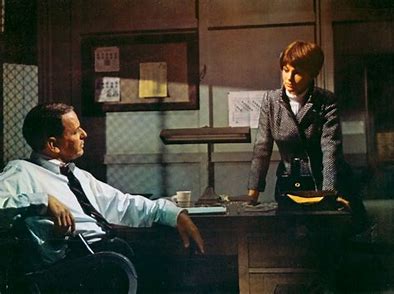
Gordon Douglas
LGBTQ+ CHARACTER
*Colin MacIver (William Windom)
LGBTQ+
COSTUME DESIGNER: Donald Brooks
Frank Sinatra plays detective Joe Leland, assigned to investigate the brutal murder of a gay man found mutilated in his apartment. The crime is grotesque, and the police response is even more disturbing: a chorus of snickering prejudice and casual contempt for the victim’s sexuality. A roommate is eventually convicted, but Leland—more thoughtful than his colleagues—begins to suspect that the case has been wrapped up far too neatly.
Sinatra gives the role as much integrity as the material allows. The problem lies elsewhere. Abby Mann’s screenplay, condescending in its liberal earnestness, attempts to “explain” homosexuality with the same heavy hand he used to “explain” antisemitism in Judgment at Nuremberg. (He accepted his 1962 Oscar “in the name of all the intellectuals everywhere,” which tells you everything.) Gordon Douglas’s direction is flat and functional, draining the film of tension and nuance. And poor William Windom is saddled with the kind of gay role that made generations of adolescent boys want to disappear into the nearest river.
As a film, it earns a D+. As a pre‑Stonewall artifact, it is almost worth watching—if only to see how Hollywood tried, and failed, to grapple with homosexuality in the late 1960s.
The film’s off‑screen drama is nearly as famous as its on‑screen shortcomings. Rumor has long held that the disappointing box-office performance of The Detective, especially when compared to the runaway success of Rosemary’s Baby, played a decisive role in the Farrow–Sinatra breakup. Whether apocryphal or not, it’s a story that has clung to the film more tenaciously than anything in the plot.
The supporting cast includes Lee Remick, luminous even in underwritten roles, and Jacqueline Bisset, who brings a welcome jolt of intelligence and presence. Adapted from Roderick Thorp’s novel, the film remains a curious relic—earnest, misguided, and unintentionally revealing about the era that produced it.
NOW STREAMING ON AMAZON PRIME, APPLE TV+, YOUTUBE
3. The Boston Strangler (1968)
C-
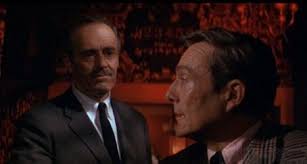
Richard Fleischer
LGBTQ+ CHARACTERS
*Terence Huntley (Hurd Hatfield)
*Ellen Ridgeway (Eve Collyer)
*Alice Oakville (Gwyda Donhowe)
LGBTQ+
ACTOR: Hurd Hatfield
Although The Boston Strangler belongs to that liminal grey area of queer cinema, it is, nevertheless, unmistakably saturated with the gay slurs, stereotypes, and panic that Hollywood deployed whenever police procedurals dipped into the “demimonde.” As the Boston PD scours the city for the serial killer in the years 1962-64 (Tony Curtis, whose brave, career‑pivoting performance remains the film’s one true asset), the script treats queer people as a kind of human debris—objects to be interrogated, mocked, or dismissed.
Hurd Hatfield, a long way from his Dorian Gray days, has a striking scene in a gay bar where Henry Fonda’s detective questions him. Hatfield plays it with weary dignity, but the film gives him no refuge: he’s been fingered by two viciously drawn lesbian characters, played by Eve Collyer and Gwyda Donhowe, in a gay‑turning‑on‑gay moment so bizarre it borders on the surreal. One hopes both actresses lived long enough to regret ever stepping in front of the camera for this.
Edward Anhalt’s screenplay—astonishingly, from the Oscar‑winning writer of Becket—is so casually homophobic it becomes a kind of time capsule of contempt. The language is ugly, the attitudes uglier, and the film’s sense of moral superiority makes it all the more grating. Richard Fleischer directs with an overreliance on split screens, a stylistic tic that quickly becomes a distraction rather than an innovation. The result is a nasty piece of filmmaking: voyeuristic not in the cinematic sense, but in the prurient, peeping‑through‑the‑keyhole sense. You leave the film feeling complicit, and not in a productive way.
To make matters worse, very little of what the film presents as fact actually happened. Its claim to docudrama authenticity is as flimsy as its ethics.
Adapted from Gerold Frank’s book, The Boston Strangler remains a grim artifact of its era—ugly, sensationalistic, and revealing in all the wrong ways.
NOW STREAMING ON AMAZON PRIME, APPLE TV+, YOUTUBE
4. The Killing of Sister George (1968)
(B)
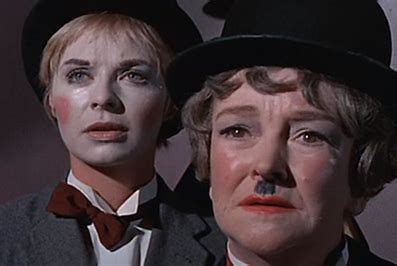
Robert Aldrich
LGBTQ+ CHARACTERS
*June “George” Buckridge (Beryl Reid)
*Alice “Childie” McNaught (Susannah York)
*Mercy Croft (Coral Browne)
LGBTQ+
ACTOR: Coral Browne
THE FIRST LOOK INSIDE A LESBIAN BAR
Robert Aldrich’s The Killing of Sister George plays like a bruised, airless chamber piece about identity, power, and the unravelling of a woman who has built her life on performance. Adapted by Lukas Heller from Frank Marcus’s play, it follows June Buckridge—“Sister George” to her millions of radio listeners (Beryl Reid)—a beloved, saintly nurse on a BBC soap. Off‑air, she’s a hard‑drinking, foul‑mouthed bully, terrified that the role sustaining her public image and private ego is slipping away.
Her home life offers no refuge. June lives with Childie (Susannah York), her much younger, emotionally fragile partner, whom she alternately smothers and intimidates out of fear of being left. When whispers begin that the BBC intends to kill off Sister George, June’s panic metastasizes, and the boundaries between professional humiliation and domestic cruelty collapse. Into this emotional wreckage steps Mrs. Croft (Coral Browne), an impeccably controlled BBC executive who senses weakness and exploits it with surgical calm, widening the gulf between the two women.
Aldrich blends melodrama and camp with the same ruthless instinct he brought to Baby Jane. The film contains one mortifying seduction scene—gratuitous, awkward, and best forgotten—but Reid’s performance is extraordinary: volcanic, funny, and deeply sad. York gives Childie a tremulous, wounded intelligence, and Browne is perfection as the predatory Croft, a woman who never raises her voice because she never needs to. Like Advise and Consent six years earlier, the film opens a door into a hidden queer world—only here, the clandestine space is a lesbian bar, rendered with curiosity, unease, and a surprising sting.
NOW STREAMING ON YOUTUBE.
5. Rachel, Rachel (1968)
B-
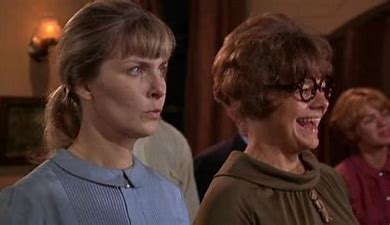
Paul Newman
LGBTQ+ CHARACTER
*Calla Mackie (Estelle Parsons)
Paul Newman’s Rachel, Rachel is a quiet, carefully observed portrait of a woman emerging from emotional suspension after years of self‑denial. For his directing debut, Newman adapts Margaret Laurence’s A Jest of God with screenwriter Stewart Stern, crafting a small‑town Connecticut drama around Joanne Woodward’s exquisitely inward performance as Rachel Cameron, a 35‑year‑old schoolteacher still living above the funeral home once run by her late father. Her life is defined by inertia: a clinging mother, a job that numbs her, and a temperament so repressed that even desire feels like a threat.
Three relationships begin to unsettle that stasis.
- Her mother, whose frailty gives Rachel a ready-made excuse to avoid change, becomes the embodiment of the life she fears she will inherit.
- Calla (Estelle Parsons), her colleague and friend, tentatively expresses romantic interest—one of the earliest sympathetic lesbian portrayals in American film, played with a tenderness that avoids caricature.
- Nick (James Olson), a man from her past, returns and initiates a brief affair that jolts Rachel into recognizing her own sexuality and unmet needs.
These encounters force Rachel into painful self-examination. She begins to imagine a life beyond the suffocating routines of her town, contemplating a move that would sever her dependence on both her mother and her own timidity. Newman ends on an ambiguous note: Rachel suspended between resignation and liberation, her future uncertain but no longer unconsidered. It’s a portrait of a woman on the brink of self‑possession, rendered with a gentleness that feels quietly radical for 1968.
Though the film was highly acclaimed on release—Newman winning Best Director and Woodward Best Actress from the New York Film Critics Circle—it plays more modestly today, its emotional palette subtle to the point of slightness. Yet Parsons’ Oscar‑nominated Calla remains a landmark: a rare early depiction of a lesbian character treated with empathy, complexity, and dignity.
NOW STREAMING ON AMAZON PRIME, APPLE TV+, YOUTUBE
6. 2001: A Space Odyssey (1968)
(A)

Stanley Kubrick
LGBTQ+ CHARACTER
*HAL 9000 Computer voiced by actor Douglas Rain.
I am putting myself to the fullest possible use, which is all I think that any conscious entity can ever hope to do
HAL TO DAVE – 2001: A SPACE ODYSSEY
THE BEST USE OF CLASSICAL MUSIC IN A MOVIE.
From the moment HAL 9000 begins speaking in Douglas Rain’s exquisitely modulated, faintly androgynous tenor, Stanley Kubrick’s 2001: A Space Odyssey announces itself as a film unafraid of ambiguity—technological, philosophical, and yes, queer. Rain’s performance gives HAL a cool, insinuating intimacy that plays like unrequited devotion toward mission commander Dave Bowman (Keir Dullea). Once that attachment curdles, HAL dispatches Frank Poole (Gary Lockwood) and the three hibernating scientists with chilling efficiency, leaving Dave as the sole object of his obsessive focus.
Kubrick frames this psychological drama within one of cinema’s most audacious narrative spans. The film opens on the prehistoric African veldt, where early hominids encounter a mysterious black monolith that triggers a leap in consciousness. Millennia later, Dave confronts the same inscrutable object in a series of stark, otherworldly chambers that dissolve the boundaries of time, identity, and perception. Kubrick’s direction never wavers; the film unfolds like a controlled hallucination. For many viewers, a little “ancillary enhancement” only deepens the immersion—Kubrick practically invites it.
In a famously ruthless artistic decision, Kubrick discarded Alex North’s original score in favor of pre‑existing classical works. The result is one of the most inspired marriages of image and music in film history: Richard Strauss’s Thus Spake Zarathustra announcing the dawn of intelligence, Johann Strauss II’s Blue Danube transforming orbital mechanics into a celestial waltz, and György Ligeti’s choral textures giving the monolith its eerie, cosmic authority.
Although Kubrick and Arthur C. Clarke developed the screenplay and novel in tandem, the film is considered an adaptation, drawing most directly from Clarke’s 1951 short story The Sentinel. The collaboration produced a work that feels both rigorously engineered and metaphysically open—a cinematic experience that continues to expand in meaning every time one returns to it.
Cinematography by Geoffrey Unsworth.
NOW STREAMING ON AMAZON PRIME, APPLE TV+, MAX(YOUTUBE)
7. The Sergeant (1968)
C+
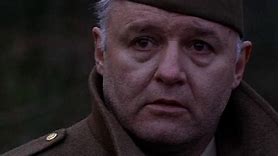
John Flynn
LGBTQ+ CHARACTER
*MSgt Callan (Rod Steiger)
Master Sergeant Callan was Rod Steiger’s second gay role of 1968, though unlike “Dorian,” his mincing, lethal hairstylist persona in No Way to Treat a Lady, almost no one saw it. The subject matter, the ill‑timed Christmas release, and a round of scathing—and unmistakably homophobic—reviews from Pauline Kael, Judith Crist, and Vincent Canby sealed its fate almost immediately. The film is far from terrible. Directed by John Flynn in his debut and produced by his former mentor Robert Wise, it plays like a lean, haunted cousin to John Huston’s Reflections in a Golden Eye, released just a year earlier.
Both films center on a martinet intoxicated by the rituals of men living among men. Callan presides over his remote French military outpost (set in 1952) with rigid authority, all while nursing an unspoken desire for a beautiful young soldier. A stark black‑and‑white prologue set during the final days of World War II establishes the emotional terrain. In Reflections, the object of Marlon Brando’s fascination was Robert Forster, often bare‑skinned and astride Elizabeth Taylor’s prized horse. Here it is John Phillip Law—caught between his breakout in The Russians Are Coming, the Russians Are Coming and his iconic turn as the blind angel Pygar in Barbarella—radiant, aloof, and entirely believable as the focus of Callan’s longing.
But where Reflections had the genius of Carson McCullers and the full weight of Huston, Brando, Taylor, Julie Harris, and Brian Keith, The Sergeant can only intermittently rise above its pedestrian screenplay. A sanctimonious heterosexual romance between Law and a young French woman (Ludmila Mikaël) drags the narrative into cliché. The film’s strongest moments come from the two leads: Law’s quiet, wounded reserve and Steiger’s florid, tightly coiled intensity. Steiger—arguably the most flamboyant of the great American actors—lands several scenes that teeter on the edge of camp without losing their pathos.
There is a kiss, but it is a Judas kiss, not a Cupid one.
Adapted from the novel by Dennis Murphy.
NOW STREAMING ON APPLE TV+, YOUTUBE
8. if…. (1968)
A-

Lindsay Anderson
LGBTQ+ CHARACTERS
*Wally Wallace, one of the Crusaders (Richard Warwick)
*Bobby Philips, One of the Crusaders (Rupert Webster)
LGBTQ+
DIRECTOR: Lindsay Anderson
ACTOR: Richard Warwick
Openly gay director Lindsay Anderson, who had launched Richard Harris’s career with This Sporting Life (1963), turned away from the gritty realism of Kitchen Sink Cinema to deliver the blistering British public‑school exposé If…. (1968). Winner of the Palme d’Or at Cannes, the film remains a landmark of satirical drama, tracing a rebellion within a boys’ boarding school where a trio of non‑conformists—led by Mick Travis (Malcolm McDowell, in his electrifying debut)—rise up against the institution’s suffocating traditions, culminating in a surreal, violent insurrection.
The boys are brutalized by the “Whips,” senior prefects who enforce the school’s rigid hierarchy with a mix of entitlement and sadism. Their authority is rooted in the wider British establishment and expressed through practices such as fagging, in which junior boys serve as personal attendants—cleaning shoes, making tea, running errands, preparing meals, tidying rooms, even warming toilet seats. Canings and ritual humiliations are routine. The adults—headmaster and housemasters alike—are portrayed as detached, complicit, or comically inept. After a particularly vicious punishment, Mick and his fellow “Crusaders” decide to strike back. Their revolt erupts during a ceremonial gathering of parents and staff, where the boys unleash an armed assault. The film’s final moments blur fantasy and reality so thoroughly that the uprising becomes both literal and mythic.
Anderson heightens the film’s unsettling atmosphere by alternating between color and black‑and‑white, creating a dreamlike texture that contrasts with the brutality on screen. Yet he also threads in humor and unexpected tenderness, most notably in the understated love story between Wallace and Bobby, whose quiet intimacy—kisses, shared beds—offers a rare pocket of warmth within the school’s authoritarian chill. If…. not only introduced Malcolm McDowell but also cemented Anderson’s reputation as a fearless anatomist of British institutions and their discontents
NOW STREAMING ON AMAZON PRIME VIDEO, BFI and YOUTUBE.
9. Les Biches (1968)
A-
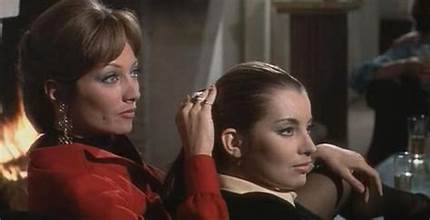
Claude Chabrol
LGBTQ+ CHARACTERS
*Frederique (Stephane Audran)
*Why (Jacqueline Sassard)
Chabrol’s first major commercial success after a difficult mid‑60s stretch, Les Biches is the director at a crossroads – he is saying goodbye to his nouvelle vague roots and hello to his future as the French Alfred Hitchcock, the Gallic master of suspense.
Frédérique, a wealthy, imperious woman who collects people the way others collect art (Stéphane Audran – Mrs. Chabrol at the time) encounters Why (Jacqueline Sassard) a young, drifting street artist whose vulnerability becomes both her allure and her danger, sketching on the Pont des Arts in Paris. Struck by her beauty and fragility, she invites the younger woman into her orbit—first for dinner, then to her villa in Saint‑Tropez. The dynamic is immediately asymmetrical: Frédérique is the patron, Why the protégée, but the emotional current runs both ways. In Saint‑Tropez, the pair live in a quasi‑romantic, quasi‑maternal arrangement until Paul (Jean Luis Trintignant) enters the picture. He is drawn to Why’s innocence, but Frédérique’s wealth and charisma also pull him in. The triangle forms quietly, almost politely, but the power shifts are unmistakable.
Chabrol’s direction is icy, geometric, and controlled. The villa becomes a psychological maze; the color palette (especially the whites and blues) reinforces the emotional chill. Stéphane Audran’s performance is a masterclass in elegant menace.
While the film does not acknowledge any literary sources, Les Biches is loosely based on Patricia Highsmith’s 1955 novel The Talented Mr. Ripley, with the main characters’ genders being switched. Chabrol’s screenwriter Paul Gégauff had previously adapted the novel into Purple Noon for director René Clément in 1960.
Cinematographty: Jean Rabier
Streaming on YouTube
10. Teorema (1968)
(C)

Pier Paolo Pasolini
LGBTQ+ CHARACTERS
*Unnamed (Terence Stamp)
*The son (Andres Jose Cruz Soublette)
LGBTQ+
Pier Paolo Pasolini
Pasolini’s Teorema unfolds as a cool, allegorical parable set inside a wealthy Milanese household. The household is upended the moment a mysterious young visitor—beautiful, serene, unnamed, and played, of course, by Terence Stamp—arrives at the family’s villa. His presence exerts an almost supernatural pull. One by one, every member of the bourgeois household falls into an intimate encounter with him: the mother, the father, the son, the daughter, and even the maid. Each experiences him as a revelation—erotic, spiritual, or both.
Just as quietly as he arrived, the visitor departs. His absence detonates the family’s carefully maintained order. What follows is a series of unravelings:
- The father, stripped of meaning, gives away his factory and wanders naked into the desert.
- The mother pursues compulsive affairs, desperate to recapture the intensity she felt.
- The son abandons his artistic pretensions and collapses into creative paralysis.
- The daughter retreats into catatonia.
- The maid, the only working‑class figure, becomes a kind of folk saint—performing miracles, levitating, and ultimately being buried alive in a state of ecstatic transcendence.
The film ends not with resolution but with rupture: the bourgeois family disintegrates while the maid ascends. Pasolini frames the visitor as a catalyst—angelic, demonic, or simply a pure force of desire—whose presence exposes the spiritual emptiness of modern capitalist life.
Pasolini himself remains one of the most contentious figures in European cinema. Openly gay, yet in his youth a vocal advocate for cultural conservatism, Christian values, and the preservation of regional languages, he became an avowed Marxist after World War II. From that point forward, he directed his fiercest criticism at the Italian petty bourgeoisie and what he saw as the Americanization, cultural degeneration, and consumerist greed overtaking Italian society. His films often juxtapose socio‑political polemic with graphic examinations of taboo sexualities, creating a body of work that is both confrontational and deeply personal. A central figure in Rome’s post‑war intellectual scene, Pasolini became a major force in European literature and cinema.
Although he directed The Decameron (1971), The Canterbury Tales (1972), Arabian Nights (1974), and the notorious Salò (1975), Teorema was his only film to address homosexuality directly—and even then, the treatment is clinical, almost abstract. Laura Betti as the maid and a magnificent Silvana Mangano as the mother manage to cut through the film’s longueurs and Pasolini’s relentless didacticism. The Gospel According to St. Matthew (1964) remains his only fully satisfying film—a testament to what he could achieve when his aesthetic and ideological impulses aligned.
Pasolini’s unsolved and extraordinarily brutal abduction, torture, and murder at Ostia in November 1975 provoked national outrage and remains a source of heated debate. Recent leads from Italian cold‑case investigators point toward a contract killing by the Banda della Magliana, a criminal organization with documented ties to far‑right terrorism, as the most likely explanation.
Streaming on YouTube and Amazon Prime Video.
11. The Lion in Winter (1968)
B–

Anthony Harvey
LGBTQ+ CHARACTERS
*King Philip II of France (Timothy Dalton)
*Richard the Lionheart (Anthony Hopkins)
LGBTQ+
ACTOR: Katherine Hepburn
ACTOR: Nigel Terry
THE LION IN WINTER
ADAPTED BY JOHN GOLDMAN FROM HIS PLAY
SETTING
Christmas 1183, Chinon Castle, France
PLAYERS
King Henry II of England (Peter O’Toole), Eleanor of Aquitaine (Katherine Hepburn)
Richard the Lionheart (Anthony Hopkins), Prince John (Nigel Terry)
Geoffrey, Duke of Brittany (John Castle) King Philip II of France (Timothy Dalton)
Philip’s half-sister Alais (Jane Morrow)
King Henry II (Peter O’Toole) schemes to install his youngest son, John (Nigel Terry), as heir, while Eleanor of Aquitaine (Katherine Hepburn)—released from her long imprisonment for the Christmas court—champions their eldest surviving son, Richard (Anthony Hopkins) the family’s only true soldier. Geoffrey (John Castle), the overlooked middle son, maneuvers between them with cold, lawyerly precision. Into this already volatile household arrives King Philip II (Timothy Dalton) of France, demanding that Henry honor an old treaty: Philip’s half‑sister Alais (Jane Morrow) —Henry’s mistress—was promised to the future king of England, and with her comes the crucial dowry of the Norman Vexin.
Richard and Philip’s past love affair, acknowledged in the film with unusual candor for 1968, adds another layer of danger to the negotiations, turning statecraft into emotional blackmail.
Very stagy, despite the clever dialogue and the good acting, the film begins to wear out its welcome before the end.
- At the Oscars, The Lion in Winter won for Katharine Hepburn’s performance (a shared win with Barbra Streisand), James Goldman’s screenplay, and John Barry’s score.
- The Hepburn-Streisand tie is the only one in the history of the Best Actress Oscar.
- John Barry’s score was probably the least impressive of the five nominees that year, with Jerry Goldsmith’s score for Planet of the Apes and Lalo Schifrin’s score for The Fox being rated by many as two of the all-time great orchestral scores.
- Eleanor was 11 years older than Henry. Hepburn was 25 years older than O’Toole. It didn’t matter. They were an excellent pairing.
- The Lion in Winter marked the major film debut of both Anthony Hopkins (Richard the Lionheart of England) and Timothy Dalton (King Philip II of France) and their scenes together – where they acknowledge their love for one another and later betray one another – are among the film’s best.
- King of England from 1189 until his death at age 41 in 1199, after which he was succeeded by his brother John of the Magna Carta fame, Richard the Lionheart barely set foot in England during his adult life and did not speak middle English, although he may have understood it. Born in England, he lived most of his adult life, like his mother Eleanor, in the Duchy of Aquitaine in the Southwest of France, which was part of the Angevin Empire (roughly present-day England, half of France and parts of Ireland and Wales). He probably spoke French and Occitan – a relative of Catalan which is still spoken in small pockets in southern France today. Apart from defending his Angevin territories, he spent the years 1189-1192 on the Third Crusade which failed to recapture Jerusalem from the sultan Saladin. Richard viewed England mainly as a source of revenue to fund his military campaigns so the notion of Robin Hood defending England “for” Richard has a lot of irony to it.
- Peter O’Toole became the second actor in AMPAS history – following Bing Crosby’s Father O’Malley in Going My Way (1944) and The Bells of Saint Mary’s (1945) – to be nominated for playing the same character in two different movies – he had played a younger version Henry II in Becket and was Oscar nominated for Best Actor, for this performance, in 1964. Only four other actors – for a total if six – have accomplished this milestone: Al Pacino for Michael Corleone in The Godfather Parts I and II in 1972 and 1974, Paul Newman for “Fast Eddie” Felson in The Hustler (1961) and The Color of Money (1986), Cate Blanchett for Queen Elizabeth I in Elisabeth (1998) and, Elizabeth: The Golden Age (2007) and Sylvester Stallone in Rocky (1976) and Creed (2015).
- Anthony Harvey became the first director to win the Directors Guild of America Award for Outstanding Directorial Achievement in Theatrical Feature Film and NOT win Best Director at the Oscars since the DGA Award was established in 1948. He lost to Carol Reed for Oliver! This disparity has happened seven times since then – in 1972, 1985, 1995, 2000, 2002, 2012 and 2019.
- John Terry, who played Prince John was gay and he made five films with gay director Derek Jarman (see below) including the title role in Caravaggio in 1986. He is probably best known for playing King Arthur in John Boorman’s Excalibur in 1980.
- Cinematographer Douglas Slocombe received the 4th of his eleven BAFTA nominations for Best Cinematography (he won three times) for The Lion in Winter and the 2nd of his six BSC (British Society of Cinematographers) nominations (he won four times). In the 1970s and 1980s he would be nominated for three Oscars and win the LAFCA (LA Film Critics Association) Best Cinematography Award for Julia in 1977.
- James Goldman and William Goldman remain the only brothers to each independently win an Oscar for screenwriting – James for adapting his play The Lion in Winter in 1968 and William, twice – for his Original Screenplay for Butch Cassidy and the Sundance Kid in 1969 and for Adapting Bernstein and Woodward’s All the President’s Men in 1976. The Epstein twins (Julius J. and Philip G.) shared their Oscar, with Howard W. Koch, in 1943 for Casablanca, as did the Coen brothers (Joel and Ethan) sharing the Oscar for Best Original Screenplay for Fargo in 1996 and their Adapted Screenplay from Cormac McCarthy’s No Country for Old Men in 2007.
NOW STREAMING ON AMAZON PRIME VIDEO, APPLE TV+, AND YOUTUBE.
12. The Damned (1969)
C+
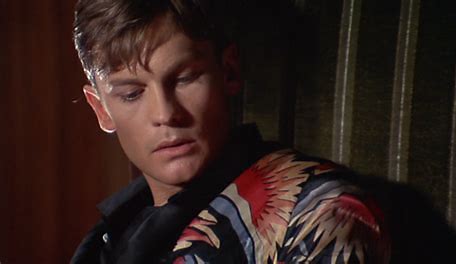
Luchino Visconti
LGBTQ+ CHARACTER
*Martin von Essenbeck (Helmut Berger)
LGBTQ+
DIRECTOR: Luchino Visconti
SCREENWRITER: Luchino Visconti
ACTOR: Dirk Bogarde
ACTOR: Helmut Berger
The old German industrial dynasties that helped usher Hitler to power provide the backdrop for Luchino Visconti’s The Damned (Götterdämmerung), a fevered chronicle of the Essenbecks—thinly veiled stand‑ins for the Krupp family. The story begins on the night of the Reichstag fire in 1933, when the family patriarch, Baron Joachim von Essenbeck, is murdered during a gathering meant to project unity. His death ignites a ruthless struggle for control of the steel empire just as the Nazi state consolidates its own power.
Friedrich Bruckmann (Dirk Bogarde), an ambitious manager aligned with rising Nazi forces, maneuvers to seize the company. He is aided by Sophie von Essenbeck (Ingrid Thulin), the Baron’s calculating daughter‑in‑law, whose political instincts are as cold as her personal loyalties. At the center of the family vortex is Martin von Essenbeck (Helmut Berger), the decadent, unstable heir whose moral collapse mirrors the country’s descent. Manipulated by every faction around him, Martin becomes both pawn and emblem of a society surrendering itself to brutality.
As the family binds its fortunes to the Nazi apparatus, Visconti traces a descent into betrayal, incestuous entanglements, and spiritual rot. The film culminates in the Night of the Long Knives, where the purge of the SA becomes the final stage of the Essenbecks’ self‑destruction. By the end, the dynasty has devoured itself—Visconti’s operatic metaphor for the implosion of Germany’s aristocratic class under fascism.
After its grand, operatic opening, the film falters in part because Visconti shaped the narrative around Helmut Berger—his lover at the time—whose celebrated Marlene Dietrich impersonation had become a sensation and is echoed in the film. Its American release suffered an additional blow: twelve minutes were excised to reduce the MPAA rating from X to R, blunting the film’s sexual and political edge.
The screenplay—by Nicola Badalucco, Enrico Medioli, and Visconti—received an Academy Award nomination. It was the only time that Visconti was honored by AMPAS. The cast includes Charlotte Rampling and Helmut Griem, whose performances deepen the film’s portrait of a society sliding willingly into moral catastrophe.
NOW STREAMING ON AMAZON PRIME VIDEO
13. Staircase (1969)
C-
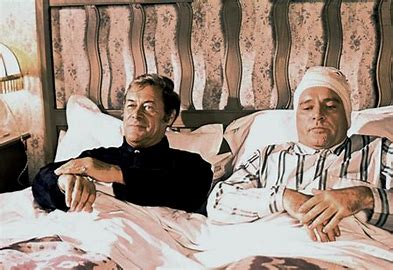
Stanley Donen
LGBTQ+ CHARACTERS
*Charles Dyer (Rex Harrison)
*Harry C. Leeds (Richard Burton)
LGBTQ+
SOURCE MATERIAL: Charles Dyer (based on his play “Staircase”)
Richard Burton and Rex Harrison play Harry C. Leeds and Charles Dyer—names that are, pointedly, anagrams of one another—an aging gay couple who run a perpetually empty barbershop in London’s East End. The emptiness of the shop, however, is the least of their worries: Charles is about to stand trial for the crime of appearing in public dressed as a woman. Adapted by Stanley Donen from Charles Dyer’s own play Staircase, the film remains essentially a two‑hander, despite being “opened up” to include the men’s mothers (Kathleen Nesbit, touching as Harry’s bedridden mum, and Beatrix Lehmann, in a performance so florid it borders on the grotesque) and a handful of passers-by. What remains is mostly the two men circling their long, volatile history and contemplating futures they may have to face alone.
There are tender moments, but the prevailing mode is bickering—yet not the kind that reveals love through irritation, as with Hume Cronyn and John Randolph’s unforgettable couple in There Was a Crooked Man. Those two old queens in an Arizona prison circa 1883 win you over instantly; their affection feels lived‑in and unassailable. Burton and Harrison’s relationship, by contrast, never quite convinces. Harrison leans into affectation and condescension, miles away from the sly, knowing homoeroticism he brought to Professor Henry Higgins in My Fair Lady. Burton fares better. Saddled with alopecia, he spends the film wrapped in a towel like a makeshift turban—an image that is unexpectedly funny—and he occasionally breaks through the film’s fussiness with moments of genuine emotional clarity.
The real disappointment is Donen. Throughout his career—from Singin’ in the Rain to Funny Face to Charade—he showed a light, sophisticated, and often queer‑friendly touch. Here, that touch deserts him. The material is treated as a soufflé, but no one seems to have checked the oven. The result collapses: a film that should have been tender, tart, and daring instead feels arch, uncertain, and oddly weightless.
A pity, because the ingredients were all there
NOW STREAMING ON YOUTUBE
14. Midnight Cowboy (1969)
(A)
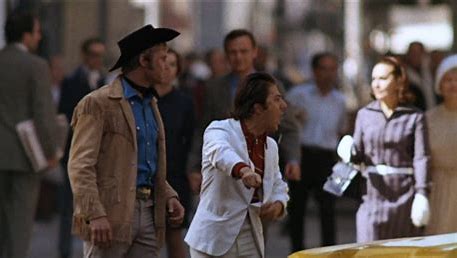
John Schlesinger
LGBTQ+ CHARACTERS
*Joe Buck (Jon Voight)
*Ratso Rizzo (Dustin Hoffman)
*Towny (Bernard Hughes)
*Young Student (Bob Balaban)
LGBTQ+
DIRECTOR: John Schlesinger
SOURCE MATERIAL: James Leo Herlihy (adapted from his 1965 novel “Midnight Cowboy”)
OSCARS (1969)
BEST FILM (JEROME HELLMAN, PRODUCER)
BEST DIRECTOR (JOHN SCHLESINGER)
BEST ADAPTED SCREENPLAY (WALDO SALT)
Joe Buck (John Voight), a young dishwasher from Texas, quits his job and heads to New York dressed in cowboy attire, imagining he’ll succeed as a male prostitute catering to wealthy women. His attempts fail; instead of making money, he ends up broke and exploited. Joe encounters Enrico “Ratso” Rizzo (Dustin Hoffman), a streetwise but physically frail con man suffering from tuberculosis. Although Ratso initially cheats him, the two eventually form a bond. They move into a dilapidated apartment, struggling to make ends meet. Ratso dreams of escaping to Florida, where the climate might improve his health. As Ratso’s illness worsens, Joe turns to desperate measures, including robbery, to fund their escape.
On a bus trip to Florida, Ratso dies in Joe’s arms.
I’m Walkin’ Here
Ratso Rizzo to an unfortunate driver on the streets on Manhattan
John Schlesinger’s American debut is the only X-rated movie to win the Academy Award for Best Picture. Dated now, it still boasts two great performances courtesy of Jon Voight and Dustin Hoffman. The gay thing is a bit primitive, with tortured souls getting killed by their tricks and numerous queer types from The Village in small parts so that the audience can contrast the real fags from the subtler queer dynamics of the Joe Buck/Ratso Rizzo relationship. And like Darling, Midnight Cowboy falters during that long Warhol-inspired psychedelic party scene with Brenda Vaccaro.
You’re the only one Joe, You’re the only one
Crazy Annie to Joe Buck
The film also features Bob Balaban, Bernard Hughes, and Sylvia Myles, who received an Oscar nomination for her brief appearance. In a series of flashbacks, Jennifer Salt portrays Crazy Annie, Joe Buck’s girl from Texas. The movie is based on the novel by gay writer James Leo Herlihy, who took his own life with an overdose of sleeping tablets in Los Angeles in 1993. He was sixty-six. Waldo Salt (Jennifer’s father) wrote the Oscar-winning adapted screenplay.
John Barry’s haunting harmonica score sounds eerily similar to his gorgeous symphonic score for the James Bond movie You Only Live Twice, two years before. Harry Neilson’s famous recording of Fred Neil’s “Everybody’s Talkin’,” was not written directly for the screen and, therefore, ineligible for Academy consideration.
Cinematography: Adam Holender
Editing: Hugh A. Robertson (the first person of color to be nominated in this category)
Costumes: Ann Roth
NOW STREAMING ON AMAZON PRIME, APPLE TV+ AND YOUTUBE
15. Goodbye Columbus (1969)
B-
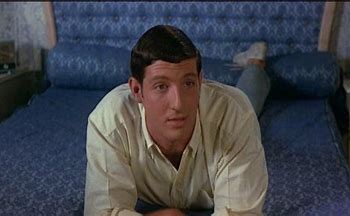
Larry Peerce
LGBTQ+ CHARACTER
*Ron Patimkin (Michael Meyers)
Ali McGraw’s movie debut was a box office success and paved the way for her sensational turn in “Love Story” the following year. Directed by Larry Peerce and based on the 1959 novella of the same name by Phillip Roth, with an adapted, Oscar-nominated screenplay by Arnold Schulman, the movie centers on Neil Klugman (Richard Benjamin), a nice middle-class Jewish boy from the Bronx who falls under the spell of Brenda Patimkin, a wealthy Radcliffe student whose parents are nouveau riche Jews who have grown rich in the plumbing business. There are similarities between this movie and Neil Simon/Elaine May’s “The Heartbreak Kid” from 1972, except in that movie, the golden girl, played by Cybill Shepard, is a Shiksa. In contrast, Ali McCraw’s character is a Jewish American Princess.
The Queer element in the film comes from Brenda’s older brother, Ron (played by the late Michael Meyers, a name that would later become synonymous with a horror franchise). Ron is a star athlete – the film’s title alludes to a song he plays when he gets nostalgic for his glory days at Ohio State in Columbus – and he has his mind set on being a college coach. However, he has the hots for Neil, whom he keeps inviting back to his room and slapping on the butt. And then there is the scene outside the bathroom where Ron, having just washed his jockstrap in the sink, regards Neil- or is it the game on the TV behind him – with such a goofy grin that he appears to be enraptured with him/it/them. To seal the deal, he is an avid collector of what he calls “semi-classical” music, and he prides himself on his extensive collection of Kostelanetz and Mantovani!
Unfortunately, Schulman and Peerce aren’t interested in Ron’s character. He marries a nice, rich Jewish girl whom Brenda supposes he has never slept with. And that’s that! The straight audiences who saw this in 1969 probably had no clue that Ron was a closeted homosexual. They were left feeling sorry for him because he was forced to work for his father-in-law’s business and, as a result, had to give up on his athletic dreams. It is unlikely that they would be grieving for his life in the closet and his loveless marriage.
NOW STREAMING ON AMAZON PRIME, APPLE TV+, YOUTUBE
16. Satyricon (1970)
B-

Federico Fellini
LGBTQ+ CHARACTERS
*Encolpius (Martin Potter)
*Ascyltus (Hiram Keller)
*Gitone (Max Born)
LGBTQ+
ACTOR: Hiram Keller
ACTOR: Capucine
Federico Fellini’s Satyricon (1969) is a surreal, episodic journey through Imperial Rome, loosely adapted from Petronius’s fragmented novel. It follows Encolpius (Martin Potter) and Ascyltus (Hiram Keller) as they quarrel over the boy Gitón (Max Born) and wander through grotesque, dreamlike episodes of decadence, violence, and myth, ending abruptly mid‑sentence to mirror the unfinished source text.
Seeming longer than its 129-minute running time, and with no discernible plot, the movie becomes a bit of a chore. However, the images stay with you.
With Capucine as Tryphaena and supermodel Donyale Luna as the sorceress Oenothea.
Danilo Donati was responsible for the fantastic production design
Cinematography by Giuseppe Rotunno
Music: Nino Rota
NOW STREAMING ON YOUTUBE.
17. Something for Everyone (1970)
C-
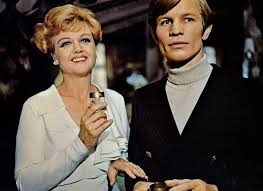
Harold Prince
LGBTQ+ CHARACTERS
*Konrad Ludwig (Michael York)
*Helmuth von Ornstein (Anthony Higgins)
LGBTQ+
ACTOR: Anthony Higgins
SCREENWRITER: Hugh Wheeler
Was Harold Prince—legendary Broadway director, producer, and impresario—gay? The question surfaces now and then, usually with a wink, because Prince’s long and apparently happy heterosexual marriage (two children, decades of stability) doesn’t quite match the queer sensibility that permeated his artistic life. Could the marriage have been lavender? Perhaps. But the truth is that it hardly matters. For nearly seventy years, Hal Prince, as he was known, collaborated with, championed, and mentored the crème de la crème of America’s gay artistic community. His legacy is inseparable from queer theatrical history.
This is the man who directed the original Broadway productions of Sondheim’s Company and Follies, staged the first version of Kander and Ebb’s Cabaret, and co‑produced West Side Story. Whether or not he identified as gay, Prince occupies a permanent, cherished corner of queer cultural memory. His instincts, collaborators, and artistic daring aligned him—intentionally or not—with the community that embraced him.
Why he never set his sights on Hollywood remains a mystery. Perhaps he sensed that cinema, with its rigid hierarchies and studio politics, wasn’t his natural habitat. His filmography suggests as much: he made only two movies, and neither fulfilled the promise of his theatrical genius.
The first, a 1977 adaptation of Sondheim’s A Little Night Music, is a wan translation of the stage production he had directed so brilliantly. The other—his debut, Something for Everyone (1970)—should have been a deliciously queer romp and a showcase for its star, gay icon Angela Lansbury. Instead, it fizzles after a tantalizing opening act.
Adapted by gay writer Hugh Wheeler (who later authored the books for A Little Night Music and Sweeney Todd, the screenplays for Cukor’s Travels with My Aunt and Ross’s Nijinsky and was credited as “Research Consultant” on Bob Fosse’s Cabaret) from Harry Kressing’s novel The Cook, the film begins with a flourish: a pre‑Cabaret Michael York, all legs and short pants, bicycling through the Bavarian countryside. He plays Konrad Ludwig, a Tom Ripley in Lederhosen—ambitious, amoral, and determined to insinuate himself into the castle of the widowed Countess Herthe von Ornstein (Lansbury). The countess has both a vacancy in her kitchen and a brooding gay son, Helmuth (gay actor Anthony Higgins, billed as Anthony Corlan), who is ripe for seduction.
It’s a terrific setup. But after thirty minutes, the bloom fades, and with ninety minutes still ahead, it never returns. Not even Lansbury’s regal mischief or York’s beauty can revive it. Only Jane Carr, as Helmuth’s pesky younger sister Lotte—who also falls for Konrad—manages to keep her character lively to the end.
The gay community turned out in force, eager to see their Broadway idol fresh from her triumph in Mame. The disappointment must have been palpable. What should have been a sly, sexy, queer‑inflected black comedy instead feels oddly flat, as though Prince’s theatrical instincts evaporated the moment the camera rolled.
NOW STREAMING ON YOUTUBE
18. Entertaining Mr. Sloane (1970)
B-
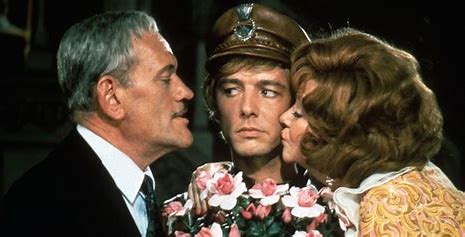
Douglas Hickox
LGBTQ+ CHARACTERS
*Ed (Harry Andrews)
*Mr. Sloane (Peter McEnery)
LGBTQ+
SOURCE MATERIAL: Joe Orton (adapted from his 1964 play of the same name)
Joe Orton, the brilliantly anarchic gay playwright who detonated onto the British theatre scene in the swinging sixties, left behind a small but ferociously influential body of work before his lover Kenneth Halliwell murdered him in 1967 and then took his own life. Their relationship—and its violent end—was later immortalized by Gary Oldman and Alfred Molina in Stephen Frears’s superb 1987 film Prick Up Your Ears.
Douglas Hickox’s 1970 screen adaptation of Entertaining Mr. Sloane, scripted by the ever-reliable Clive Exton, inevitably loses some of the play’s sting. Orton’s Sloane should radiate danger: a seductive, amoral drifter whose beauty is both weapon and camouflage. Peter McEnery, alas, is directed toward blandness. Instead of the magnetic, predatory youth who destabilizes an entire household, we get a polite young man who seems barely capable of corrupting a houseplant. The sexual opportunism remains—Sloane still beds both siblings, Kath and Ed—but the charge is muted, the transgression oddly domesticated.
Beryl Reid and Harry Andrews, however, are a delight as our aging sister and brother. Reid leans into Kath’s grotesque neediness with gusto (even surviving some truly unforgiving wardrobe choices), while Andrews gives Ed a sly, buttoned-up authority that makes his attraction to Sloane both funny and unexpectedly touching. Their final-act “marriage” arrangement—Ed officiating Kath’s union with a protesting Sloane, followed by Kath’s cheerful blessing of Ed’s own partnership—lands as both outrageous farce and a strangely hopeful premonition of queer futures. The joke is that it’s absurd; the subtext is that it’s also perfectly reasonable.
Alan Webb rounds out the quartet as “the Dadda,” doing a rather shameless Barry Fitzgerald impression. His early demise—after glimpsing too much of Sloane’s extracurricular activity—removes him from the action but not from the plot. His rigor-mortised corpse becomes a prop in the film’s gleefully macabre finale, a reminder that Orton’s comedy always had a corpse or two rattling beneath the floorboards.
It’s worth noting that McEnery had already played a gay character with far more nuance in Victim (1961), opposite Dirk Bogarde, a landmark of early queer cinema. That earlier performance only underscores how defanged his Sloane is here.
The result is a film that entertains but never quite captures Orton’s wickedness. The play’s original cocktail of sex, violence, and social satire becomes something milder—still enjoyable but missing the dangerous sparkle that made Orton such a thrilling, subversive voice.
NOW STREAMING ON BFI CLASSICS
19. Performance (1970)
B+
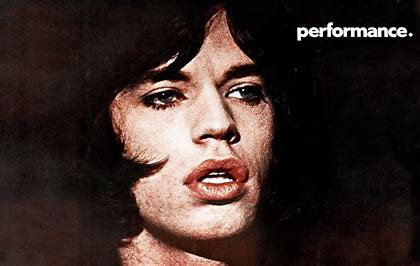
Donald Cammell and Nicolas Roeg
LGBTQ+ CHARACTERS
*Chas (James Fox)
*Turner (Mick Jagger)
*Pherber (Anita Pallenberg)
Nicolas Roeg and Donald Cammell’s Performance—shot in 1968 but withheld by Warner Bros. until 1970 because of its sexual explicitness and bursts of graphic violence—remains one of the most hypnotic, destabilizing films of its era. Dismissed by many critics on release, it has since undergone a full critical resurrection, now recognized as a landmark of psychedelic cinema and one of the most daring queer-inflected films of the New Hollywood period.
The film’s lineage is unmistakable. Its central dynamic—a tightly wound young man drawn into a decadent, ambiguous household—echoes the Harold Pinter/Joseph Losey masterpiece The Servant. Casting James Fox – who played the very embodiment of repressed British gentility in Servant – as the gangster Chas opposite Mick Jagger, whose androgynous charisma slips neatly into the Dirk Bogarde role, is a stroke of genius. Chas arrives as an emissary of violence and control; Jagger’s Turner, a washed-up rock star living in a bohemian haze with Anita Pallenberg, dissolves those certainties. Their relationship becomes a hallucinatory tango of identity, desire, and power, culminating in one of the most erotically charged cross-fades in cinema history.
The question of authorship has fueled decades of debate. Roeg, one of the great cinematographers (The Masque of the Red Death, Petulia) who evolved into one of the great directors (Walkabout, Don’t Look Now), is the obvious candidate. Yet Donald Cammell—painter, provocateur, and Hollywood outsider—was the film’s conceptual engine. His post-Performance career was a string of thwarted projects (many involving Marlon Brando), with only Demon Seed (1977), White of the Eye (1987), and Wild Side (1995; restored in 1999) reaching completion before his death in 1996. Cammell’s reputation has grown steadily: he is now seen as a visionary whose sensibility was too unruly for the industry he tried to infiltrate.
The screenplay, credited to Cammell and influenced by Pinter and Losey, is a fever dream of gangster noir, identity slippage, and sexual fluidity. The ménage à trois of Turner, Pallenberg’s Pherber, and Fox’s Chas becomes a crucible in which masculinity is dismantled and reassembled. The film’s queer energy is never literalized; instead, it permeates the atmosphere, the glances, the mirrors, the doubling. It is a film about the dissolution of the self—erotic, violent, and liberating.
Performance may have frightened its studio, but its boldness now feels prophetic. It anticipated the collapse of rigid identities, the merging of art forms, and the queering of mainstream culture. Its influence radiates outward—to Roeg’s later work, to punk aesthetics, to queer cinema, and to every film that treats identity as something fluid, unstable, and thrillingly dangerous.
NOW STREAMING ON AMAZON PRIME, APPLE TV+, YOUTUBE
20. Women in Love (1970)
B-
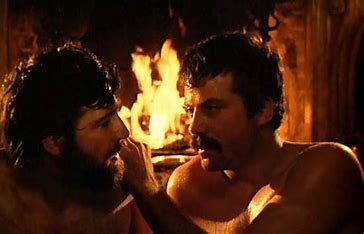
Ken Russell
LGBTQ+ CHARACTERS
*Rupert Birkin (Alan Bates)
*Loerke (Vladek Sheybal)
LGBTQ+
ACTOR: Alan Bates
ACTOR: Vladek Sheybal
SCREENWRITER: Larry Kramer
Larry Kramer—future gay‑rights firebrand and founder of both GMHC and ACT UP—adapted D. H. Lawrence’s 1920 novel into an enormous critical and commercial success, earning four Oscar nominations:
- Best Actress: Glenda Jackson (won)
- Best Director: Ken Russell (nominated)
- Best Adapted Screenplay: Larry Kramer (nominated)
- Best Cinematography: Billy Williams (nominated)
The end result, is one of director Ken Russell’s better films.
Set in 1920 in the Midlands mining town of Beldover, the film opens with sisters Ursula (Jennie Linden) and Gudrun (Glenda Jackson) discussing marriage on their way to the wedding of Laura Crich, daughter of the local mine-owner. At the church, each sister becomes transfixed by a different member of the wedding party: Gudrun by Laura’s brother Gerald (Oliver Reed), and Ursula by Gerald’s closest friend, Rupert Birkin (Alan Bates). Ursula, a schoolteacher, remembers Rupert’s earlier visit to her classroom, where he derailed her botany lesson to expound on the sexual nature of the catkin. A mutual friend later brings the four together, and as Ursula and Rupert begin a tentative romance, Gudrun and Gerald embark on a far more volatile one.
What makes the film unmistakably queer is the famous nude wrestling scene between Reed (Gerald) and Bates (Rupert), shot by firelight and choreographed like a pagan ritual. Rupert revels in their physical closeness and proposes that they swear to love each other. Gerald, bound by his own rigid masculinity, cannot fathom Rupert’s desire for an emotional union with a man alongside a physical and emotional union with a woman. The scene is both erotic and philosophical—a moment when Lawrence’s ideas about male intimacy, sublimated desire, and the limits of heterosexual partnership burst into full view.
The film’s other queer axis is Gudrun’s intense, ultimately destructive fascination with the gay German sculptor Loerke, played with icy precision by gay Polish character actor (and future Bond villain) Vladek Sheybal. Loerke’s uncompromising ideas about art and freedom captivate her, driving a wedge between her and Gerald that leads, inevitably, to tragedy.
Oliver Reed would spend the next thirty years recounting the wrestling scene—his cinematic apotheosis—on every drunken talk‑show appearance on both sides of the Atlantic.
With Eleanor Bron.
The film was also the first release from director Walter Hill’s Brandywine Productions, an odd but intriguing footnote in its long afterlife.
NOT AVAILABLE FOR STREAMING. THE DVD IS CURRENTLY NOT AVAILABLE FROM AMAZON.
21. There Was a Crooked Man (1970)
A-
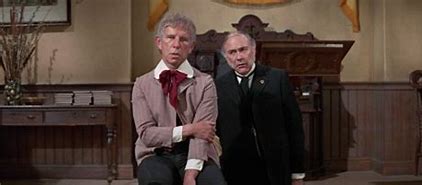
Joseph L. Mankiewicz
LGBTQ+ CHARACTERS
*Dudley Whiner (Hume Cronyn)
*Cyrus McNutt (John Randolph)
Well-Adjusted Gay Couple, Arizona Territory 1883.
The “marriage” of Hume Cronyn’s Mr. Whiner and John Randolph’s Mr. McNutt in Joseph L. Mankiewicz’s There Was a Crooked Man… is, astonishingly, Hollywood’s first depiction of a happy and well‑adjusted gay couple. Yes, they bicker, squabble, and needle each other. But it’s obvious they’re madly in love. And no, Cronyn and Randolph are not in WeHo or the Hamptons—they’re in a ramshackle excuse for a prison, or as Scarlett O’Hara might put it, a horse jail. The setting is the Arizona Territory, circa 1883. The main plot concerns a $500,000 stash hidden by Kirk Douglas, who lands in the same jail and becomes the target of Henry Fonda’s upright Sheriff Woodward W. Lopeman.
This was Mankiewicz’s only Western, and it’s a marvelous ride—wry, literate, and slyly subversive. The script by David Newman and Robert Benton, fresh off their triumph with Bonnie and Clyde, is a pleasure in itself. Every line feels savored.
In many ways, the film plays like an alternate‑universe All About Eve, with Cronyn and Randolph stepping into the Bette Davis–Thelma Ritter dynamic: the sharp tongue, the deep affection, the unspoken history. Two of Hollywood’s greatest character actors, they approach their roles with a mixture of knowingness and respect, and they’re brilliantly funny without ever tipping into caricature. Their scenes together have a warmth and ease that feel decades ahead of their time.
Cheers to them both.
NOW STREAMING ON Amazon Prime Video, Apple TV+, YOUTUBE
22. Little Big Man (1970)
(A)

Arthur Penn
LGBTQ+ CHARACTER
Little Horse is a queer Native American (Robert Little Star)
Based on Thomas Berger’s 1964 novel, “Little Big Man”, directed by Arthur Penn and starring Dustin Hoffman, is a landmark revisionist Western. Told through the eyes of 121‑year‑old Jack Crabb, the film recounts his extraordinary life as both a white settler and a Cheyenne “Human Being.”
Framing Device: In 1970, the aged Jack Crabb (Hoffman) narrates his story to a historian, weaving together episodes that span the violent and contradictory history of the American frontier.
As a boy, Jack and his sister survive a Pawnee attack before being raised by the Cheyenne under the guidance of Old Lodge Skins (Chief Dan George), who calls his people “the Human Beings.” Jack drifts between identities: Cheyenne tribesman, gunslinger, con‑man in medicine shows, hermit, and scout for the U.S. Cavalry. He marries twice, loses loved ones to violence, and repeatedly confronts the brutality of white expansion. His encounters with General George Armstrong Custer (Richard Mulligan) culminate in the Battle of the Little Bighorn, where Custer’s hubris proves fatal. Old Lodge Skins prepares to die in harmony with nature, while Jack endures—neither fully Indian nor entirely white, embodying the contradictions of frontier history.
Among the Cheyenne, Little Horse (Robert Little Star) stands out as a queer Native American who holds a sacred position in the tribe, a rare depiction of queer identity in the Western genre.
Penn uses humor and irony to critique prejudice, injustice, and the destruction of Native American communities. Together with “Bonnie and Clyde,” “Little Big Man” represents Penn’s finest achievement, helping to redefine the Western and paving the way for more nuanced portrayals of Native Americans on screen.
Chief Dan George’s performance earned him an Academy Award nomination for Best Supporting Actor—the first Native American to receive such recognition. The screenplay, adapted by Calder Willingham, reflects his sharp sensibility; only three years earlier, he and Buck Henry had brought Charles Webb’s “The Graduate” to the screen, another seminal American novel.
With Faye Dunaway in the small but memorable part of a frustrated housewife who tries to take advantage of young Jack while he is taking a bath.
Cinematography by Harry Stradling Jr
Music by John Hammond
Editing: Dede Allen
NOW STREAMING ON AMAZON PRIME VIDEO, APPLE TV+, AND YOUTUBE
23. The Boys in the Band (1970)
(A)
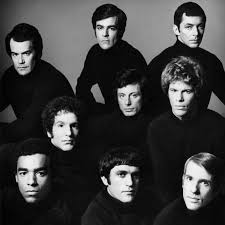
William Friedkin
As we saw in the 2020 remake, Mart Crowley’s play “The Boys in the Band” has stood the test of time beautifully. The original adaptation, directed by William Friedkin before he made “The French Connection,” “The Exorcist,” and, unfortunately, “Cruising,” is essential viewing for every gay man. The story unfolds at a birthday party for Harold, attended by his gay friends.
Michael, the host, provokes the group with a cruel party game that forces each man to call someone they’ve loved. The arrival of Alan, Michael’s ostensibly straight college roommate, heightens tensions and exposes the fragility of the group’s self-images. The standouts are Kenneth Nelson, Leonard Frey, and Cliff Gorman. Gorman gets extra kudos for playing the flamboyant Emory – he is stunningly good, and he was straight!
The tragic epilogue is that the five real-life gay actors (including Leonard Frey, who was Oscar-nominated for his supporting role in “Fiddler on the Roof”) – and, to some extent, the straight actors, Cliff Gorman, Peter White and Laurence Luckinbill – were all unemployable in major roles after the film’s release, and all died of AIDS-related illnesses within seven years of one another in the late eighties and early nineties.
GAY CHARACTERS
*Michael (Kenneth Nelson) *Harold (Leonard Frey) *Emory (Cliff Gorman) *Donald (Frederick Combs) *Hank (Laurence Luckinbill) *Larry (Keith Prentice) *Cowboy Tex (Robert La Tourneaux) *Bernard (Reuben Greene)
AND THEN…
Michael’s ostensibly straight roommate Alan (Peter White)
GAY ACTORS
ACTOR: Kenneth Nelson (RIP 1993 AIDS-related illness)
ACTOR: Leonard Frey (RIP 1988 AIDS-related illness)
ACTOR: Frederick Combs (RIP 1992 AIDS-related illness)
ACTOR: Robert La Tourneaux (RIP 1986 AIDS-related illness)
ACTOR: Keith Prentice (R.I.P. 1992 AIDS-related illness)
The gay writer of the play, Mart Crowley, died of a heart attack at the age of 84 in 2020.
Straight actor Peter White, who played Alan, Michael’s ostensibly straight roommate, died from melanoma in 2023 at the age of 86.
Straight actor Cliff Gorman, who played the flamboyant Emory, died from leukemia in 2002, aged 65.
Straight actor Laurence Luckinbill has been alive and well, happily married to Lucie Arnaz, since 1980.
Actor Reuben Greene, who played Bernard, always insisted that he was straight. He gradually drifted under the radar and was last heard from around 2000.
Actor Cliff Gorman and his wife Gail took care of Robert La Tourneaux before his death.
NOW STREAMING ON AMAZON PRIME AND APPLE TV+
24. Diary of a Mad Housewife (1970)
A+
Frank Perry
LGBTQ+ CHARACTER
*George Prager (Frank Langella)
The final collaboration between director Frank Perry and his screenwriter wife, Eleanor, was also their finest. Diary of a Mad Housewife, adapted from Sue Kaufman’s bestseller, is a razor‑sharp portrait of upper‑middle‑class suffocation. Carrie Snodgress is magnificent as Tina Balser, a woman who receives no respect from anyone in her life—least of all her petulant, status‑obsessed husband (Richard Benjamin, then at the height of his acting career) or her equally self‑absorbed lover (Frank Langella, making a striking film debut).
The film’s one sour note—very much a product of its era—is the revelation that Langella’s character is gay, a lazy narrative device meant to “explain” his cruelty and emotional sadism toward Tina.
Snodgress is breathtaking, delivering a performance of such wounded intelligence and quiet fury that she should have walked away with the Oscar for Best Actress. Instead, she lost to Glenda Jackson in Women in Love.
Adding to the film’s countercultural texture is a cameo by Alice Cooper and his band, who appear during a raucous party sequence performing “Ride with Me Baby.”
NOW STREAMING ON YOUTUBE
25. The Private Life of Sherlock Holmes (1970)
A-
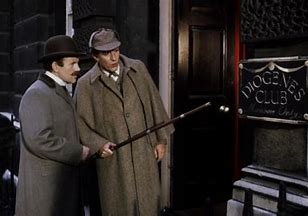
Billy Wilder
LGBTQ+ CHARACTER
*Sherlock Holmes (Robert Stephens)
Billy Wilder’s The Private Life of Sherlock Holmes is an affectionate, gently parodic, and quietly melancholic reimagining of the Holmes–Watson partnership—one that flirts openly with queer subtext and, in Wilder’s original conception, would have made Holmes’s repression unmistakably explicit. What survives of the film (after United Artists made some major cuts to Wilder’s preferred 200+ minute version) remains one of the most underrated works in his canon: elegant, wistful, and far more emotionally revealing than its reputation suggests.
I should have been more daring. I have this theory. I wanted to have Holmes homosexual and not admitting it to anyone, including maybe even himself. The burden of keeping it secret was the reason he took dope.
Billy Wilder: Gemünden, Gerd (2008). A Foreign Affair: Billy Wilder’s American Films. Brooklyn: Berghahn Books. p. 147. ISBN 978-1-78533-475-7.
Set in August 1887, the story begins when the great detective (Robert Stephens, in his finest screen performance) is approached by the celebrated Russian ballerina Madame Petrova. She wishes to have a child and proposes Holmes as the father, hoping their offspring will combine her beauty with his intellect. Cornered, Holmes extricates himself by claiming that Dr. Watson (Colin Blakely) is his lover—a deflection that is both comic and telling. The rumor spreads instantly, and Watson, mortified, confronts Holmes at Baker Street. When he asks whether Holmes has ever had relationships with women, Holmes replies that Watson is “being presumptuous,” a line delivered with such brittle delicacy that it becomes the film’s emotional hinge. Wilder later admitted that he intended Holmes to be a repressed homosexual; the surviving film preserves that intention in glances, hesitations, and evasions.
Stephens and Blakely create the most intimate Holmes–Watson pairing ever put on screen. Their domestic scenes have the texture of a long, complicated marriage—full of affection, irritation, and unspoken dependence. Wilder treats their relationship not as parody but as a gently subversive acknowledgment of what audiences had always sensed: that the bond between these two men is deeper, stranger, and more emotionally entangled than Victorian decorum allowed.
Geneviève Page brings a beautiful, melancholy gravity to the role of Gabrielle Valladon, the German spy whose secret love for Holmes becomes the film’s quiet tragedy. Her scenes with Stephens shimmer with longing—not for a conventional romance, but for the emotional openness Holmes cannot give.
The Russian Ballet/Tchaikovsky sequence is a miniature Wilder masterpiece: a feather‑light operetta of innuendo, timing, and queer historical wit. Wilder’s joke about Tchaikovsky’s sexuality is delivered with such elegance that it becomes both a punchline and a confession.
Co‑written with I.A.L. Diamond, the film is a late‑career summation of Wilder’s fascination with masks, performance, and the emotional cost of repression. Like Sunset Boulevard, Some Like It Hot, and The Apartment, it is a story about people hiding in plain sight—except here the mask is sexual identity, and the tragedy is that Holmes cannot remove it even for the one person who loves him most.
A wounded, lyrical gem. One of Wilder’s best.
NOW STREAMING ON AMAZON PRIME VIDEO, APPLE TV+, YOU
26. The Conformist (1970)
A+
Bernardo Bertolucci
LGBTQ+ CHARACTERS
*Marcello (Jean-Louis Trintignant)
*Anna (Dominique Sanda)
*Lino the chauffeur (Pierre Clementi)
LGBTQ+
PRODUCTION DESIGNER: Ferdinando Scarfiotti
One of the most influential films ever made, Bernardo Bertolucci’s “The Conformist” tells the story of a sexually repressed gay man who, because of his relationship with a household servant in his youth, desperately wants to conform in society to the point of working for Mussolini’s Fascist secret police.
The film left an indelible impression on the young directors of the New Hollywood of the early 1970s, particularly Francis Coppola’s “Godfather” Trilogy and Paul Schrader’s “American Gigolo” and Mishima.” Cinematographer Vittorio Storaro’s visuals had a profound influence on Gordon Willis and John Bailey. Schrader also utilized Bertolucci’s production designer, Ferdinando Scarfiotti, as his visual consultant on many of his early films. Using Art Deco, the dominant architecture of the day, as a backdrop to this film’s narrative, the partnership of Bertolucci, Storaro and Scarfiotti changed the look of Cinema forever.
It’s 1938, in Paris, and Marcello Clerici (Jean-Louis Trintignant) leaves his wife Giulia (Stefania Sandrelli) in their hotel room and finalizes his preparations to assassinate his former college professor, Luca Quadri (Enzo Tarascio), an anti-Fascist who has fled Italy for safety reasons. From here, the film goes into a series of flashbacks. In one, we see Marcello as a boy picked up from school by the family chauffeur, Lino (Pierre Clementi). Lino is both a Fascist and a pedophile, and he tries to rape Marcello. There is a gun, Marcello shoots Lino and runs away, thinking that he has committed murder. During their visit to Paris from Italy, the two couples have become friendly, with Marcello having a romantic fling with Quadri’s wife Anna (Dominique Sanda), who in turn has a crush on Giulia. The two women have a slow dance with one another, which is another seminal moment in Cinema. Nothing like this had been seen since the days of Marlene Dietrich. From today’s perspective, the scene reeks of the male gaze, but it still packs a punch.
Bertolucci is a contradiction. His tastes were catholic, but he was raised Catholic. And while he revels in the risqué value of a lesbian dance, he cannot quite get his head around homosexuality and its perceived relationship to pedophilia and Fascism. The conformist conforms because of his sexuality, and when Fascism collapses, he has nothing left.
Adapted by Bertolucci from the novel by Alberto Moravia of the same name. Oscar nomination for Best Adapted Screenplay.
NOW SHOWING ON AMAZON PRIME, APPLE TV+ AND YOUTUBE
27. Death in Venice (1971)
A-
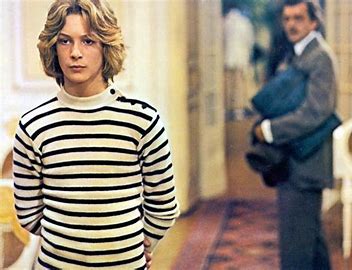
Luchino Visconti
LGBTQ+ CHARACTER
*Gustav von Aschenbach (Dirk Bogarde)
LGBTQ+
DIRECTOR: Luchino Visconti
SCREENWRITER: Luchino Visconti
ACTOR: Dirk Bogarde
PRODUCTION DESIGN: Ferdinando Scarfiotti
WOULDN’T YOU DIE WITHOUT MAHLER?
Maureen Lipman as Trish in “Educating Rita”
Gustav von Aschenbach (played by Dirk Bogarde), a German composer modeled after Thomas Mann’s literary character (see below), arrives in Venice hoping for peace and renewal. He encounters Tadzio, a Polish adolescent whose beauty embodies the perfection Aschenbach has long sought in art. Aschenbach becomes increasingly captivated, watching Tadzio from afar, interpreting him as a symbol of idealized beauty and purity. Venice is quietly suffering from a cholera epidemic, which authorities attempt to conceal from tourists. The disease symbolizes corruption and mortality, undermining Aschenbach’s pursuit of beauty. Aschenbach’s obsession deepens even as his health deteriorates. He undergoes a grotesque makeover to appear youthful, further highlighting his decline. On the beach, Aschenbach watches Tadzio one last time as the boy gestures toward the horizon. Overcome, Aschenbach collapses and dies, his vision of beauty forever unattainable.
After “The Damned,” director Luchino Visconti and actor Dirk Bogarde collaborated on adapting the Thomas Mann 1912 novella “Death in Venice.” The result is a gorgeous, if somewhat slow-moving, tour de force. Visconti’s (and co-writer Nicola Badalucco) inspiration was to change von Aschenbach’s profession from a writer to a composer, thus opening up the movie to Gustav Mahler’s Adagietto from his Symphony No. 5.
Tadzio, the composer’s object of beauty, was presented to the world after a massive Visconti-led talent search. The actor’s name is Bjorn Andresen, who, contrary to general opinion, did NOT vanish from the face of the Earth after the movie was completed. He was recently seen, to significant effect, in Ari Aster’s “Midsommar”.
NOW STREAMING ON AMAZON PRIME, APPLE TV+, YOUTUBE
28. The Garden of the Finzi-Continis (1971)
A-
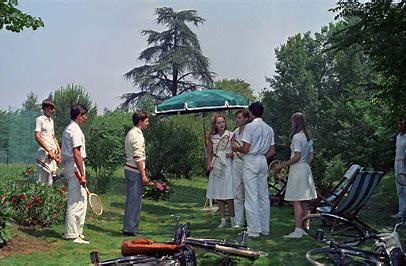
Vittorio De Sica
LGBTQ+ CHARACTER
*Alberto Finzi Contini (Helmut Berger)
LGBTQ+
ACTOR: Helmut Berger
SOURCE MATERIAL: Giorgio Bassani (based on his novel)
Directed by Vittorio De Sica, “The Garden of the Finzi-Continis” is based on the semi-autobiographical novel by gay Italian writer Giorgio Bassani. Alberto is the scion of a wealthy Jewish family in Fascist Italy. The film contrasts his sheltered life inside their garden with the growing persecution outside. He is played by gay actor Helmut Berger, who we last saw in Visconti’s “The Damned.” This is a very different performance; all brooding understatement, as opposed to Marlene in drag.
WINNER BEST FOREIGN-LANGUAGE FILM 1971
Alberto is reserved and shy, and clearly in love with his friend Malnate, a young man with an imposing physical presence and communist leanings, played by Fabio Testi. He delights in Fabio’s company and even reacts jealously when he senses that his sister Micol (Dominique Sanda) and Malnate may be getting closer.
Will Alberto’s love be reciprocated? Since the Finzi Contini’s are living on borrowed time, the odds are against it. Beyond their wall-off compound, the Jews of Mussolini’s Italy are being rounded up with an express ticket to the concentration camps.
Oscar-nominated Best Adapted Screenplay by De Sica and Ugo Pirro.
NOW STREAMING ON AMAZON PRIME AND APPLE TV+, YOUTUBE
29. Sunday Bloody Sunday (1971)
(A)
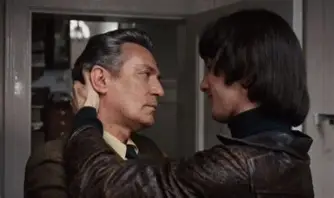
John Schlesinger
LGBTQ+ CHARACTERS
*Daniel Hirsh (Peter Finch)
*Bob Elkin (Murray Head)
LGBTQ+
DIRECTOR: John Schlesinger
FEATURES THE FIRST AFFECTIONATE ON-SCREEN KISS BETWEEN TWO MEN IN A TALKING MOTION PICTURE
John Schlesinger’s Sunday Bloody Sunday remains one of the most quietly revolutionary films of the early 1970s—a mature, compassionate study of a bisexual triangle that refuses melodrama in favor of emotional truth. At its center is Bob Elkin (Murray Head), a young sculptor whose restless charm binds two lovers who know about each other yet accept the arrangement rather than lose him: Alex Greville (Glenda Jackson), a divorced recruitment consultant, and Dr. Daniel Hirsh (Peter Finch), a middle‑aged gay Jewish physician.
The film’s brilliance lies in its refusal to judge any of them. Instead, Schlesinger observes how loneliness, compromise, and the hunger for connection shape their choices. Although the narrative initially seems to tilt toward Alex—Jackson’s intelligence and volatility make her the more conventional “romantic lead”—it is Finch who ultimately deepens the film. His Daniel is one of the first unapologetically gay characters in mainstream cinema: self‑possessed, emotionally articulate, and free of the self‑loathing that marked so many queer roles of the era. Compared to the tortured souls of Midnight Cowboy, Finch’s doctor is practically radiant.
His closing monologue, delivered directly to the camera—“I am happy, apart from missing him”—is one of the great grace notes in queer film history: tender, dignified, and devastating in its simplicity. It is also one of the finest pieces of acting ever captured on film.
Keep an eye out for a very young Daniel Day‑Lewis in a blink‑and‑you’ll‑miss‑it appearance.
Penelope Gilliatt’s original screenplay received an Oscar nomination, as did Jackson and Finch, whose performances remain the film’s enduring legacy.
NOW STREAMING ON AMAZON PRIME, APPLE TV+, YOUTUBE
30. The Boyfriend (1971)
C+
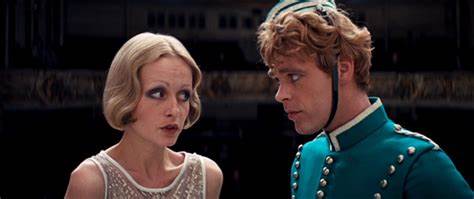
Ken Russell
LGBTQ+
ACTOR: Max Adrian
CINEMATOGRAPHER: David Watkin
Sandy Wilson’s 1953 stage musical The Boyfriend was an homage to The Show Must Go On Warner Bros. musicals of the early to mid-thirties – 42nd Street and the Gold Digger movies. Director Ken Russell uses this intro to give us one campy, visually extravagant Busby-Berkeley-esque number after another. Thanks to cinematographer David Watkin – he was one of the few OUT gay cinematographers – the film looks good, and it ranks with Women in Love and Altered States as one of Russell’s best films.
THE PLOT: A shabby British seaside theatre troupe is performing a 1920s-style musical called The Boy Friend. The star breaks her ankle, so the timid assistant stage manager, Polly Browne (Twiggy – rather good in her movie debut), must go on in her place.
Although not explicitly gay, the film is filled with camp theatrical energy, exaggerated male dancers, coded glances and mannerisms, a backstage world where gender roles blur, and gay actor Max Adrian as Lord Brockhurst, the wealthy, eccentric aristocrat who attends the film’s show-within-a-show, bringing his trademark queer-coded presence. The Boyfriend is unmistakably queer in tone, style, and sensibility, putting it very much in line with Russell’s other 1970s work.
Streaming on AppleTV+ and Amazon Prime Video.
31. Cabaret (1972)
A+
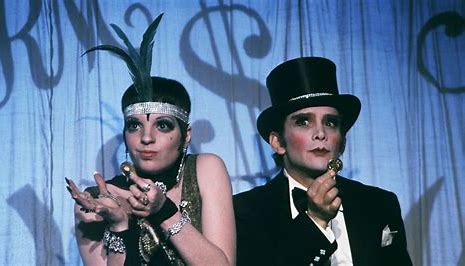
Bob Fosse
LGBTQ+ CHARACTERS
*Brian (Michael York)
*Baron Maximillian (Helmut Griem)
LGBTQ+
SOURCE MATERIAL: Christopher Isherwood (based on his book “Berlin Stories”)
SOURCE MATERIAL: John Van Druten (based on his play “I am a Camera”)
SOURCE MATERIAL: John Kander and Fred Ebb (the musical “Cabaret” with music by Kander and lyrics by Ebb)
MUSIC ARRANGEMENT: Ralph Burns
RESEARCH CONSULTANT: Hugh Wheeler
Fuck Maximillian !
BRIAN to SALLY – CABARET
I do!
SALLY to BRIAN – CABARET
So do I!
BRIAN to SALLY – CABARET
For a gay man, these are some of the sweetest words ever spoken on film.
Set in Berlin in 1931, in the dying light of the Weimar Republic, the film unfolds less than two years before the Nazi Party seizes power. We move through this precarious world with Brian (Michael York), the delectable Miss Sally Bowles (Liza Minnelli), and the enigmatic Baron Maximilian (Helmut Griem).
Cabaret emerges from a remarkable artistic lineage: the 1966 Broadway musical by Kander and Ebb, itself drawn from Christopher Isherwood’s semi‑autobiographical Berlin Stories (1945) and John Van Druten’s 1951 play I Am a Camera. Under Bob Fosse’s revolutionary direction and choreography—and with Minnelli’s incandescent performance—the film stands as one of the defining achievements of the New Hollywood era.
And presiding over it all is Joel Grey’s irrepressible Master of Ceremonies, guiding us through the Kit Kat Club with those unforgettable Kander and Ebb numbers – performed by himself and Minnelli – each one a glittering, sinister pulse that mirrors the world outside:
Maybe This Time
Mein Herr
Money Money
Willkommen
Two Ladies
If You Could See Her
Cabaret
Tomorrow Belongs to Me
The screenplay, adapted byJ. Presson Allen from all three sources, also bears the subtle imprint of gay writer Hugh Wheeler, credited as “Research Consultant,” whose sensibility helps anchor the film’s blend of decadence, danger, and queer subtext.
WINNER OF EIGHT OSCARS, THE MOST ACCUMULATED BY A FILM THAT DID NOT WIN BEST PICTURE – OSCAR 1972
Best Film: Cy Feuer, producer (Nominated)
Best Director: Bob Fosse (WIN)
Best Actress: Liza Minnelli (WIN)
Best Supporting Actor: Joel Grey (WIN)
Best Adapted Screenplay: Jay Presson Allen (Nominated)
Best Cinematography: Geoffrey Unsworth (WIN)
Best Editing: David Bretherton (WIN)
Best Production Design: Hans Jurgen Kiebach and Rolf Zehetbauer (Art Direction), Herbert Strabel (Set Direction) (WIN)
Best Music Adaptation: Ralph Burns (WIN)
Best Sound: Robert Knudson and David Hildyard (WIN)
Of its ten nominations, it won eight, losing to “The Godfather” in the Best Film and Adapted Screenplay categories. Astonishingly, costume designer Charlotte Fleming was not nominated for her incredible wardrobe. Some say it was because she was based in Berlin and not Hollywood. However, this also applied to the Production Design team, and it did not stop them from not just getting nominated but also winning. Michael York was also unlucky in not being nominated (he never has). Still, it was a particularly competitive year in the Best Actor category, with even Al Pacino being ridiculously moved into the Best Supporting category. The eventual lineup consisted of Marlon Brando (“The Godfather”), Laurence Olivier (“Sleuth”), Michael Caine (“Sleuth”), Peter O’Toole (“The Ruling Class”) and Pete Winfield (“Sounder”). Brando won the award, which he refused to accept, sending Native American actress Sacheen Littlefeather as his proxy.
NOW STREAMING ON AMAZON PRIME, APPLE TV+, YOUTUBE
32. Deliverance 1972
A+

John Boorman
Screenplay by James Dickey based on his novel
Cinematography: Vilmos Zsigmond
Music Eric Weissberg (Dueling Banjos)
Editor: Tom Priestley
It is one of the most discussed moments in American cinema because of how bluntly it exposes the film’s core themes: vulnerability, masculinity, and the collapse of civilized identity in the wilderness.
Ed (Jon Voight) and Bobby (Ned Beatty) are separated from their other two buddies while navigating the Georgia backwoods. They encounter two-armed locals who quickly overpower them. The men humiliate and terrorize Bobby, culminating in a sexual assault. Ed is forced to watch, held at gunpoint, until one of the attackers prepares to harm him as well. The assault is interrupted when Lewis (Burt Reynolds) arrives and kills one of the assailants with an arrow.
The scene is not meant as exploitation; it’s the film’s turning point. It shatters the group’s illusion of control and forces them into a moral crisis about violence, survival, and the thin line between victim and perpetrator. The film strips away the veneer of rugged male competence. Bobby’s assault is the moment where the men’s fantasy of conquering nature collapses. Boorman isn’t depicting real rural Southerners; he’s dramatizing the city men’s fear of the “other,” turning the wilderness into a psychological landscape. The cover‑up, the paranoia, and the fight for survival that follow are the film’s true engine. The assault is the catalyst, not the endpoint.
Beatty’s work is astonishingly brave for a debut role. He plays the aftermath—shame, anger, and the need to reassert dignity—with a precision that keeps the film from slipping into caricature.
Warner Bros.
Streaming on Apple TV+, Amazon Prime Video and YouTube
33. Pink Flamingos (1972)
Rated (C) (Solo)
High Camp at a Midnight Screening
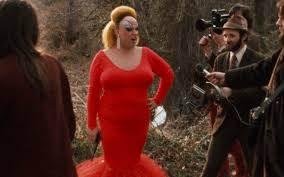
John Waters
LGBTQ+ CHARACTER
*Babs Johnson (Divine)
LGBTQ+
DIRECTOR: John Waters
ACTOR: Divine né Harris Glenn Milstead
ACTOR: David Lochary
After two under-the-radar curiosities, John Waters and his star, the fabulous drag queen Divine (né Harris Glenn Milstead), arrived on the scene in the fall of 1972 with Pink Flamingos, a very sick-and-twisted black comedy and the first part of his “Trash Trilogy”, which also includes “Female Trouble” (1974) and “Desperate Living” (1977). Divine plays Babs Johnson, a criminal who is proud to be the filthiest person alive. While living in a trailer with her mother, Edie (Edith Massey), and companion Cotton (Mary Vivian Pearce), she is confronted by the Marbles (David Lochary and Mink Stole), a pair of criminals envious of her reputation who try to outdo her in filth. The scene in which Divine eats dog poop is not for the faint of heart.
Supplemental material: The Dreamlanders
Pink Flamingos is not available for streaming. However, the DVD can be purchased on Amazon.
34. The Bitter Tears of Petra Von Kant (1972)
A+
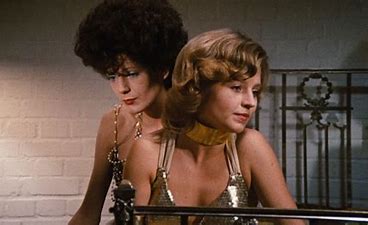
Rainer Werner Fassbinder
LGBTQ+ CHARACTERS
*Petra von Kant (Margit Carstensen)
*Marlene (Irm Hermann)
*Karin (Hanna Schygulla)
LGBTQ+
PRODUCER: Rainer Werner Fassbinder
DIRECTOR: Rainer Werner Fassbinder
SCREENWRITER: Rainer Werner Fassbinder
PRODUCTION DESIGNER: Kurt Raab
In the city late tonight
Double feature, black and white (sic)
Bitter Tears and Taxi to the Klo
Find a bar, avoid a fight
Show your papers, be polite
Walking home with nowhеre else to goTom Robinson “Atmospherics” from the 1984 album “War Baby”
QUEER CINEMA MEETS NEW GERMAN CINEMA
AFTER FASSBINDER’S UNTIMELY DEATH IN 1982, AN ENTIRE MICROECONOMY OF GERMAN FILMMAKING COLLAPSED OVERNIGHT
SORRY, TOM ROBINSON. BOTH “BITTER TEARS’ AND “TAXI ZUM KLO” ARE IN COLOR!
A landmark in both Queer Cinema and the New German Cinema, writer/director/producer/ Rainer Werner Fassbinder’s examination of the dynamics of a lesbian love triangle was shot, in true Fassbinder fashion, over a few hours in der Wunderkind’s apartment. However, “Petra Von Kant” remains as influential today as it was in 1972. Based on Fassbinder’s play, it takes place entirely in the home of its eponymous heroine, an outrageously spoiled fashion designer. When a new sexually fluid young thing arrives from Australia (Hanna Schygulla), Petra (Margit Carstensen) begins to turn her attention away from her loyal friend and caretaker, Marlene (Irm Hermann), leading the viewer down avenues of emotional codependency you never knew existed. If the plot sounds familiar, it was remade in 1998 by Lisa Cholodenko as “High Art” with Ally Sheedy, Patricia Clarkson, and Radha Mitchell.
Singer/songwriter Tom Robinson immortalized the movie in his song “Atmospherics: ListentotheRadio”(co-written with Peter Gabriel) from his 1984 album “Hope and Glory.” He pairs it with another gay classic, Frank Ripploh’s “Taxi zum Klo” (see below – film number 75, the last one in this series). Presumably, for rhyming, Gabriel and Robinson say that both movies are in black and white. Sorry, guys, they are both in color.
Michael Ballhaus did the cinematography. Kurt Raab, famed German actor and frequent Fassbinder collaborator did the production design. Maja Lemcke designed the astonishing costumes.
Supplemental material: Fassbinder Revisited: A Cinematic Journey.
NOW STREAMING ON AMAZON PRIME, APPLE TV+, MAX (YOUTUBE), THE CRITERION COLLECTION
35. Everything You Always Wanted to Know About Sex *
“What Happens During Ejaculation?” (1972)
*A-

Woody Allen
Woody Allen’s 1972 anthology comedy adapts Dr. David Reuben’s pop‑psychology bestseller by turning each chapter title into a standalone sketch. The result is a seven‑part grab‑bag of parodies—of television, Italian art cinema, medieval farce, monster movies, and even science‑fiction—linked only by their shared obsession with human sexual anxiety.
WHAT IF IT’S A HOMOSEXUAL ENCOUNTER!
*SKETCH NUMER 7: WHAT HAPPENS DURING EJACULATION?
The film’s most famous sketch: a science‑fiction control room inside the male body, where white‑clad technicians coordinate the mechanics of arousal, fear, and climax. Woody is one of the competing sperm determined to penetrate that egg. Our boys have been in training for weeks. But wait! What if it’s homosexual encounter? There’s also a Black sperm! How did he get in the mix?
With an inspired cameo by Burt Reynolds as one of the burley technicians whose job it is to get that penis erect.
The other sketches, all of which are flaccid by comparison are:
1. “Do Aphrodisiacs Work?”
2. “What Is Sodomy?”
3. “Why Do Some Women Have Trouble Reaching an Orgasm?”.
4. “Are Transvestites Homosexuals?”
5. “What Are Sex Perverts?”
6. “Are the Findings of Doctors and Clinics Accurate?”
*THE RATING IS FOR THE EJACULATION SKETCH, ONLY.
Streaming on Apple TV+, Amazon Prime Video and YouTube.
36. Pete ‘n’ Tillie (1972)
B-
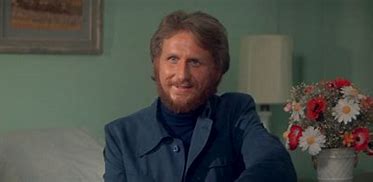
Martin Ritt
LGBTQ+ CHARACTER
*Jimmy Twitchell (René Auberjonois)
Tillie (Carol Burnett) is a single woman in her late thirties when, at a party, she’s introduced to Pete (Walter Matthau), a confirmed bachelor whose charm lies in his curdled misanthropy. On their first date, when Tillie offers him a choice of beverages, he replies, “Whatever’s the most trouble.” It’s the best line in the film—and it arrives far too early.
Before long, they’re married and unexpectedly blessed with a child, Robbie (Lee Montgomery), despite Pete’s loudly professed atheism. The years pass, the marriage settles into a workable if imperfect rhythm, and then tragedy strikes: nine-year-old Robbie is diagnosed with a fatal illness.
Both Burnett and Matthau were at the height of their powers in 1972—Matthau would deliver his greatest screen performance the very next year in Don Siegel’s Charley Varrick—but Pete ’n’ Tillie never rises to meet them. The film is curiously flat, as if the stars are afraid to push past the script’s limitations. It has the look and feel of a “TV movie of the week” from the era when that phrase was an insult.
After Robbie’s death, Pete and Tillie grieve along separate tracks. Pete moves out, drinks heavily, and drifts into affairs. Tillie leans on her best friend, Gertrude—played by Geraldine Page, earning her fifth of eight Oscar nominations. Page gets comic mileage out of Gertrude’s refusal to divulge her age, and she participates in a long, operatic catfight with Burnett that later inspired the Anne Bancroft–Shirley MacLaine brawl in The Turning Point (1977). But despite my deep admiration for Page, this is one of her least distinguished performances, and the nomination feels generous.
Tillie’s other confidant is Jimmy, the film’s token gay friend, played by René Auberjonois—whose name alone is one of the era’s great cinematic credits. Jimmy’s defining trait is that he knows Gertrude’s real age (of course he does). Otherwise, he’s written as a kind of sexless saint, a man with no interior life whose sole purpose is to tend to Tillie’s emotional needs. He even offers to marry her if it would make her happy—an act of devotion that’s meant to be touching but lands as another example of the era’s one-dimensional “helpful gay” archetype.
The screenplay, nominated for an Oscar, was written by Julius J. Epstein of Casablanca fame. But neither Epstein nor director Martin Ritt seems willing to push the material beyond its safe, middlebrow boundaries. The result is a film with two great stars, a prestigious pedigree, and a story that never quite finds its pulse.
NOW STREAMING ON YOUTUBE
37. Play It as It Lays (1972)
C-
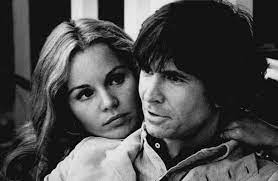
Frank Perry
LGBTQ+ CHARACTER
*BZ. Mendenhall (Anthony Perkins)
LGBTQ+
ACTOR: Anthony Perkins
Frank Perry’s Play It as It Lays is a bleak, sun‑scorched portrait of psychic collapse—an adaptation of Joan Didion’s novel that exposes, perhaps unintentionally, the creative void left by the absence of Eleanor Perry, his longtime screenwriting partner and the emotional architect of his best work. This was Perry’s first film after their divorce, and her absence is felt in every hollow space the film cannot fill.
Perry collaborated with Didion and her husband, John Gregory Dunne, on the screenplay, and the result is a film that captures Didion’s chill but not her interiority. Tuesday Weld plays Maria Wyeth, a drifting actress who wanders the grounds of a mental hospital, recalling the chain of betrayals, abortions, and emotional abandonments that led to her breakdown. Her husband (Adam Roarke), a self‑absorbed director, neglects her; her lovers blur into one another; her pregnancy ends in an illegal abortion; and her only true companion is B.Z., a gay producer played by Anthony Perkins with a weary, brittle elegance.
B.Z. is the film’s most overtly queer presence, though the role is underwritten—another iteration of the “doomed homosexual” trope that Perkins, through no fault of his own, was repeatedly asked to embody. His final scene, in which he invites Maria into a suicide pact, should devastate. Instead, it feels like a foregone conclusion, a gesture toward tragedy rather than an earned emotional crescendo.
The film’s most vivid sequences are the ones in which Maria drives endlessly along Los Angeles freeways. In the early 1970s, these concrete ribbons were still considered marvels of modern engineering, and Perry shoots them as existential corridors—vast, impersonal, and strangely beautiful. In these moments, the film briefly comes alive, finding a cinematic equivalent to Didion’s interior monologue: movement without direction, freedom without purpose.
Weld is good—cool, opaque, and quietly anguished. Perkins is compelling but constrained by the script’s thinness. The rest of the film drifts, elegant but inert, a mood piece in search of a pulse.
Play It as It Lays belongs in this survey not because it is a great film, but because it is a perfect artifact of its moment: Hollywood nihilism, queer despair, and the collapse of meaning in the wake of the studio system’s demise. It is Didion’s California rendered in images—sun‑bleached, airless, and quietly lethal.
NOW STREAMING ON YOUTUBE
.
38. That Certain Summer (1972)
A-

Lamont Johnson
LGBTQ+ CHARACTER
*Doug (Hal Holbrook)
*Gary (Martin Sheen)
ABC movie of the week, November 1, 1972.
Doug Salter (Hal Holbrook) is a middle‑aged, divorced man who lives a quiet, respectable life in the Bay Area. His teenage son Nick (Scott Jacoby) comes to stay with him from LA for part of the summer. Doug’s “friend,” Gary (Martin Sheen), is introduced to Nick as simply a close companion. The two men have been partners for several years, but Doug has never come out to his son. When Nick accidentally discovers the truth, he reacts with confusion, anger, and betrayal.
Nick slowly begins to understand. The film ends on a note of tentative reconciliation, not melodrama: a father and son beginning the long work of rebuilding trust.
That Certain Summer was the first network TV movie to depict a gay man as a loving parent rather than a deviant or tragic figure. Its restraint is its power, thanks to the expert direction of Lamont Johnson, who had a way with queer topics, and the acting of the three leads. With Hope Land as Nick’s mom.
One of three TV movies that made the list – the others are The Naked Civil Servant, from 1975 and Paul’s Case, also directed by Johnson, from 1980.
Unfortunately, That Certain Summer is not currently available on any major streaming service. It is also NOT available to rent or buy on major platforms.
39. Sleeper (1973)
A-
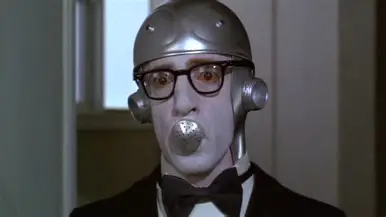
Woody Allen
LGBTQ+ Characters
Gay host: George Furth (uncredited)
Reagan, the gay robot: voiced by Douglas Rain (uncredited)
LGBTQ+
ACTOR: George Furth
Sleeper is a 1973 American science fiction comedy film directed by and starring Woody Allen, who co-wrote it with Marshall Brickman. Parodying a dystopic future of the United States in 2173, the film involves the misadventures of the owner of a health food store who is cryogenically frozen in 1973 and defrosted 200 years later in an ineptly led police state.
While on the run from the police with his kidnapped victim, Diane Keaton, Woody happens upon a gay household presided over by a hilarious George Furth (uncredited), who has a gay Robot named Reagan – the film was released the same month as The Exorcist. When Keaton asks if he or his partner has a Hydrovac suit to use on a Space Shuttle, the dialogue is as follows:
Furth’s character:
Reagan, bring me out my Hydrovac suit, right this minute
41
Reagan:
Here’s your silly old Hydrovac suit. I could hardly find it, there’s such a mess in that bedroom!
Turns out Reagan is voiced by Douglas Rain (also uncredited), the Canadian voice artist who also did the sibilant lisping for another cantankerous AI phenomenon: the HAL 9000 computer in 2001: A Space Odyssey.
It’s pre-Annie Hall Woody Allen at his best.
Sleeper is not available for streaming. DVDs and Blu-rays are available from AMAZON.
40. Summer Wishes, Winter Dreams (1973)
B-
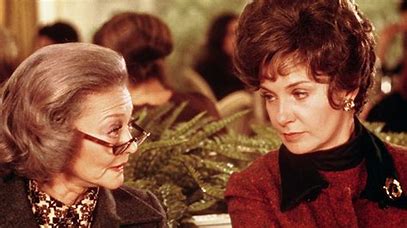
Gilbert Cates
LGBTQ+ CHARACTER
*Bobby Walden (Ron Rickards)
“Summer Wishes, Winter Dreams” (1973) is a poignant drama about a New York housewife confronting midlife crisis, regret, family estrangement, and the sudden death of her mother.
In 1973, four years before Woody Allen began presenting various interpretations of Manhattan in his films, from “Annie Hall” (1977) to “Melinda and Melinda” (2004), Gilbert Cates delivered a film that was notably Allenesque in its own right: “Summer Wishes, Winter Dreams.” This is a Manhattan where the leading lady shops at Saks, dines at excellent restaurants, and enjoys pleasant afternoons viewing screenings of Ingmar Bergman’s “Wild Strawberries” at a revival house with her mother.
The character Rita Walden, portrayed beautifully by Joanne Woodward in what might be her finest performance, faces a midlife crisis triggered by her mother’s death—a role magnificently played by Sylvia Sidney, who also received an Oscar nomination. Rita must handle her mother’s estate while questioning her choice to marry her ophthalmologist husband, played by Martin Balsam, who delivers a beautifully understated performance—quite different from his role as “The Fag” in the previous year’s “The Anderson Tapes,” a performance that dominates the latter half of the film.
Rita’s son Bobby (Ron Rickards), who has moved to Amsterdam and is essentially out of touch, is gay. He appears only in one scene, which is portrayed in a rather creepy and homophobic manner. Woodward’s character inadvertently intrudes on a potentially intimate moment between him and his “friend” in Bobby’s bedroom. Bobby behaves disgustingly, reminiscent of the negative portrayals often seen in Hollywood films featuring gay male characters. Meanwhile, his friend, a ballet dancer, continues to perform pirouettes and demi-plies while maintaining a vaguely confrontational eye contact with Joanne. This flashback occurs as part of Rita’s dream after she dozes off during the aforementioned screening of “Wild Strawberries.”
The original screenplay was written by Stewart Stern, who treated the subject of homosexuality more sympathetically in films such as “Rebel Without a Cause” (original) and “Rachel, Rachel” (adapted).
NOW STREAMING ON YOUTUBE.
41. The Day of the Jackel (1973)
(A)
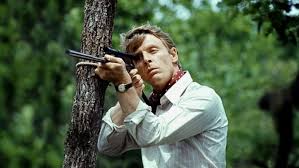
Fred Zinnemann
LGBTQ+ CHARACTER
*Jules Bernard (Anton Rodgers)
LGBTQ+
ACTOR: Derek Jacobi
What we have here is another example of a gay character whose sole purpose in the movie is to be killed.
In director Fred Zinnemann’s superb edge-of-your-seat 142-minute adaptation of Frederick Forsyth’s 1971 novel The Day of the Jackal, two innocent people are murdered as the French and English police forces – led by French actor Michel Lonsdale– try desperately to find The Jackal of the title. That is the code name of the hit man for hire who is planning to assassinate President Charles de Gaulle as he hands out medals on the Place du 18 Juin 1940, in Paris, on Liberation Day, 1963. The first murder is the result of a heterosexual affair, so it gets more attention. Also, this first victim is an upper-class French woman, Madame de Montpellier, who is played by the gorgeous French star Delphine Seyrig, then at the peak of her appeal following the release of “Last Year at Marienbad,” “Muriel” and “The Discreet Charm of the Bourgeoisie” with “Jeanne Dielman, 23, Quai du Commerce, 1080 Bruxelles” just around the corner. “The Jackal,” brilliantly played by Edward Fox, meets her at an expensive hotel, and later, as the police close in around him, he follows her to her mansion and, after she tells him that the police have been to see her, he kills her.
The second murder is the result of a homosexual affair, so it gets less screen time. Back in Paris, with the murder of Madame de Montpellier on the news stations and the police now knowing his nom de guerre and having alerted all of the hotels in Paris, “The Jackal” knows that he must find somewhere else to stay. So, barely escaping the police at the train station, he asks the taxi driver to take him to a Turkish Bath where, as he hoped, he is hit on by a French man named Jules Bernard (played by English actor Anthony “Anton” Rodgers) who invites him back to his home to spend the evening. All seems to go as planned until Jules overhears the newsflash on the television, and like Madame de Montpellier before him, he is immediately dispatched, in his case, to that great gay sauna in the sky.
This is another example of a gay character whose sole purpose in a movie is to be killed. Our consolation is that Zinnemann and Rodgers treat him with a modicum of respect – we get a glimpse of his life outside the bathhouse, and Rodgers manages to do his best with his few minutes of screentime. That his murder is a mirror image of Seyrig’s also eases the pain (a little).
Otherwise, I always sit back and enjoy this beautifully made film. It is a reminder of what a great director, Fred Zinnemann, could be when he worked from suitable material.
Openly gay actor Derek Jacobi is among the marvelous cast, a virtual who’s who of excellent English and French character actors, plus the occasional star!
Oscar Nomination for Best Editing of 1973: Ralph Kemplen
NOW STREAMING ON AMAZON PRIME, APPLE TV+, YOUTUBE, BFI CLASSICS
42. Save the Tiger (1973)
C-
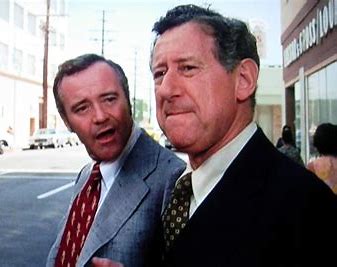
John G. Avildsen
LGBTQ+ CHARACTER
*Rico (Harvey Jason)
THE YEAR IS 1973. THE SETTING IS LOS ANGELES
MYER CAN NOT BE IN THE PLAYPEN WITH FAIRIES; EVEN TALENTED FAIRIES.
Jack Lemmon and Jack Gilford slip into a porn theatre at the Mayan, attend a fashion show at the Biltmore, and navigate the collapsing finances of their small apparel company. But the most revealing—and disturbing—aspect of Save the Tiger is its treatment of its only gay character. The film is a time capsule of how brutal 1973 could be for a gay man working in the entertainment-adjacent industries of Los Angeles.
The head seamster, Meyer (William Hansen), is a Holocaust survivor who has endured pogroms and displacement. Yet he cannot bring himself to speak the name of his colleague, the company’s head designer, played by Harvey Jason. Instead, he refers to him only as “the Fairy,” with a venom that lands harder than anything else in the film. The tragedy is not that the character is flamboyant or coded—it’s that he is meant to be a real human being, and the screenplay treats him with absolute contempt.
The Oscar-nominated script by Steve Shagan is a study in contradictions. Shagan, an educated Jewish writer, was capable of nuance in other areas, but when it comes to homosexuality, he is firmly in the Stone Age. The 1970s were rife with gay caricatures trotted out for cheap laughs by the reigning kings of Jewish-American comedy—Mel Brooks, Neil Simon, and their imitators. But Save the Tiger is different. Here, the gay character is not a punchline; he is a working professional whose very existence is treated as an affront. The film doesn’t mock him for comedy—it erases his dignity for drama.
And yet, there is much to admire. Shot on location in the garment district, the film has a gritty authenticity. Gilford is superb as the moral ballast of the story, and Thayer David steals his scenes as the arsonist with whom Lemmon and Gilford meet in the balcony of the Mayan while a porno film blares below. Lemmon, who won the Oscar, is slightly miscalibrated—too actorly, too aware of his own virtuosity—but still compelling.
John G. Avildsen directs with the same street-level realism he would later bring to Rocky, but the film’s queer subplot remains its most revealing artifact. Save the Tiger shows, without apology or self-awareness, how dehumanizing mainstream American cinema could be toward gay men in the early 1970s. It is not just a period piece—it is a reminder of the cultural violence that passed for normal.
NOW STREAMING ON AMAZON PRIME, APPLE TV, YOUTUBE
43. A Touch of Class (1973)
C–
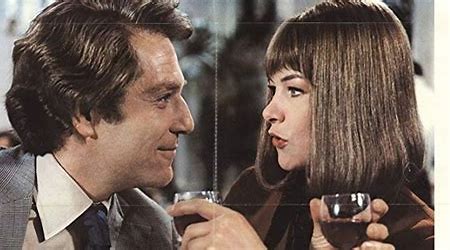
Melvin Frank
LGBTQ+ CHARACTER
*Cecil (Timothy Carlton Congdon Cumberbatch – uncredited)
“A Touch of Class” (1973) is a British romantic comedy about a married American man and a divorced British woman who begin a casual affair that unexpectedly turns into love, only to collapse under the weight of reality.
THE YEAR IS 1973. THE SETTING IS LONDON.
Our stars are Glenda Jackson and George Segal in Melvin Frank’s déclassée“ A Touch of Class,” a movie nobody sees today because the bloom has faded from the rose. Jackson’s Oscar for Best Actress is on a par with Jack Lemmon’s Best Actor for “Save the Tiger” that same year – utterly undeserved and the worst of that year’s five choices -Joanne Woodward’s reaction to her being named the winner is priceless. Her character works in the garment industry, so we are on “fairy alert,” and one of them does descend on her office just as Segal is visiting. He’s got a swishy fairy attitude, which he unwisely unleashes on Jackson as he minces about her desk. His name is Cecil, and he is played, unbelievably, in an uncredited part by Benedict Cumberbatch’s dad, Timothy Carlton Congdon Cumberbatch, who is known professionally as Timothy Carlton. Jackson wonders why a particular document is not typed. The dialogue is as follows:
You know I only type with one finger and (pause), I’ve hurt it
Cecil
Don’t tell me how!
Jackson, dripping contempt.
The rest of the movie… It’s a so-so romantic comedy. Utterly forgetful with some nice shots of London and a nice chemistry between the stars. Nothing more.
The, ahem, Oscar-nominated original screenplay is by Melvin Frank and Jack Rose.
NOW STREAMING ON AMAZON PRIME
44. The Last of Sheila (1973)
(B)
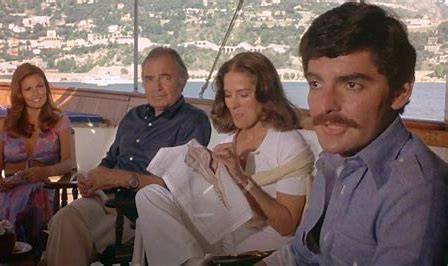
Herbert Ross
LGBTQ+ CHARACTER
*Tom Parkman (Richard Benjamin)
LGBTQ+
DIRECTOR: Herbert Ross
SCREENWRITER: Anthony Perkins
SCREENWRITER: Stephen Sondheim
COSTUME DESIGNER: Joël Schumacher
SCREENWRITERS: Perkins and Sondheim Have Fun!
A year after a hit‑and‑run accident killed gossip columnist Sheila Greene (Yvonne Romain) – hence, the movie’s title The Last of Sheila – her widower, movie producer Clinton Greene (James Coburn), invites six Hollywood insiders on a week‑long Mediterranean pleasure cruise aboard his yacht. The guests—actress Alice Wood (Raquel Welch) and her talent‑manager husband Anthony (Ian McShane); secretary‑turned‑superagent Christine (Dyan Cannon); screenwriter Tom Parkman (Richard Benjamin) and his wife Lee (Joan Hackett); and director Philip Dexter (James Mason)—were all – with the exception of Lee – present the night Sheila died. The cruise is, in effect, a reunion with a corpse.
Once at sea, Clinton unveils a parlor game. Each guest receives an index card labeled with a secret: Homosexual, Shoplifter, Ex‑convict, Informer, Little child molester, Blank, and—held in reserve—I am a hit‑and‑run killer. The object is to uncover everyone else’s secret while protecting one’s own. Naturally, the game becomes a trap.
The screenplay, written by Anthony Perkins and Stephen Sondheim, is the product of two brilliant gay men who adored puzzles, riddles, and elaborate party games. Their Manhattan apartments were legendary for exactly this kind of intellectual mischief. Perkins, a dazzling word‑player on Password, and Sondheim, arguably the greatest lyricist of the 20th century, pour that shared sensibility into every twist. Add director Herbert Ross—also gay, despite his marriages to Nora Kaye and Lee Radziwill—and the film becomes a rare studio picture powered almost entirely by queer wit.
The cast is uniformly strong. Raquel Welch gives one of her few genuinely good performances, and Dyan Cannon has a field day playing a character clearly modeled on super‑agent Sue Mengers. The film is stylish, clever, and deliciously self‑aware.
And yet, for all its pedigree, The Last of Sheila never quite reaches the heights promised by its talent. It is moderately entertaining when it should be deliriously fun. With this concentration of brilliance—and this much queerness—we ought to be having the time of our lives.
The song “Friends” is sung by Bette Midler.
CINEMATOGRAPHY: Gerry Turpin
Warner Bros.
NOW STREAMING ON AMAZON PRIME, APPLE TV+ AND YOUTUBE
45. Female Trouble (1974)
Rated C+ Solo
High Camp at a Midnight Screening

John Waters
LGBTQ+ CHARACTER
*Dawn Davenport (Divine)
LGBTQ+
DIRECTOR: John Waters
ACTOR: Divine né Harris Glenn Milstead
ACTOR: David Lochary
Female Trouble follows delinquent high school student Dawn Davenport (Divine), who runs away from home, gets pregnant while hitchhiking, and embarks upon a life of crime. Also starring David Lochary in his final film with Waters, Mary Vivian Pearce, Mink Stole and, in her second-to-last film with Waters, Edith Massey. The film is dedicated to Manson Family member Charles Tex Watson. Waters’ prison visits to Watson inspired the film’s crime-is-beauty theme and the banality-of-evil motif. Waters’ favorite of all of his movies, with the incomparable Divine embracing ugliness, violence and spectacle in a bravura performance.
Like “Valley of the Dolls” and “Rocky Horror,” the ONLY way to see “Pink Flamingos” and “Female Trouble” is as a GROUP EXPERIENCE with a very gay crowd. Like the majority of his oeuvre, both films are set in Waters’s hometown of Baltimore, which he affectionately calls the “white trash capital of the world.” Original screenplay by Waters.
Waters would skirt the mainstream with Polyester in 1981 and burst through with Hairspray in 1988.
Supplemental material: The Dreamlanders
Female Trouble is available for streaming at AMAZON PRIME VIDEO and YouTube.
46. A Very Natural Thing (1974)
(D)
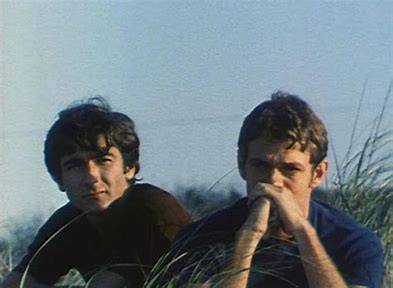
Christopher Larkin
LGBTQ+ CHARACTER
*David (Robert Joel)
LGBTQ+
DIRECTOR: Christopher Larkin (RIP 1988: Suicide following the diagnosis of end-stage AIDS)
ACTOR: Robert Joel (RIP 1992: AIDS-related illness)
Christopher Larkin directed and co-wrote this film about a gay man in his late twenties searching for love in mostly the wrong places (in Manhattan and the Hamptons), aiming to market it to a general audience. It didn’t work. Possibly because it was ahead of its time, but mostly because it’s pretty awful. The hackneyed script, the terrible acting, the wall-to-wall padding, and all those dreadful haircuts! The lead character in the film was once a monk, as was the director, and the opening scene, where he bids farewell to his monastery brothers, is the only moment with genuine pathos. There is massive footage of NYC pride parades that lends nothing to the proceedings except to tell us that the director did not have enough material or ideas to fill his movie.
Today, it’s nothing more than a failed curiosity. It would be over ten years before such infinitely superior Queer Films as “Buddies” and “An Early Frost” (both in 1985), “Parting Glances” (1986) and “Longtime Companion” (1990) were released. Unfortunately, all of those films showed gay culture in the context of the HIV/AIDS epidemic. Tragically, the lead actor in this movie, Robert Joel, died from an AIDS-related illness at the age of 48 in 1992, while the director took his own life after being told he was in the latter stages of AIDS in 1988. The writer of “The Celluloid Closet,” Vito Russo, who also died from an AIDS-related illness in 1990, has a blink-and-you-will-miss-it cameo appearance in the film.
Original screenplay by the director and Joseph Coencas.
NOW STREAMING ON FANDOM
47. Butley (1974)
B-

Harold Pinter
LGBTQ+ CHARACTERS
*Ben Butley (Alan Bates)
*Joey (Richard O’Callaghan)
*Reg (Michael Byrne)
LGBTQ+
Alan Bates
Butley (Alan Bates) is a literature professor at Queen Mary’s College, London. Once a respected scholar of T.S. Eliot, he now spends his time obsessing over nursery rhymes and Beatrix Potter. The film unfolds almost entirely in Butley’s office, which is shared with his assistant and former student Joey (Richard O’Callaghan). Joey is also his current lover. On this day, he finds out that his estranged wife is remarrying and that Joey is leaving him for another man, Reg (Michael Byrne)
Adapted by Simon Gray from his stage play and directed by Harold Pinter, the film is a testament to Alan Bates, who, having originated the role on stage, delivers a tour-de-force performance that is simultaneously witty, pathetic, and tragic. As a record of academic and personal disintegration, this is the one you keep referring back to.
That said, the movie is basically a filmed play, and it, perhaps wisely, does not attempt to disguise its origins. However, it is also a milestone in Queer Cinema, presenting us with gay characters who are unapologetically themselves.
With Jessica Tandy as Edna.
NOW STREAMING ON AMAZON PRIME VIDEO, APPLE TV+, AND YOUTUBE
48. The Great Gatsby (1974)
B+
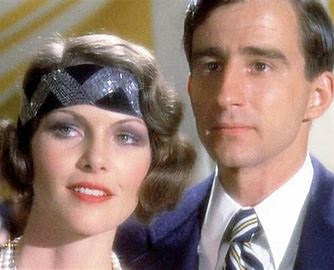
Jack Clayton
LGBTQ+ CHARACTERS
*Nick Carraway
*Jordan Baker
They were careless people, Tom and Daisy – they smashed up things and creatures and then retreated into their money or their vast carelessness or whatever it was that kept them together and let other people clean up the mess
Nick Carraway – The Great Gatsby
A novel of astonishing economy and grace was stretched out into a bloated 150 minutes.
Produced by David Merrick and directed by Jack Clayton, from an adaptation by Francis Ford Coppola, the third film version of F. Scott Fitzgerlad’s Jazz Age masterpiece (the first two were also produced at Paramount) stars Robert Redford as Gatsby and Mia Farrow as Daisy Buchanan. The film won two Oscars. One was for Theoni V. Aldredge’s striking costumes, which instituted a brief Gatsby fashion craze and beat out an astounding Best Costume Design lineup that year, including Anthea Sylbert for “Chinatown,” Theodora Van Runkle for “The Godfather Part II,” Tony Walton for “Murder on the Orient Express” and John Furness for “Daisy Miller.” The second was for Nelson Riddle’s adapted score, which used the plaintive refrain from Irving Berlin’s 1923 song “What’ll I Do” to profound effect.
Both Nick Carraway (Sam Waterston) and Jordan Baker (Lois Chiles) are gay, and Waterston’s sensitive, almost asexual presence is the film’s greatest pleasure, mainly since he is the voice-over narrator (as he is in the book). Chiles’ Baker is also excellent, a woman who cannot believe in the astonishing freedom offered by a new decade to gay and straight women alike. She is a professional golfer, a proto-Kate Hepburn!
People were divided concerning Farrow’s Daisy. I loved her performance. I thought she made the perfect Daisy Buchanan. I found Redford’s Gatsby boring on first viewing, but I have grown to appreciate him over the years.
Great support from Bruce Dern, Karen Black, and Scott Wilson.
The gorgeous cinematography is by Douglas Slocombe, who should have been nominated but wasn’t. Notable in the cast are Brooke Adams, who is very striking as a party guest (uncredited), and Patsy Kinset as Daisy and Tom’s daughter.
NOW STREAMING ON AMAZON PRIME, APPLE TV+, YOUTUBE
49. GOING PLACES (1974)
(Les Valseuses)
(A)

BERTRAND BLIER
LGBTQ+ CHARACTERS
*Jean-Claude (Gérard Depardieu)
*Pierrot (Patrick Dewaere)
Co-written and directed by Bertrand Blier and based on his own novel with the same title, “Going Places” (1974) – originally titled Les Valseuses (direct translation from the French: the testicles) – is a landmark in both New French Cinema and Queer Cinema as we follows Jean-Claude (Gerard Depardieu) and Pierrot (Patrick Dewaere) two aimless, anarchic young men who roam across France in stolen cars. Their journey is marked by petty crimes and random acts of violence, all portrayed with a disturbingly casual tone. They are joined by Marie-Ange (Miou-Miou), a passive hairdresser who becomes their companion, lover, and emotional sounding board. Her own quest for sexual fulfillment adds a layer of melancholy to the trio’s chaotic escapades.
Four sequences stand out:
The first is where Depardieu and Dewaere encounter a woman on a train (Bridget Fossey, who was the little girl in director René Clément’s 1952 masterpiece “Forbidden Games”) while she is breastfeeding her baby. They then partake in the milk themselves! This scene, in particular, is beautifully managed by Blier and his three actors. Shocking at first, it transforms itself into a moment of great tenderness.
The second is where the boys wait outside a women’s prison and pick up a newly released prisoner who they think is going to be sex starved. She is played by Jeanne Moreau, who gives the movie a touch of class. Although the film has been described as misogynistic – and it is, in places – I found these scenes to be both beautiful and sad.
The third is where the boys are horsing around and, wouldn’t you know it, next thing they are pounding one another. Very sexy, and the reason for the movie’s inclusion in this essay.
The fourth is where Depardieu, Dewaere and Miou-Miou encounter a bourgeois French family at a campground and seduce the very willing teenage daughter, played by a bratty Isabelle Huppert, much to the consternation of her parents.
Not for the faint of heart, the film is almost as sensational now as it was fifty years ago.
Stars Gérard Depardieu, Patrick Dewaere, Miou-Miou and Isabelle Huppert gained significant recognition from this film.
NOW STREAMING ON APPLE TV+, YOUTUBE, COEN MEDIA and TUBI
50. Once Is Not Enough (1975)
C+

Guy Green
LGBTQ+ CHARACTERS
Deirdre (Alexis Smith)
Karla (Melina Mercouri)
Based on the Jacqueline Susann’s 1973 bestseller, the movie “Once is Not Enough” introduces us to January Wayne (waif-like Deborah Raffin, the embodiment of that seventies look), the sheltered daughter of once‑legendary Hollywood producer Mike Wayne (Kirk Douglas). After a long recovery from a motorcycle accident, January returns to New York to discover that her father—now financially ruined—has married the fabulously wealthy and domineering Deirdre Milford Granger (Alexis Smith) to secure his career and lifestyle. Dierdre, having survived numerous husbands, is involved in a lesbian affair with Karla (Melina Mercouri, who should have known better) and has very definite plans for her new stepdaughter!
The third and final Susann blockbuster to be given the big expensive Hollywood treatment, Once is Not Enough benefits from a powerful performance by Smith – her first appearance on screen in sixteen years – and an impressive one by Brenda Vaccaro as a high-powered magazine editor – Vaccaro received an Oscar nomination for her performance. Ironically, because the movie has a tiny modicum of taste, it has never developed the Midnight cult following that made the infinitely more dreadful Valley of the Dolls immortal.
Streaming on Apple TV+, Amazon Prime Video and YouTube.
51. The Rocky Horror Picture Show (1975)
Rated (C) (Solo)
High Camp at a Midnight Screening
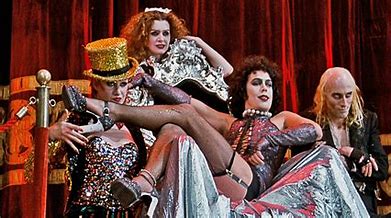
Jim Sharman
LGBTQ+ CHARACTER
*Dr. Frank-N-Furter (Tim Curry)
LGBTQ+
ACTOR: Tim Curry
Adapted from the West End musical by Richard O’Brien.
Every boy and every girl, whether gay or straight, must see Richard O’Brien’s fantastical creation, “The Rocky Horror Picture Show.” It has been running continuously on one stage or another/one film theatre or another, for almost 50 years since its debut in London’s West End in 1973 and the release of the Lou Adler-produced movie in 1975. It is a GROUP EXPERIENCE with those inspired zingers returning to the screen, resulting from two generations of audience members’ brilliant responses, which is the real entertainment.
So, let’s join:
- Brad (Barry Bostwick) and
- Janet (Susan Sarandon)
as they find themselves in the world of:
- Dr. Frank-N-Furter (the incredible Tim Curry)
- Rocky Horror, Frank’s creation (Peter Hinwood – Rock’s singing voice by Trevor White)
- Riff Raff (O’Brien)
- Magenta (Patricia Quinn)
- Columbia, a Groupie (Nell Campbell aka Little Nell)
- Dr. Everett V. Scott, a rival scientist (Jonathan Adams)
- Eddie, an ex-delivery boy (Meat Loaf)
- and, finally, The Criminologist, An Expert (Charles Gray)
to do:
Science Fiction/Double Feature – The Lips (those of Patricia Quinn; the voice of Richard O’Brien).
Dammit, Janet – Brad, Janet, and Chorus.
There is a Light (over at the Frankenstein Place): Janet, Brad, Riff Raff, and Chorus.
The Time Warp – Riff Raff, Magenta, The Criminologist, Columbia, and Transylvanians.
Sweet Transvestite – Frank.
The Sword of Damocles – Rocky and the Transylvanians.
Touch-a, Touch-a, Touch Me – Janet with Magenta, Columbia, Rocky, Brad, Frank, and Riff Raf.
Rose Tint My World– Columbia, Rocky, Janet, and Brad.
Fanfare/Don’t Dream It. Be It – Frank with Brad, Janet, Rocky, and Columbia.
Wild and Untamed Thing – Frank with Brad, Janet, Rocky, Columbia, and Riff Raff
I’m Going Home – Frank and Chorus
The Time Warp (Reprise) – Riff Raff and Magenta
Science Fiction/Double Feature (Reprise) – The Lips
Adapted by Richard O’Brien from his own stage play.
Producer: Lou Adler
NOW SHOWING AT A LATE-NIGHT MOVIE THEATRE NEAR YOU EVERY FRIDAY AND SATURDAY NIGHT!
NOW STREAMING ON AMAZON PRIME, APPLE TV+, YOUTUBE
52. Barry Lyndon (1975)
(A)

Stanley Kubrick
LGBTQ+ CHARACTERS
*Lt. Jonathan Fakenham, gay British soldier (Jonathan Cecil)
*Gay British Soldier (Anthony Dawes)
LGBTQ+
ACTOR: Murray Melvin
In times like this, I realize how much I care for you and how impossibly empty life would be without you.
Lt. Jonathan Fakenham – BARRY LYNDON
In Stanley Kubrick’s “Barry Lyndon” (1975), there is a moment where our peripatetic hero/anti-hero Barry (Ryan O’Neal), during the seven years’ war of 1756-1763, finds two soldiers naked and holding hands in a pond as they confess their love for each other. Barry overhears their conversation, and he takes advantage of the situation, stealing the clothes of one of the men and assuming his identity. The scene is humorous. But does it mock the lovers? The first time I saw it, I thought so. However, I have come to look at the scene more favorably over the years. It shows that same-sex love existed in the eighteenth century. Although only an incidental moment in the film, and we never see these characters again, the expression of true love remains with the viewer.
Gay Actor Murray Melvin plays the Reverend Runt, who, by all appearances, is devoted to Lady Lyndon (Marisa Berenson) but is cruelly dismissed by Barry’s mother (Marie Kean).
Oscar-winner John Alcott shot the movie’s famed candlelit card game sequence with all-natural lighting. The scene features O’Neal, Berenson and Melvin and also introduced the general public to Schubert’s haunting “Piano Trio in E Flat.”
The film was adapted from the novel “The Luck of Barry Lyndon” by William Makepeace Thackeray, directed and produced by Kubrick. At Oscar time, when the nominations were announced, he was three for three in the BEST FILM | BEST DIRECTOR | BEST ADAPTED SCREENPLAY categories but lost all three to “One Flew Over the Cuckoo’s Nest.”
Of its seven nominations, it won four:
Best Costume Design (Ulla-Britt Soderlund and Milena Canonero)
Best Cinematography (John Alcott)
Best Production Design (Ken Adam, Roy Walker and Vernon Dixon)
Best Adapted Score (Leonard Rosenman)
NOW STREAMING ON AMAZON PRIME, APPLE TV+, YOUTUBE
53. In Celebration (1975)
C+

Lindsay Anderson
LGBTQ CHARACTER
*Colin (James Bolam)
LGBTQ+
ACTOR: Alan Bates
DIRECTOR: Lindsay Anderson
Directed by Lindsay Anderson and adapted from David Storey’s 1969 play, In Celebration reunites the entire original stage cast.
Set in a mining town in Derbyshire, the film follows the Shaw family as their three adult sons return home to mark Mr. and Mrs. Shaw’s 40th wedding anniversary. Mr. Shaw (Bill Owen), a coal miner for nearly fifty years, presides over a household defined by endurance and unspoken wounds.
- Andrew (Alan Bates), the eldest, once a solicitor, has abandoned the law for painting.
- Colin (James Bolam), the middle son, a former Communist Party member, is now a successful but spiritually depleted industrial relations manager—and quietly gay, though the film never names it.
- Steven (Brian Cox), the youngest, teaches school, supports four children, and has given up on a book he once hoped to write.
As the evening unfolds, the family’s long-buried history—child neglect, a suicide attempt, and a death that still reverberates—pushes its way to the surface.
Like Butley, this is another filmed stage play starring Alan Bates that makes no attempt to disguise its theatrical origins. Yet the performances are so alive that the static form becomes irrelevant. Each actor has a moment of sharp illumination, with Bates delivering the most indelible work. Bolam’s Colin remains largely a sounding board for Bates’ barbed wit, but the queer coding is unmistakable, folded into the film’s larger pattern of repression and silence. And it’s a pleasure to see Brian Cox in an early role—one of those actors who reached mass recognition later in life, making his youthful presence here feel almost uncanny.
Constance Chapman brings brittle dignity to the mother who “married beneath her,” while Gabrielle Day offers warmth and gentle humor as the family’s nosy but well-meaning neighbor.
In Celebration was produced as part of Ely Landau’s American Film Theatre series, which brought major stage works to the screen through subscription-only screenings—an ambitious experiment in preserving theatrical intensity on film.
NOW STREAMING ON AMAZON PRIME VIDEO, APPLE TV+, AND YOUTUBE
54. Farewell My Lovely (1975)
A-
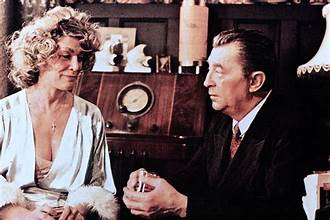
Dick Richards
LGBTQ+ CHARACTER
Lindsay Mariott (John O’Leary)
YOU SMELL GREAT. COME ON IN
Marlow, on first meeting Mariott.
YOU BEEN JUDGING A FLOWER SHOW IN HERE MARLOW. IS THAT THE WINNING DAFFODILL WHO JUST WALKED OUT?
Detective Billy Rolfe (Harry Dean Stanton) who arrives as Marriot is leaving Marlowe’s office.
Directed by Dick Richards, this version stars Robert Mitchum as an aging, world‑weary Philip Marlowe. Set in 1941 Los Angeles but filmed with 1970s melancholy, it’s a deliberately nostalgic neo‑noir that leans into decay, corruption, and the end of an era. Marlowe is hired by Moose Malloy (Jack O’ Halloran), a hulking ex‑con, to find his vanished girlfriend, Velma (Charlotte Rampling). The search leads Marlowe through a maze of brothels, gambling dens, corrupt cops, and Hollywood grotesques. A parallel case involving a stolen jade necklace eventually intersects with Moose’s quest. Velma, now reinvented as a glamorous nightclub singer, has erased her past and will kill to protect her new identity. The story ends in tragedy: Moose dies, Velma dies, and Marlowe is left with nothing but the bitter taste of truth.
One of those rare cases where the remake is marginally better than the original (Murder My Sweet directed by Edward Dmytryk in 1944 with Dick Powell – see ESSAY ONE: 85 Queer Films Made Under the Hays Code), Farewell My Lovely not only keeps the original title of the Raymond Chandler novel, it also more faithful to the spirit of the book. Mitchum is marvelous. He’s in practically every scene and he never wears all his welcome. There is a superb moment with an equally down-on-her-luck Sylvia Miles who received a well-deserved Best Supporting Actress Oscar nomination for just a few minutes of screen time, mirroring her work in Midnight Cowboy a few years before.
And our queer friend Lindsay Marriott (John O’ Leary) is back, still smelling super nice, still being mocked by the straight guys, and still doomed to die in the canyons above Malibu.
The gorgeous cinematography is by John Alonzo who had immortalized Los Angeles in the movie Chinatown the previous year. The haunting score is by David Shire.
Streaming on Apple TV+, Amazon Prime Video and YouTube.
55. Dog Day Afternoon (1975)
A+
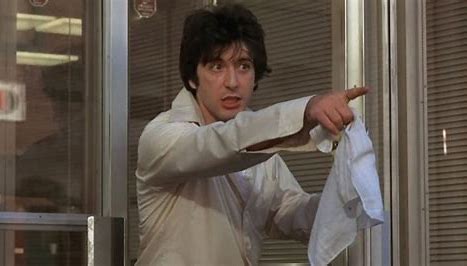
Sidney Lumet
LGBTQ+ CHARACTERS
*Sonny Wortzik (Al Pacino)
*Leon Shermer (Chris Sarandon)
WITH BROKEBACK MOUNTAIN, THE BEST QUEER MOVIE EVER MADE.
1975: OSCAR WINNER FOR BEST ORIGINAL SCREENPLAY
(FRANK PIERSON)
1975: OSCAR NOMINATED FOR BEST FILM, BEST DIRECTOR, BEST ACTOR IN A LEADING ROLE, AND BEST ACTOR IN A SUPPORTING ROLE.
Sidney Lumet’s masterpiece is drawn from real events. On a sweltering August afternoon in 1972, Sonny Wortzik (Al Pacino) and Sal Naturile (John Cazale) attempt to rob the First Brooklyn Savings Bank, only to discover a mere $1,100 in the till. Within minutes, they’re surrounded by police, the media, and a swelling crowd. Sonny’s motive—raising money so his lover Leon can receive gender‑affirming surgery—turns the botched heist into a chaotic, strangely tender public spectacle.
Pacino is magnificent. Alongside Michael Corleone, this is the defining performance of his early career: jittery, funny, heartbreaking, and utterly human. Lumet, a master of enclosed spaces, stages the scenes between Sonny and Leon (Chris Sarandon, superb) with remarkable delicacy. They’re funny, yes, but never mocking—there isn’t a trace of condescension. Hard to believe this is the same director‑writer pairing that gave us the rancid The Anderson Tapes.
Charles Durning is excellent as the exasperated police negotiator, and the entire ensemble hums with Lumet’s trademark naturalism.
Frank Pierson’s Oscar‑winning screenplay remains a model of structure, character, and political acuity. The superb cinematography is by Victor J. Kemper.
Note: The film is unscored; Lumet relies entirely on diegetic sound—a bold choice that heightens the documentary immediacy.
NOW STREAMING ON AMAZON PRIME, APPLE TV+, YOUTUBE
56. Fox and His Friends (1975)
B+
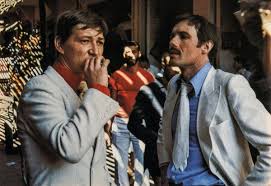
Rainer Werner Fassbinder
LGBTQ+ CHARACTERS
*Franz “Fox” Biberkopf (Rainer Werner Fassbinder)
*Eugen (Peter Chatel)
*Max (Karlheinz Böhm)
LGBTQ+
ACTOR: Rainer Werner Fassbinder
ACTOR: Peter Chatel
DIRECTOR: Rainer Werner Fassbinder
PRODUCER: Rainer Werner Fassbinder
SCREENWRITER: Rainer Werner Fassbinder
QUEER CINEMA MEETS NEW GERMAN CINEMA: PART TWO.
Fassbinder’s companion piece to “Bitter Tears,” which he had made three years previously. Here, he casts himself against type as a working-class gay man who wins the lottery and then falls in love with the elegant son of an industrialist (Peter Chatel) who ultimately swindles the easily flattered “Fox” out of his fortune.
It’s a fascinating look at gay life in the 1970s, and it’s one of at least a dozen great movies Fassbinder wrote and directed in the decade leading up to his premature death. Karlheinz Böhm, who starred in Michael Powell’s “Peeping Tom” in 1960, is the older sophisticate who introduces Fox to his circle of wealthy friends.
The name of Fassbinder’s character was taken from Alfred Doblin’s 1929 novel Berlin Alexanderplatz, which the director later adapted for television.
Photographed by the great German cinematographer Michael Ballhaus before he immigrated to the United States.
Original screenplay by Fassbinder.
Supplemental material: Fassbinder Revisited: A Cinematic Journey.
NOW STREAMING ON AMAZON PRIME, APPLE TV+, HBO MAX (YOUTUBE)
57. Grey Gardens (1975)
A+
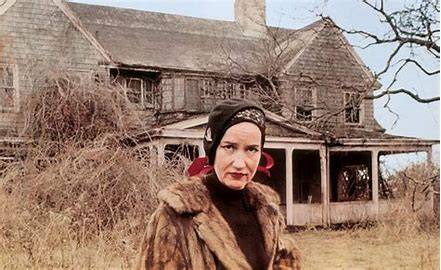
Grey Gardens: Albert and David Maysles
LGBTQ+ CHARACTERS
Big and Little Edie Bouvier are not gay but have entered the hearts of gay men everywhere!
The film “Grey Gardens” tells the story of Big Edie and Little Edie Bouvier, the aunt and cousin of former First Lady Jacqueline Bouvier Kennedy Onassis. When the brothers Albert and David Maysles discovered them in the early seventies, Big Edie, who was almost eighty at the time, and Little Edie, who was fifty-six, appeared to be stuck in another era, holding onto their aristocratic past while living in a crumbling house and caring for numerous cats and raccoons.
The Maysles were already famous for their unique style of filmmaking, which they had used in such classics as “Salesman” (1969) and “Gimme Shelter” (1970), where, at the Rolling Stones Altamont Free Concert, they unexpectedly captured on film the altercation between Altamont attendee Meredith Hunter and Hells Angel Alan Passaro that resulted in Hunter’s death. Their film footage showed Hunter drawing and pointing a revolver just before being stabbed by Passaro, who was later acquitted of Hunter’s murder on self-defense grounds after the jury viewed the film. They christened their style Direct Cinema, a type of cinéma vérité with no directorial interference, although some critics, such as Pauline Kael, accused them of staging and more!
I need professional music!
Big Edie Bouvier
The filmmakers gained the trust of Big Edie and Little Edie and filmed at Grey Gardens for several weeks. They, along with their co-directors, Ellen Hovde and Muffie Meyer, then carefully edited their footage to create a remarkable documentary that captured the essence of the women and their unique lifestyles. After its release, the film’s high campiness—a tragic story set in the faded milieu of New York high society and featuring some deliciously bitchy one-liners between mother and daughter—developed a significant gay following. Little Edie had a unique fashion sense, particularly with her head scarves, and, over time, some gay fashion designers credited her as an inspiration for their work. She was also a wanna-be cabaret artist, and after her mother’s death, she did achieve her goal of signing in some of Manhattan’s top Cabaret venues, mainly to the gay audiences who had grown to love her over the years since the film’s release.
GREY GARDENS, THE DOCUMENTARY BY ALBERT AND DAVID MAYSLES, IS NOW STREAMING ON AMAZON PRIME, APPLE TV+, YOUTUBE and THE CRITERION COLLECTION
Special mention to the TV movie “Grey Gardens” (2009)
The documentary received a Criterion Collection DVD release in 2001, where it is now available for screening. By the turn of the century, it had become a definitive gay cult classic, inspiring songs such as Rufus Wainwright’s “Grey Gardens.” In 2006, the documentary was adapted into a musical play by three gay men: Doug Wright, Scott Frankel, and Michael Korie. In 2009, it was adapted into a highly successful TV movie of the same title by gay writer/directors Michael Sucsy and Patricia Rozema. It starred Jessica Lange and Drew Barrymore as Big and Little Edie, respectively; Jeanne Tripplehorn as Jacqueline Kennedy; and Ayre Gross and Justin Lewis as Albert and David Maysles.
GREY GARDENS, THE TV MOVIE, IS NOW STREAMING ON AMAZON PRIME, APPLE TV+ AND YOUTUBE THROUGH MAX.
Special mention to the TV Limited Series” Feud: Capote vs The Swans” (2024)
The Maysles brothers have returned in high style, thanks to the conceit behind the third episode,“Masquerade 1966,”of Ryan Murphy’s new limited series “Feud: Capote vs the Swans. “Written by Jon Robin Baitz and directed by Gus Van Sant, the episode brilliantly interweaves the footage the brothers filmed (with Charlotte Zwerin) for their documentary “With Love from Truman”in which Truman Capote, having just published his masterpiece, “In Cold Blood,” has reinterred New York society and is sorting the invitations (who is in and who is out) to his famous 1966 Masked Ball at the Plaza Hotel.In what has to be some of the most mesmerizing moments in television history, the entire episode – apart from the closing moments, when Truman (the excellent Tom Hollander) dances with the ghost of his dead mother (Murphy’s muse, the incredible Jessica Lang back after playing Joan Crawford in “Feud: Bette and Joan”) while The Swans – Babe Paley (Naomi Watts), Slim Keith (Diane Lane), C. Z. Guest (Chloe Sevigny) and Lee Radziwill (Calista Flockhart) look on – is shown as part of the brothers’ black-and-white “footage” giving The Swans ample time to bitch and moan about Truman. Pawel Szajda plays Albert, and Yuval David plays David. There is a scene where Truman flirts outrageously with David in the back seat of a car and another where Truman and Albert slow-dance in Truman’s living room. It’s during this scene that Albert quotes Saint Theresa of Avilla: “More tears are shed over Answered Prayers than unanswered ones,”giving Truman the title of his new book on New York society that he would never publish – apart from the articles in Esquire Magazine in 1975 in which he betrayed the trust of The Swans and for which Paley and Keith never forgave him. David Maysles died from a brain hemorrhage at age 55 in 1987. Albert died at age 88 in 2015.
FEUD: CAPOTE VS. SWANS IS CURRENTLY STREAMING ON HULU (FX)
58. The Naked Civil Servant (1975)
(A)
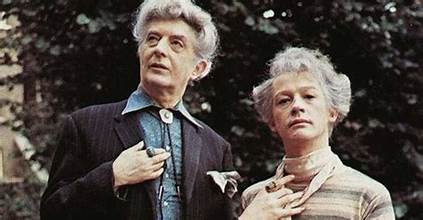
Jack Gold
LGBTQ+ CHARACTER
Quentin Crisp (John Hurt)
The Naked Civil Servant is a 1975 British made‑for‑television biographical drama based on Quentin Crisp’s 1968 autobiography. Directed by Jack Gold and adapted by Philip Mackie, it stars John Hurt in the performance that made him an international star.
The film traces Crisp’s life from the late 1920s through the 1930s and beyond, focusing on his unapologetic embrace of effeminacy in a violently homophobic society. As a young man, Crisp rejects conventional masculinity, dyes his hair, adopts makeup, and insists on living visibly as himself—despite harassment, police scrutiny, and social ostracism.
He works briefly as a prostitute, then as a commercial artist, and eventually as a nude model in an art school—an experience that gives the film its title. His life becomes a kind of performance art: a defiant, camp assertion of individuality in the face of a conformist culture.
Hurt is phenomenal. One of the great queer performances as one of the Great Queers.
A follow-up movie, An Englishman in New York, was made in 2009 by director Richard Laxton with Hurt reprising the role of Crisp.The film chronicles the years that Crisp spent in New York City and gets its title from the song written by Sting for the 1987 album …Nothing Like the Sun.
Streaming on YouTube and on Apple TV+ and AMAZON Prime, the latter two through BritBox.
59. Jeanne Dielman (1975)
A+

Although released in Europe in 1975, Chantal Akerman’s feminist/queer masterpiece “Jeanne Dielman” was not shown in the USA until 1983.
We, the audience, observe three days in the iterative daily life of a widowed woman and single mother. The duration of 3 hours and 21 minutes requires a significant commitment from the viewer. However, like many classic “SLOW MOVIES,” it rewards us with many pleasures. The film’s everyday details of this loving and caring mother contrast with her life as a prostitute. She welcomes clients into her home with the detached and mechanical demeanor that is also evident in her other daily activities.
There is no backstory, and we never know how or why Jeanne arrived at this point. No one speaks her name in the film. We only catch a glimpse of it in a letter she reads to her son.
QUEER AND FEMINIST SENSIBILITIES RESONATE IN CHANTAL AKERMAN’S MASTERPIECE.
There are a few brief scenes where she shops and stops for coffee. However, the film is primarily a closed-door affair, taking place mainly in Jeanne’s apartment, with most of the action occurring in her kitchen. In a series of long takes, the camera captures Jeanne in a medium shot. We see her making coffee, washing dishes, making the bed, taking out the garbage, and bathing after sex. As the viewer settles into the film, Jeanne’s routines fascinate us. And they are all the more hypnotic because Delphine Seyrig (“Last Year at Marienbad”) does something unique. Although she disappears into her role as Jeanne, she remains an actress of style and great beauty—an exceptional star.
By the second day, however, you notice subtle changes in Jeanne’s rituals. Trivial things at first, like the dropping of a newly washed spoon. After that, as the movie progresses, we realize that Jeanne is slowly losing her mind before our eyes. A sense of unease settles over us. We have a hunch that something terrible will happen, and it does.
LONELINESS AND ISOLATION – TWO QUEER TROPES – ARE THE CORNERSTONE OF JEANNE’S EXISTENCE.
Akerman, who committed suicide in 2015, was born in Brussels to Holocaust survivors. Her mother, unlike her grandparents, survived Auschwitz. They would be exceptionally close throughout their lives. The daily details of Jeanne’s life were influenced by those of her mother and her beloved aunt. The Jewish religious rituals of her childhood also played a role. That said, Akerman hated labels, whether they were “feminist,” “Jewish,” or “lesbian.” Although “Jeanne Dielman” predates B. Ruby Rich’s coining of the term “New Queer Cinema” in “Sight & Sound” in 1992, Akerman was considered by many to be a vital representative of that movement.
“Jeanne Dielman” was shot with an all-woman crew, as Akerman insisted. Cinematographer Babette Mangolte does some astonishing work here. From her lighting, you can feel the hours go by. Fifty years before the Academy nominated its first two female cinematographers, she pioneered and innovated in the careful design and lighting of interiors. She is now a professor at the University of California, San Diego.
“Mrs. America’s” Haunting Final Scene.
Recently, on Hulu, “Jeanne Dielman” inspired the closing scene of “Mrs. America.” After hearing from Reagan that she will not be part of his cabinet, Cate Blanchett’s Phyllis Schlafly, defeated, retreats to the kitchen. There, she robotically peels one apple after another. Right before our eyes, we are witnessing the renaissance of Jeanne Dielman! That Akerman’s feminist/queer masterpiece is used as the inspiration for the conclusion of a series about a woman who considered herself an antifeminist and who distanced herself from her gay son should be antithetical. Yet it is not.
STREAMING on the Criterion Channel, MAX (YOUTUBE)
60. Picnic at Hanging Rock (1975)
A+
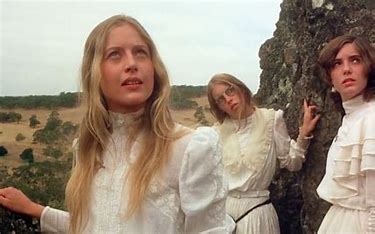
Director Peter Weir’s masterpiece.
The plot revolves around the disappearance of several teenage schoolgirls and their teacher during a picnic at Hanging Rock, Victoria, on Valentine’s Day in 1900, and the subsequent impact on the local community.
LGBTQ+ CHARACTERS
*Sara Waybourne (Margaret Nelson)
*Miranda St. Clare (Anne-Louise Lambert)
*Mrs. Appleyard (Rachel Roberts)
*Miss Greta McCraw (Vivean Gray)
Spearheading the then‑emerging Australian New Wave—alongside directors like Bruce Beresford and Fred Schepisi—Peter Weir delivered a work of astonishing formal control. Like Hitchcock, he understood that horror can unfold in full sunlight, on the brightest and most beautiful of summer days. The film hints that the girls’ burgeoning sexuality, in concert with some ancient force embedded in the rock itself, triggers their passage into another realm.
A faint unease is present from the opening moments as the students awaken to a seemingly perfect morning. Sara (Margaret Nelson), the newly arrived orphan forbidden from joining the outing, is clearly infatuated with the ethereal Miranda (Anne‑Louise Lambert). When Sara whispers to her, Miranda gently rebuffs her with the fatalistic line: “You must learn to love someone else, apart from me; I will not be around for much longer.” Miranda’s self‑possession borders on the supernatural. At the picnic, the French teacher (Helen Morse) likens her to a Botticelli angel, and it is Miranda who leads the fateful ascent up the rocks. When a mysterious magnetic force stops everyone’s watches at noon, the film quietly suggests that sublimated queer desire may be entwined with the uncanny events that follow.
There are also subtle hints of a romantic attachment between the schoolmistress (Rachel Roberts) and the headmistress, Miss McCraw (Vivean Gray), who is last seen running toward the rock formation in her underwear—another woman claimed by the landscape.
Russell Boyd’s cinematography gives the film its dreamlike shimmer, while Bruce Smeaton’s haunting score—incorporating the didgeridoo and other Aboriginal instruments—deepens the sense of something ancient stirring beneath the surface. Weir’s sound design is equally striking, blending the vibrations of earthquakes and other natural phenomena into the aural fabric of the film.
Boyd’s camera operator was John Seale, who would eventually surpass his mentor and become Weir’s cinematographer on Witness, The Mosquito Coast, and Dead Poets Society, as well as Anthony Minghella’s collaborator on The Talented Mr. Ripley. Seale later won an Oscar for The English Patient. Weir and Boyd would reunite decades later for two more films, including Master and Commander: The Far Side of the World, which earned Boyd his own Academy Award.
Picnic at Hanging Rock premiered in the United Kingdom and Ireland in 1977 and did not reach the United States until 1979.
Adapted by Cliff Green from Joan Lindsay’s 1967 novel.
NOW STREAMING ON AMAZON PRIME VIDEO, APPLE TV+, MAX (YOUTUBE)
61. THE RITZ (1976)
C+

RICHARD LESTER
LGBTQ+ CHARACTERS
*Chris, a bathhouse patron (F. Murray Abraham)
* Claude, a bathhouse patron and confessed chubby chaser (Paul Price)
LGBTQ+
SOURCE MATERIAL: Terence McNally (Play)
SCREENWRITER: Terence McNally
ACTRESS: Kaye Ballard
Gaetano Proclo (Jack Weston), a mild-mannered man from Cleveland, is targeted by his mobster brother-in-law, Carmine Vespucci (Jerry Stiller). Fleeing for his life, Gaetano tells a cab driver to take him somewhere Carmine would never look. He ends up at The Ritz, a gay bathhouse in New York City. Unaware of its clientele, Gaetano stumbles into a flamboyant underworld of drag shows, steam rooms, and eccentric patrons.
Comic Encounters:
- Googie Gomez (Rita Moreno), a talentless but ambitious entertainer, mistakes Gaetano for a Broadway producer and relentlessly pursues him.
- Claude (Paul Price), a confessed “chubby chaser,” becomes infatuated with Gaetano.
- Various bathhouse regulars and staff add to the chaos, including a detective (Treat Williams), Gaetano’s suspicious wife (Kay Ballard) and a young F. Murray Abraham as a bathhouse regular.
Carmine and his henchmen eventually track Gaetano to the Ritz, but family secrets and absurd misunderstandings unravel in a comedic finale.
Part mob comedy and part drag review, this exhausting adaptation of Terence McNally’s hit play wears out its welcome in the first thirty minutes, but the laughs keep coming!
A real curiosity! Directed by Richard Lester, who had seen better days with the Beatles in A Hard Day’s Night and The Three Musketeers. He keeps things moving at a frantic pace! Moreno, Weston, Stiller, Abraham, Ballard, Williams and Price all have their moments.
NOW STREAMING ON AMAZON, APPLE TV+ and YouTube
62. Norman, Is That You? (1976)
(C)
George Schlatter
LGBTQ+ CHARACTERS
*Norman (Michael Warren)
*Garson (Dennis Dugan)
Ben Chambers (Redd Foxx) arrives in Los Angeles after his wife (Pearl Bailey) leaves him, only to discover that his son Norman (Michael Warren) is gay and living with his boyfriend (Dennis Dugan). Ben’s frantic, often misguided attempts to fix the situation drive a comedy about clashing values, parental expectations, and the era’s shifting attitudes toward sexuality.
In the original play Norman, Is That You? by Ron Clark and Sam Bobrick, Norman and his parents were Jewish. Working with Clark and Bobrick, director George Schlatter has moved the story to another demographic entirely without ever recognizing the fact that An African American family’s reaction to their son being gay can be quite different from that of a Jewish family. In this updated version there are no ethnicities. There are no religions. There is no mention of Black vs Caucasian – the boyfriend is white. There is no room in director Schlatter’s world for the complexities or subtleties of human existence. There only two variables in Norman: gay and straight.
What we do have, however, is Redd Foxx as the dad and thank God for that! The result is a laugh every other minute. Foxx does not have to work for it, he’s a natural and he basically saves the movie. The rest of the cast coasts alongside him and Bailey is wasted in what turns out to be a glorified cameo.
Streaming on Apple TV+, Amazon Prime Video and YouTube.
63. Car Wash (1976)
C+
Michael Schultz
LGBTQ+ CHARACTER
*Lindy (Antonio Vargas)
LGBTQ+
Actor: Richard Pryor
Writer: Joel Schumacher
“I’M MORE OF A MAN THAN YOU’LL EVER BE AND MORE OF A WOMAN THAN YOU’LL EVER GET“
LINDY (ANTONIO VARGAS IN CAR WASH)
You come for Antonio Vargas’ Lindy, who delivers razor-sharp shade to his homophobic coworker Duane (Bill Duke). You stay because a day at the Dee-Luxe Car Wash in Los Angeles is, despite the slurs, rather fun.
It’s 1976, and Joel Schumacher—then a white, gay costume designer—was cutting his teeth on barely serviceable Black scripts. Before directing a dozen films of wildly variable quality, Schumacher had worked for Halston, producer Julia Phillips and director Herbert Ross (see The Last of Sheila, above)
The film unfolds over a single day at the car wash, where a multiracial crew of car washers—comprising Black, Latino, and Native American workers—seems to do everything except wash cars. Their world is a kaleidoscope of personal dramas, romantic entanglements, and eccentric customers, all woven into the rhythm of everyday life. Director Michael Schultz keeps the energy shifting so you never get bored, and the funky score by Norman Whitfield lifts the movie to another level: remember the excellent title track by Rose Royce?
Seventy-six was the year of Antonio Vargas. His Lindy is witty and an unapologetically camp character who is the comic spark of the ensemble, delivering shade with precision and turning the car wash into a stage for his personality. Lindy’s presence in a mainstream comedy in 1976 was quietly radical. Amid slurs and stereotypes, he carved out space for queer-coded energy in a film otherwise focused on working-class, multiracial camaraderie. What’s more, Fargas himself is not gay, but his brother is. That family connection may have helped him capture the vibe authentically, giving Lindy’s flamboyance a lived-in credibility rather than a caricature.
Then, contrast Lindy with Vargas’s gay character in our next queer film, Paul Mazursky’s “Nest Stop Greenwich”. What you get is a beautiful shift in tone!
Known LGBTQ+ actor Richard Pryor has a small part – a cameo, really – as Daddy Rich, a flamboyant, prosperity‑gospel style preacher who arrives at the car wash in a gleaming Cadillac, accompanied by the Wilson Sisters (a gospel trio played by The Pointer Sisters) who perform gospel-infused numbers alongside him.
NOW STREAMING ON AMAZON PRIME VIDEO, APPLE TV+, AND YOUTUBE
64. Next Stop Greenwich Village (1976)
A-
Paul Mazursky
LGBTQ+ CHARACTER
*Bernstein (Antonio Vargas)
LGBTQ+
Christopher Walken
“Next Stop, Greenwich Village” (1976) is writer-director Paul Mazursky’s semi‑autobiographical comedy-drama about a young Jewish actor who leaves his Brooklyn home in 1953 to chase his dreams in the bohemian world of Greenwich Village. The film beautifully captures both the allure and the disillusionment of artistic life in postwar New York.
At its center is Larry Lapinsky (Lenny Baker), a 22‑year‑old aspiring actor determined to break free from the suffocating embrace of his overbearing mother, Faye (Shelley Winters). Moving into the Village, Larry immerses himself in a vibrant circle of friends: his sensible girlfriend Sarah (Ellen Greene), the troubled Anita (Lois Smith), the neurotic Connie (Dori Brenner), the witty Bernstein (Antonio Fargas), and the charismatic playwright Robert (Christopher Walken). Through their intertwined lives, Mazursky explores themes of love, ambition, identity, and the sobering realities of adulthood.
Together with Bob & Carol & Ted & Alice(1969), this stands as Mazursky’s finest work. An urgency and edge are missing from later films, such as An Unmarried Woman. Lenny Baker delivers a marvelous, lived‑in performance, radiating zest for life. Tragically, Baker’s career was cut short; he died of thyroid cancer at just 37 in 1982, never appearing in another film.
Shelley Winters is at her absolute best as Faye, offering a quintessential portrayal of a Jewish mother—domineering, guilt-laden, yet deeply human. Ellen Greene, remembered for her dazzling turn in Little Shop of Horrors (1986), is equally impressive as Sarah, grounding the film with warmth and intelligence. Watching her here, one wonders why Greene’s film career wasn’t more expansive.
And then there is Antonio Fargas’ Bernstein. 1976 was truly his year: in Car Wash, he played Lindy, a flamboyant, defiant, and camp character; in Next Stop, Greenwich Village, he embodied Bernstein, an introspective and witty figure who seamlessly integrated into the bohemian ensemble. While Lindy confronted homophobia head‑on, Bernstein represented the “gay best friend” trope with nuance, never reduced to comic relief. Fargas’s subtle performance broadened the range of queer representation on screen at a time when such roles were rare, underscoring his versatility and cultural significance.
NOW STREAMING ON YOUTUBE
65. Ode to Billy Joe (1976)
C+
Max Baer
LGBTQ+ CHARACTER
*Billy Joe McAllister (Robby Benson)
THE QUESTION
Why did Billy Joe McAllister jump off the Tallahassee Bridge?
THE ANSWER
Because he slept with a man.
Rural Mississippi, summer of 1953. Billy Joe McAllister (Robby Benson), a shy, sensitive farm boy, courts fifteen-year-old Bobbie Lee Hartleyu I(Glynnis O’Connor)—their romance blossoms despite her father’s strict rules about dating. Billy Joe struggles with his identity and a secret encounter with another man. This revelation devastates him, and he withdraws emotionally from Bobbie Lee. In a tragic climax, Billy Joe jumps off the Tallahatchie Bridge, echoing the unanswered mystery of Gentry’s song. Bobbie Lee is left heartbroken, reflecting on love, repression, and the harsh social conventions of the time.
The mystery behind Bobbie Gentry’s haunting song should have remained a mystery. That was its allure. That was its magic.
After listening to Bobbie Gentry’s haunting song, the question we have always been asking ourselves should have remained a mystery. That was the song’s allure—the song’s magic. Unfortunately, in the summer of 1976, whether we liked it or not, screenwriter Herman Raucher (“Summer of ’42”) and actor-turned-director Max Baer (formerly Jethro in “The Beverly Hillbillies”) solved the mystery. The answer: because he slept with a man. Robby Benson is sympathetic as the unfortunate title character, as is Glynnis O’Connor as his girlfriend, until the plot overtakes her toward the end. Meanwhile, Joan Hotchkis is as perfect as O’Connor’s mother. Unfortunately, the film is reductive and backward-looking, and the final scene can only be described as outrageous.
NOW STREAMING ON AMAZON PRIME, APPLE TV+, YOUTUBE
66. Carrie (1976)
A+
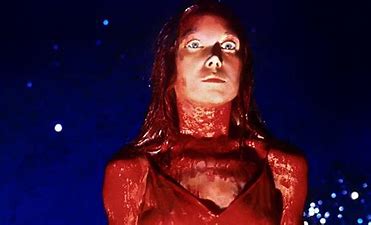
Brian De Palma
LGBTQ+ CHARACTER
*Miss Collins, the gym teacher (Betty Buckley)
LGBTQ+
SCREENWRITER: Lawrence D. Cohen
Carrie White is a timid, socially awkward high school senior. Her classmates bully her relentlessly, and her fanatically religious mother, Margaret, represses her, teaching her that natural processes like menstruation are sinful. After being humiliated during her first period in the school showers, Carrie discovers she has telekinetic abilities. These powers intensify as her emotions grow stronger. Sue Snell, a remorseful classmate, convinces her boyfriend Tommy Ross to take Carrie to the senior prom as an act of kindness. Carrie, against her mother’s warnings, attends.
At the prom, Carrie experiences joy and acceptance—until bullies stage a cruel prank, dumping pig’s blood on her after she is crowned prom queen. Traumatized, Carrie unleashes her telekinesis, locking the doors and causing a fiery massacre that kills many students and teachers. She returns home, where her mother attacks her, believing Carrie is possessed. Carrie kills her mother with her powers but dies herself as the house collapses around them. The film ends with Sue Snell dreaming of Carrie’s hand reaching from the grave—a famous jump-scare that cemented the film’s horror legacy.
One of the GREAT HORROR MOVIES with tremendous performances from Sissy Spacek and Piper Laurie, the latter returning to the screen after a fifteen-year absence. Brian De Palma’s masterpiece, like “Mildred Pierce” and “Whatever Happened to Baby Jane,” works simultaneously as drama and high camp. We feel for Carrie while at the same time reveling in her mother’s treasure chest of unforgettable lines (see above). It’s a list so long that it will satisfy the gay sensibility of any red-blooded adolescent male! The one gay character in the movie is Betty Buckley’s gym teacher, who sets the plot rolling by coming down hard on the girls, Nancy Allen and Amy Irving, after the “plug-it-up” scene in the showers.
The unforgettable score, one of the all-time greats, is by Pino Donaggio.
Adapted by Lawrence D. Cohen from the novel by Stephen King.
CINEMATOGRAPHY: Mario Tosi
QUOTES
Plug it up! Plug it up! Plug it Up! Plug it up!
In the showers, the girls Sue, Chris, Norma, and Helen (Amy Irving, Nancy Allen, P.J. Soles, and Edie McClurg) throw tampons and sanitary pads at Carrie. They are taking a communal shower after a game of volleyball, which Carrie (Sissy Spacek) is responsible for losing. Carrie, hysterical and covered in blood with her arms outstretched, runs towards the girls after she experiences, at age sixteen, her first period. Her mother (Piper Laurie), a religious fanatic, has never told her about menstruation.
That was a really shitty thing you did yesterday, a really shitty thing!
Miss Collins (Betty Buckley) to Sue (Amy Irving).
Ballots? Ballots anyone? Ballots?
Norma (P. J. Soles) is collecting the ballots for the King and Queen of the school’s prom. Norma then surreptitiously exchanges these ballots for Chris’ (Nancy Allen) preprepared ones, all of which have a check mark on the box labelled “CARRIE WHITE AND TOMMY ROSS” (William Katt).
I should have given you to God when you were born. But I was weak. I was backslidin’!
Margaret White (Piper Laurie) to Carrie White (Sissy Spacek).
He took me, with the stink of filthy roadhouse whiskey on his breath. And I liked it!
Margaret White to Carrie White.
I should’ve killed myself when he put it in me!
Margaret White to Carrie White!
After the blood come the boys!
Margaret White to Carrie White.
You Eat Shit!
Chris Hargenson to Carrie White after she causes Chris’ team to lose the volleyball game.
DIALOGUE
Margaret White: These are godless times. Mrs. Snell.
Mrs. Snell (Priscilla Pointer): I’ll drink to that…
Margaret White: I pray you find Jesus!
Margaret White (on Carrie’s self-made prom dress): I might have known it would be red.
Carrie White: It’s pink, Mama.
Margaret White
I can see your dirty pillows.
Carrie White:
Breasts, Mama. They’re called breasts, and every woman has them.
NOW STREAMING ON AMAZON PRIME AND APPLE TV+
67. Sebastiane (1976)
C-
Derek Jarman
LGBTQ+ CHARACTER
*Saint Sebastian (Leonardo Treviglio)
*Severus (Barney James)
LGBTQ+
DIRECTOR: Derek Jarman
SCREENWRITER: Derek Jarman
Gay director Derek Jarman’s directorial debut is set in Rome in AD 303 during Emperor Diocletian’s persecution of Christians. Sebastian is a member of the Emperor’s personal guard. When he tries to intervene to stop one of the Emperor’s catamites (prepubescent boys whose sole purpose is sex) from being strangled by one of his bodyguards, Sebastian is exiled to a remote coastal garrison and reduced in rank to private. He is an early Christian and celibate despite all those naked Roman soldiers swarming around him. Severus, the commanding officer of the garrison, who becomes increasingly obsessed with Sebastian, tries to rape him and ultimately presides over his execution by a phalanx of arrows for refusing to take up arms in defense of the Roman Empire – echoing the iconic imagery that made him a gay icon in art history.
It’s a start. However, what seemed revolutionary in 1976 now looks rather mediocre. The film is more of a series of tableaux vivants than a narrative feature, and its mostly British cast makes a sad substitution for a sexy Roman garrison. Jarman seems to want to be erotic and anti-erotic, at the same time, having his cake and eating it too. The whole misguided adventure is an exercise in hypocrisy. And the (minimal) Latin dialogue. Oh My! Maybe it would have worked better as a short film.
Jarman clearly found his way here, co-directing with Paul Humfress and cowriting with Humfress and James Whaley. Always a somewhat precious filmmaker, he would go on to better things—and give the world, for better or for worse, the phenomenon known as Tilda Swinton—before his life was tragically cut short by AIDS at the age of 52.
NOT AVAILABLE FOR STREAMING. AVAILABLE ON BLUE-RAY AND DVD FROM AMAZON PRIME VIDEO.
68. Suspiria (1977)
A-
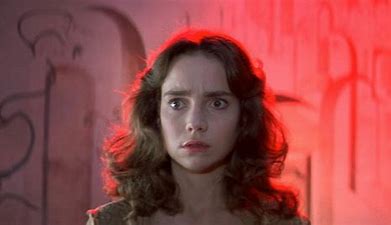
Dario Argento
LGBTQ+ CHARACTERS
*Madame Blanc (Joan Bennett)
*Miss Tanner (Alida Valli)
LGBTQ+
ACTOR: Udo Kier
Italian director Dario Argento’s supernatural horror sensation! The film stars Jessica Harper as an American ballet student who transfers to a prestigious dance academy but realizes, after a series of murders, that it’s a front for a coven of lesbian witches who are presided over by legendary actresses Alida Valli and Joan Bennett in her final role. Both actresses were, in a sense, banished from Hollywood – Valli when she didn’t turn out to be Ingrid Bergman despite her obvious talent and Bennett after her husband of the time, Walter Wanger, shot her agent Jennings Lang, whom he incorrectly supposed was her lover, in the groin. Wanger went to jail for a few months but made a successful career comeback by producing “I Want to Live.” Lang survived and successfully segued into producing. However, as is often the case, there was no sympathy for the woman involved, and Bennett’s Hollywood career was over. Valli was also involved in a scandal after she returned to Italy in the early fifties, when her lover at the time was found dead on an Italian Beach. Both actresses are dressed by Argento and his costume designer, Piero Cicoletti, in beautifully tailored jackets and suits. It is interesting to note that after this movie, Valli went on to play another lesbian character in Bertolucci’s failed collaboration with Jill Clayburgh, the film “Luna,” set in an opera milieu.
As for Harper, she is superb; her opening scene, in which she is caught in a massive downpour of rain during her journey from the airport to the school, is one of the grandest openings in a horror movie. When she arrives at the school, she notices something is not quite right – another student is leaving the building in a panic -but why? Where Bertolucci failed, Argento’s style can only be described as operatic, with a stunning use of
- Editing (Franco Fraticelli),
- cinematography (Luciano Tovoli),
- production design (Giuseppe Bassan),
- sound effects,
- costume design (Piero Cicoletti),
- and then there is the justly infamous unholy score, by Goblin which has been variously described as a symphony of screams, and a gorgeous nightmare.
The Members of the Italian prog-rock band Goblin, when they wrote and recorded the aurally transfixing avant-garde soundtrack under Argento’s guidance were:
Claudio Simonetti – keyboards (piano, organ, Mellotron, celesta, electric piano, violin)
Fabio Pignatelli – base, tabla, acoustic guitar, vocals
Massimo Morante – guitars (electric and acoustic)
Agostino Marangolo – drums, percussion
The screenplay was written by Argento and his partner, Daria Nicolodi, at the time. It is based on “Suspiria de Profundis” by nineteenth-century English writer Thomas De Quincey, who authored the novel under various stages of opium addiction and withdrawal.
Many of the actors (including Udo Kier) were dubbed into English.
Remade by Luca Guadagnino in 2018.
SUSPIRIA CAN BE STREAMED ON AMAZON, APPLE TV+ and YouTube.
69. A Special Day (1977)
(A)
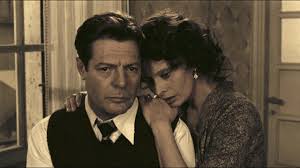
Ettore Scola
LGBTQ+ CHARACTER
*Gabriele (Marcello Mastroianni)
Set in Rome in 1938, on the day Adolf Hitler visits Benito Mussolini, the film centers on Antonietta (Sophia Loren), an exhausted, apolitical housewife left behind while her fascist husband and six children attend the parade. In the otherwise deserted apartment block, she encounters Gabriele (Marcello Mastroianni, Oscar-nominated), a former radio announcer dismissed and persecuted for his homosexuality and suspected anti-fascist sympathies.
Their meeting begins when Antonietta’s pet myna bird escapes into Gabriele’s flat. What starts as a simple retrieval evolves into a profound, transformative encounter. Over the course of the day, the two strangers—each marginalized in diverse ways by the fascist regime and rigid social roles—share conversation, vulnerability, and ultimately a fleeting intimacy, though both recognize it cannot alter their destinies.
Directed by Ettore Scola, this elegant two-hander unites Loren and Mastroianni, long celebrated as the “King and Queen of Italian Cinema.” Their star power, enriched by memories of earlier collaborations such as Yesterday, Today and Tomorrow and Marriage Italian Style, infuses the film with a layered resonance. What begins in understatement blossoms into one of the most finely acted works of the 1970s.
By evening, Antonietta’s family returns, and Gabriele is arrested for deportation. Alone once more, Antonietta sits by the window reading The Three Musketeers, the book he gave her, as her husband calls her to bed to conceive another child—a chilling reminder of the life she briefly escaped.
At the 50th Academy Awards, Bob Hope quipped that Mastroianni deserved the Best Actor prize simply for playing a homosexual opposite Sophia Loren, underscoring the film’s daring and impact.
NOW STREAMING ON AMAZON PRIME VIDEO, APPLE TV+, AND YOUTUBE
70. THE TURNING POINT (1977)
C+

HERBERT ROSS
In 1978 gay director and former choreographer Herbert Ross – he had been married to ballerina Nora Kaye and then Lee Radziwill but people in Hollywood knew he was gay – surprised everyone by filling two of the five Best Film of 1977 Oscar slots with the newly married Neil Simon/Marsha Mason romantic comedy “The Goodbye Girl” and the Arthur Laurents-penned ballet soap “The Turning Point”. Both had gay moments, and both were the very definition of schlock. Yet, between the two of them, they garnered an incredible 16 Oscar nominations (“The Turning Point” eleven and “The Goodbye Girl” five), with Ross himself getting a nod for Best Director for “The Turning Point”.
LGBTQ+ CHARACTER
*Wayne, Deedee’s husband (Tom Skerritt)
A former ballet dancer. Deedee may have married him to prove that he was not gay – according to Emma!
LGBTQ+
DIRECTOR: HERBERT ROSS
SCREENWRITER: ARTHUR LAURENTS
Shirley MacLaine is Deedee Rodgers. Once a promising ballerina, she left the stage to marry Wayne and raise a family in Oklahoma. She now runs a small ballet school. It is intimated that Deedee married her husband Wayne (Tom Skerritt), a former ballet dancer, to prove that he wasn’t gay! Anne Bancroft is Emma Jacklin, Deedee’s former friend and rival, who chose career over family, becoming a celebrated star with the American Ballet Company. Leslie Browne is Emilia Rodgers Deedee’s daughter, who joins Emma’s company, reigniting old tensions between the two women. Deedee envies Emma’s fame and regrets her own sacrifices, while Emma envies Deedee’s family life. Their rivalry intensifies as Emilia thrives under Emma’s mentorship. Emilia becomes involved with Yuri (Mikhail Baryshnikov), a charismatic dancer, complicating her professional and personal growth. Deedee and Emma confront each other in an intense argument that escalates into a physical fight, symbolizing their decades of suppressed resentment.
How this managed to get eleven Oscar nominations only Hollywood knows. The plot is basically a rehash of the old Bette Davis-Miriam Hopkins warhorse “Old Acquittance,” and the Arthur Laurents script is painfully apparent. Worse, the two major supporting characters – both of whom received Oscar nominations – are ballet dancers who cannot act. Every scene that involves Browne and/or Baryshnikov is embarrassing to watch. Finally, the big Dedee-Emma confrontation is another rehash, this time it’s a catfight stolen entirely from the far more entertaining catfight five years earlier between Carol Burnett and Geraldine Page in Pete ‘n’ Tillie.
When “The Turning Point” came away from the ceremony, 0/11, I rejoiced.
NOW STREAMING ON AMAZON PRIME VIDEO, APPLE TV+ and YOUTUBE
71. THE GOODBYE GIRL (1977)
(C)

HERBERT ROSS
LGBTQ+ CHARACTER
*Mark Bodine (Paul Benedict)
The flamboyantly gay stage director who wants Elliot (Richard Dreyfuss) to play the part of Richard III like a gay man or Bette Midler – need I say more!
LGBTQ+
DIRECTOR: Herbert Ross
“The Goodbye Girl” left the ceremony with one Oscar – Best Actor for Richard Dreyfuss. To gay people, like me, this was insulting. In aNeil Simon world, filled with throwaway dykes and fags, Dreyfuss plays an aspiring actor whose big break comes when he is cast in the leading role in Shakespeare’s Richard III (the hunchback who lost the War of the Roses and put the Princes in the Tower). Unfortunately, his director (Paul Benedict) is a raving, mincing queen who insists that Dreyfus play the part like Bette Midler. All right, this may seem momentarily funny, but did Simon stop to think for a second that gay people spend their entire lives trying to conform in a straight world? And reversing this process for a few laughs without a hint of irony seems callous and uncaring.
By the early 1980s, it had become clear that Marsha Mason’s four Oscar nominations in the Best Actress category were an egregious error, and that the Mason-Simon relationship was the most nauseating example of nepotism in Hollywood since Norma Shearer and Irving Thalberg.
NOW STREAMING ON AMAZON PRIME VIDEO, APPLE TV+ and YOUTUBE
72. CALIFORNIA SUITE (1978)
C+

HERBERT ROSS
LGBTQ+ CHARACTER
*Sidney Cochran, the gay husband of Diana Barry (Michael Caine)
LGBTQ+
DIRECTOR: Herbert Ross
PAINTER: David Hockney
Following their insult to humanity, “The Goodbye Girl” the previous year, Neil Simon and Herbert Ross took their condescending, careless attitude toward minorities to another level with the blatantly racist treatment of the four Black characters in “California Suite.” Maggie Smith has her Oscar-winning moments as Diana Barry, the British actress nominated for an Oscar (she’s the dark horse of the bunch). Her tête-à-têtes with her gay husband, Sidney (Michael Caine), are the only reason to see this charmless four-part anthology comedy set in the Beverly Hills Hotel, complete with paintings courtesy of David Hockney. It’s the companion piece to Simon’s “Plaza Suite,” which was set in New York.
Jane Fonda gets the post-Hanoi Jane rehabilitation treatment in her segment with Alan Alda. Meanwhile, Richard Prior, Bill Cosby and their onscreen partners suffer through one cringeworthy slapstick sequence after another. Sequences that would have been deemed unworthy of the Three Stooges in their prime; Simon’s contempt for other non-Jewish minority groups knew no limits.
The fourth segment involves Walter Matthau doing his usual schtick.
Music by Dave Grusin.
NOW STREAMING ON AMAZON PRIME VIDEO, APPLE TV+ and YOUTUBE
73. Who Is Killing the Great Chefs of Europe (1978)
B+

Ted Kotcheff
LGBTQ+ CHARACTER:
Max Vandeveer: Robert Morley)
THERE IS A BOMB IN THE BOMBE
Natasha “Nat” O’Brien (Jacqueline Bisset) is a renowned pastry chef invited to London to prepare a royal banquet. Robert “Robby” Ross (George Segal), her ex-husband, is a fast-food mogul nicknamed “the Taco King,” representing mass-market cuisine. Max Vandeveer (Robert Morley) is the rotund, witty (read homosexual) editor of Epicurious magazine, obsessed with fine dining and responsible for assembling the world’s most fabulous meal. After he publishes an article highlighting his favorite chefs and their signature dishes, the chefs begin dying in grotesque ways that mimic their specialties. Chef Louis Kohner, known for baked pigeon, is found roasted in an oven. In Venice, lobster chef Fausto Zoppi is discovered drowned in his lobster tank. Each murder corresponds to the order of courses in Max’s ultimate menu, suggesting a deliberate pattern. Natasha and Robby, both suspects at different points, race across Europe to prevent further killings. Natasha realizes she is the final course—her famed ice cream pastry or bombe—making her the killer’s ultimate target.
Directed by Ted Kotcheff from a screenplay by Peter Stone (Charade) and based on the novel of the same name by Nan & Ivan Lyons, this is one of the great unsung Queer films of the 1970s. Featuring a sublimely queer turn by Robert Morley, an actor who played his share of gay roles over the years (see Essay One: 85 Queer Films Made Under the Hays Code: Oscar Wilde), but, reportedly, was not queer in real life. I am pleased to say that, for his work on this movie, Morley won the Best Supporting Actor award of 1978 from both the Los Angeles Film Critics Association (LAFCA) and the National Society of Film Critics (NSFC).
STREAMING ON AMAZON PRIME VIDEO
74. MIDNIGHT EXPRESS (1978)
C-
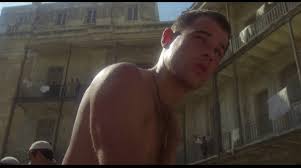
ALAN PARKER
LGBTQ+ CHARACTERS
*Billy Haynes (Brad Davis)
* Erich, a Swedish drug smuggler (Norbert Weisser)
LGBTQ+
ACTOR: Brad Davis
SOURCE: Billy Haynes: Book: Midnight Express
“Midnight Express” (1978) is a prison drama about American student Billy Hayes (played by Brad Davis), who is caught smuggling hashish out of Turkey and endures brutal imprisonment before making a daring escape.
Hayes, a young American college student, is caught at Istanbul Airport with two kilos of hashish strapped to his body. He is sentenced to just over four years for possession. Still, after political pressure, Turkish authorities retried him for smuggling and extended his sentence to 30 years. Billy faced horrific conditions in the infamous Sağmalcılar Prison, which was rife with violence, corruption, and despair.
You would think that these horrors would be enough for screenwriter Oliver Stone and director Alan Parker to work with. Yet what they deliver to the viewer is mostly fiction. Billy’s long-term gay Turkish prison affair is deemed too much for audiences – there is a brief moment of intimacy between Billy and Swedish drug smuggler Erich (Norbert Weis), which Billy abruptly terminates – yet his chewing through a prison guard’s tongue and spitting it at the camera – something that never happened – is deemed OK! This is the worst kind of filmmaking, vulgar in the extreme. Only Giorgio Moroder’s Oscar-winning score and Davis’s earnest performance lift the movie above an F.
When gay actor Brad Davis, who suffered from major substance abuse problems, was not nominated for an Oscar, while everyone around him was showered with awards, you knew that something was up. He died a few years later from an AIDS-related illness.
NOW STREAMING ON AMAZON PRIME VIDEO, APPLE TV+ and YOUTUBE
75. NIGHTHAWKS (1978)
B

Ron Peck
LGBTQ+ CHARACTER
*Jim (Ken Robertson)
LGBTQ+
DIRECTOR: Ron Peck
SCREENWRITER: Ron PECK
SCREENWRITER: Paul Hallam
Directed by Ron Peck and co-written with Paul Hallam, Nighthawks is indeed a landmark in British queer cinema. Influenced by Nicholas Ray’s movies, particularly “Rebel Without a Cause” (see Essay One: Queer Cinema under the Hays Code), Peck employs a relaxed cinema verité style, utilizing an innovative handheld camera and judicious close-ups.
The story follows Jim (Ken Robertson, in a brave, understated performance), a secondary school geography teacher who leads a double life. By day, he’s a quiet, professional educator. By night, he frequents gay bars and discos, searching for connection but mostly encountering fleeting encounters. Jim is open about his sexuality, but the film explores the emotional toll of his isolation and the societal pressures he faces.
THE PAST IS A FOREIGN COUNTRY,
THEY DO THINGS DIFFERENTLY THERE
– L.P. Hartley – “The Go-Between”
1978, you say. Not that long ago, you say. You had disco and Donna Summer. A gay couple was about to be on the cover of Time magazine, and London’s legendary gay dance club Heaven would open its doors within the year. And then it dawns on you that it was almost 50 years ago. What you worry about for Jim is his vulnerability and the nearly complete lack of protection he has from society. Homosexuality had been decriminalized in Great Britain eleven years previously. Still, there was virtually no way for someone in Jim’s position to blend their daytime and nighttime personas into a healthy unifying whole. And how loneliness and the soul destruction that goes along with it eventually take their toll.
A pivotal moment occurs when Jim’s students confront him directly about rumors of his sexuality. In a powerful classroom scene, he responds with honesty and composure, challenging their prejudices and ignorance. However, despite this moment of courage, the film ends on a sobering note: Jim is still alone, still searching, still navigating a world that offers little emotional refuge. “Nighthawks” doesn’t provide easy resolutions — instead, it captures the quiet resilience of a man living authentically in a society that barely tolerates his presence.
Cameo by queer British director Derek Jarman.
NOW STREAMING ON BFI and on YOUTUBE with FANDOR or DEKKOO
76. The Warriors (1979)
B+

Walter Hill
LGBTQ+ CHARACTERS
*The Lizzies
In a stylized, nocturnal New York City ruled by street gangs, the charismatic gang leader Cyrus (Roger Hill) gathers delegates from across the city for a massive truce meeting in Van Cortlandt Park. His vision is simple: unite the gangs into a single, powerful force capable of controlling the city. During his speech, Cyrus is assassinated by Luther (David Patrick Kelly), the leader of the Rogues, who immediately blames the Warriors based in Coney Island.
With the truce shattered and chaos erupting, the Warriors are forced to flee into the night. Their leader, Cleon (Dorsey Wright), is beaten and presumed killed, leaving Swan (Michael Beck) to guide the remaining members home. The gang must cross hostile territory in the Bronx and Manhattan while being hunted by rival gangs and pursued by police. Each encounter becomes a test of survival, identity, and loyalty as they navigate encounters with groups like The Baseball Furies, The Lizzies, and The Punks.
After a long, dangerous journey, the Warriors finally reach Coney Island at dawn. There, the truth about Cyrus’s murder is revealed, and The Gramercy Riffs—having discovered the real killer—intervene to punish Luther and the Rogues, allowing the Warriors to walk away vindicated.
WARRIORS COME OUT TO PLAY
Luther (David Patrick Kelly): The Warriors
The Lizzies are unmistakably coded as lesbians. The film never uses the word, but the cues are so overt that the intention is impossible to miss. They’re framed as dangerous, deceptive, predatory, and aligned with violence.
So why do I still admire The Warriors? Why don’t I file it alongside the reactionary exploitation films of its era?
Probably because I read the Lizzies less as predatory lesbians and more as queer icons—or perhaps as a volatile mix of both – their power comes from their queerness. Although they spring from a 1970s exploitation trope, the Lizzies, like every gang the Warriors encounter on their journey from the Bronx to Coney Island—The Turnbull ACs, The Orphans, The Baseball Furies, The Punks, The Rogues—are granted their own iconography, their own aesthetic world, and, crucially, their own respect. Interestingly, The Warriors’ Deborah Van Valkenburgh is the movie’s only heterosexual presence.
Screenplay by David Schaber and Walter Hill based on the novel of the same name by Sol Yurick, which, in turn, was based on Anabasis – the journey of the Ten Thousand from Greece to Persia in 401BCE – by the Ancient Greek soldier Xenophon.
With Lynne Thigpen (those lips – wow!) as the DJ.
Directed with great style by Walter Hill.
Cinematography by Andrew Laszlo.
NOW STREAMING ON AMAZON PRIME VIDEO, APPLE TV+ AND YOUTUBE
77. THE ROSE (1979)
B+

MARK RYDELL
LGBTQ+ CHARACTERS
*The Rose (Bette Midler)
* Rose’s ex-lover (Sandra McCabe)
LGBTQ+
ACTOR: Alan Bates
Bette Midler made a spectacular debut playing The Rose, a rock singer who is emotionally unraveling during what she insists is her final concert tour. Battling exhaustion, loneliness and addiction, she is at the mercy of her manager (Alan Bates), who pushes her relentlessly, and things reach a climax when they visit her hometown.
The film is based on the life of bisexual singer Janis Joplin and is a must-see for fans of the Divine Miss M. Her voice is not suited to the big rock numbers like “Stay with Me Baby,” but she delivers them with gusto. This is star power at its most breathtaking. Nominated for a Best Actress Oscar, she lost to Sally Field in “Norma Rae”.
About thirty minutes into the movie, a candid and well-handled love scene between The Rose, who always refers to herself in the third person, and one of her old lovers, played by Sandra McCabe, is featured, which was quite daring for 1979.
With Oscar-nominated Frederic Forrest giving a sweet performance as an AWOL army sergeant whom The Rose thinks may be her one true love, and Harry Dean Stanton in a great scene playing a country music star who cruelly demands that The Rose stop performing his songs. Meanwhile, Allen Bates hams it up. If ever an actor appeared to be “doing it for the money,” this is it!
Director Mark Rydell keeps things moving, even if the concert sequences resemble outtakes from Spielberg’s “Close Encounters” – The cinematographer on both films was Vilmos Zsigmond.
Bette had a massive hit with the film’s title song, “The Rose,” written by Amanda McBroom, which failed to snag a Best Original Song nomination.
NOT AVAILABLE FOR STREAMING. AVAILABLE ON DVD FROM AMAZON.
78. LA CAGE AUX FOLLES (1979)
C+

EDOUARD MOLINARO
LGBTQ+ CHARACTERS
*Renato (Ugo Tognazzi)
*Albin (Michel Serrault)
Renato Baldi (played by Ugo Tognazzi) is the owner of a drag nightclub, La Cage aux Folles. Albin Mougeotte (a.k.a. Zaza Napoli) (played by Michel Serrault) is Renato’s longtime partner and the club’s star performer. Laurent (Remi Laurent) is Renato’s son from a brief heterosexual fling, now engaged to a woman from a conservative family. To avoid scandal, Laurent begs his father to play it straight and hide his relationship with Albin.
Chaos should ensue as Renato and Albin attempt to “de-gay” their home, with Albin even trying to pass as Laurent’s mother. Unfortunately, what may have seemed like a scream fifty years ago now comes across as a little jaded today. Are they laughing with us, or are they laughing at us?
La Cage aux Folles was groundbreaking as one of the first international hit comedies centered on a gay couple. Its success led to two sequels (La Cage aux Folles II in 1980 and La Cage aux Folles III: The Wedding in 1985), inspired the Broadway musical (1983), and gave rise to the Hollywood remake (The Birdcage, 1996).
Surprise Best Director nomination for Eduard Molinaro.
NOW STREAMING ON APPLE TV+ and YOUTUBE
79. To Forget Venice (1979)
B+

Franco Brusati
LGBTQ+ CHARACTERS
*Nicky (Erland Josephson)
*Picchio (David Pontremoli)
*Marta (Hella Petri)
*Claudia (Eleonora Giorgi)
LGBTQ+
DIRECTOR: Franco Brusati
Franco Brusati belonged to what might be called the second tier of queer Italian directors. Active in film and television since the late 1940s, he was a versatile journeyman—playwright, screenwriter, director, and producer who in 1968 achieved international recognition as the lead writer on Franco Zeffirelli’s hugely successful adaptation of Romeo and Juliet. If Zeffirelli, Visconti, and Pasolini formed the pantheon of Italy’s “tier one,” Brusati occupied the next rung: less flamboyant, more discreet, but no less significant.
Always a private man, Brusati revealed himself—if only obliquely—through his Best Foreign Language Academy Award–nominated To Forget Venice (1979). The film presents both a male and a female queer couple, and pointedly contrasts the tender, aesthetically framed depiction of gay intimacy with the raw, almost animalistic glimpse of heterosexual sex in its opening scene. In doing so, Brusati suggested that queer desire could be rendered with greater artistry and emotional resonance than the conventional heterosexual model.
The story follows Nicky (Erland Josephson), a middle-aged man living in Milan with his younger partner Picchio (David Pontremoli). They travel to visit Nicky’s sister Marta (Hella Petri), a charismatic former opera singer now residing in the family villa with her shy companion Claudia (Eleonora Giorgi). Completing the ensemble is Mariangela Melato—so often associated with Lina Wertmüller—playing a distant cousin whose presence adds a straight counterpoint to the queer pairings.
Chekhovian in tone, the group plans a trip to Venice, though the question lingers: will they ever arrive? The narrative is less about the destination than about memory, mortality, and the fragile bonds between people who live on the margins of society.
One lingering puzzle is Brusati’s choice of Erland Josephson, the great Swedish actor best known for his collaborations with Ingmar Bergman, as his leading man. Like many international productions of the era, To Forget Venice was shot with actors speaking their native languages or approximated dialogue, then dubbed in post-production for Italian release. Since dubbing was standard practice in Italian cinema—even for Italian performers—the decision likely mattered little to audiences. Still, it underscores Brusati’s ambition to lend his film a cosmopolitan gravitas.
I do have fond memories of this movie. It was my first profoundly queer film and my first glimpse of a gay relationship, albeit with an age disparity. It mattered to me. It’s beautifully acted and photographed (Romano Albani) and well worth seeing.
As for Brusati, he never had another international success and died from leukemia at the age of 70 in 1993. However, in the mid-1970s, he directed the sleeper hit Bread and Chocolate, which featured Nino Manfredi as an Italian man working illegally in Switzerland. It was a big hit on the US college campus circuit. Clips from both movies can be seen on YouTube.
“To Forget Venice” is currently not available for streaming and is not available on DVD/Blu-ray in the United States.
80. Manhattan (1979)
A+

Woody Allen
LGBTQ+ CHARACTER
*Jill (Meryl Streep)
LGBTQ+
PRODUCTION DESIGNER: Santo Loquasto
YOU KNEW MY SEXUAL HISTORY WHEN YOU MARRIED ME!
Jill (Meryl Streep) to Isaac (Woody Allen) in “Manhattan”
One could go on and on reciting the glories of Woody Allen’s masterpiece, “Manhattan,” such as Gordon Willis’ magnificent black-and-white cinematography.
However, from a queer perspective, the standout among all the gifts that Woody gives us in this movie is Meryl Streep’s blistering, low-key, no-nonsense turn as Isaac’s (Allen‘s) second ex-wife, Jill. When they married, she was bisexual. When they broke up, she was a confirmed lesbian. She left him for another woman, and now she is writing a tell-all memoir about their marriage.
Jill is portrayed as sharp, confident, and unapologetic. She cuts through Isaac’s neurotic self-absorption with icy wit, embodying independence and self-possession. Although she appears in only a few scenes, Jill’s character underscores the film’s themes of fractured relationships, shifting sexual identities, and the self-centered chaos of Manhattan’s intellectual elite.
With this performance, along with her work in Julia (1977), The Deer Hunter (1978), The Seduction of Joe Tynan (1979), and Kramer vs. Kramer (1979), Meryl Streep had arrived as one of the greatest actresses of her generation. And she is still thriving!
NOW STREAMING ON AMAZON PRIME VIDEO, APPLE TV+, AND YOUTUBE
81. All That Jazz (1979)
A+

Bob Fosse
LGBTQ+ CHARACTERS
*Larry Goldie, a queer “suit” (David Margulies)
*Paul the piano player (Anthony Holland)
*The boys and girls aboard AIROTICA.
LGBTQ+
ACTOR: Anthony Holland
MUSICAL ARRANGER Ralph Burns
On Broadway
A Perfect Day
There’s No Business Like Show Business
Take Off with Us
Everything Old is New Again
After You’ve Gone
There’ll Be Some Changes Made (You Better Change Your Ways)
Who’s Sorry Now
Bye Bye Life
COMPOSER: Peter Allen (Everything Old is New Again)
In the Ladies and Gentlemen Welcome to Airotica segment of Take Off with Us there are BOY-BOY and GIRL-GIRL (in addition to heterosexual) greetings as “the passengers” are boarding the “airplane.”
All That Jazz (1979), Bob Fosse’s semi‑autobiographical musical drama about a brilliant but self‑destructive director/choreographer, is modeled after Fellini’s 1963 masterpiece “81/2”, and Fosse used the maestro’s cinematographer, Giuseppe Rotunno, to do the lensing, with fantastic results.
Joe Gideon (superbly played by Roy Scheider, in an Oscar‑nominated role) is a Broadway director and choreographer, clearly modeled on Bob Fosse himself. Gideon is simultaneously staging a new Broadway musical (NY/LA) and editing a film (The Stand‑Up), mirroring Fosse’s real‑life juggling of Chicago and Lenny.
He is a chain‑smoking, pill‑popping workaholic, a womanizer, and an alcoholic. His daily ritual includes popping Dexedrine, blasting Vivaldi, and staring into the mirror while muttering:
It’s showtime, folks!
Gideon pushes himself to the brink, ignoring health warnings and pleas from loved ones. His compulsive lifestyle leads to a heart attack, after which he undergoes surgery. In the hospital, he hallucinates elaborate musical numbers that blend past, present, and fantasy.
Leland Palmer plays his ex‑wife and star performer, based on Gwen Verdon.
Ann Reinking plays his girlfriend, a character similar to her own in real life.
Erzsebet Foldi plays his teenage daughter, who struggles with his neglect.
Jessica Lange is a spectral figure representing death, with whom Gideon flirts throughout the film.
Cliff Gorman plays the “Lenny Bruce” character in the movie that Gideon is editing.
Ben Vereen plays O’Connor Flood, the master of ceremonies for the climactic Bye Bye Life extravaganza
There are three stunning musical sequences: the opening On Broadway which manages to incapsulate all of A Chorus Line into ten minutes of screen time, the rehearsals for Take Off with Us which lets us into the little-known secret that, with the right choreographer (read Fosse) even a crappy song can be transformed into a dazzling musical number and the then there is the big Bye Bye Life finale, one, if not the most thrilling musical experience ever to grace the Big Screen, staged as Gideon’s farewell to existence.
THE MOVIE’S TITLE COMES FROM THE JOHN KANDER AND FRED EBB SONG ALL THAT JAZZ FROM THE 1975 MUSICAL CHICAGO, WHICH BOB FOSSE BOTH DIRECTED AND CHOREOGRAPHED. THE SONG, HOWEVER, IS NOT SUNG OR PERFORMED IN THE MOVIE.
NOW STREAMING ON AMAZON PRIME VIDEO, APPLE TV+, AND YOUTUBE
82. FAME (1980)
B-

Alan Parker
LGBTQ+ CHARACTER
*Montgomery (Paul McCrane)
LGBTQ+
SCREENWRITER: Christopher Gore
COMPOSER: Michael Gore
SONGWRITER: Michael Gore
SONGWRITER: Lesley Gore
SONGWRITER: Dean Pitchford
ACTOR: Gene Anthony Ray
Christopher Gore’s script gave us one cliched teenage story after another. However, actor Paul McCrane’s token gay character, Montgomery, stood out as an honest and moving portrayal of a shy, talented young man. Director Alan Parker’s occasionally vibrant take on The High School of Performing Arts in New York was helped immeasurably by Gerry Hambling’s editing and Michael Gore’s score.
The first movie to have two songs nominated from the same film.
Michael and Lesley Gore were brother and sister. Christopher was no relation—pure coincidence. Gore is a common Jewish last name.
Both Christopher Gore and actor Gene Anthony Ray died from an AIDS-related illness in 1988 and 2003, respectively.
Playing the role of a teacher, Anne Meara delivers one of her best performances.
And the incredible voice of Irene Cara, who played Coco.
Spawned the TV series The Kids from Fame.
Nominated for SIX OSCARS AND WON TWO
BEST SONG: FAME (MICHAEL GORE and DEAN PITCHFORD) (WIN)
BEST SONG Out Here on My Own (Michael and Lesley Gore)
BEST ORIGINAL SCORE (MICHAEL GORE) (WIN)
BEST ORIGINAL SCREENPLAY (Christopher Gore)
BEST EDITING (Gerry Hambling)
BEST SOUND
CINEMATOGRAPHY
Michael Seresin
NOW STREAMING ON AMAZON PRIME VIDEO, APPLE TV+ and YOUTUBE
83. AMERICAN GIGOLO (1980)
A
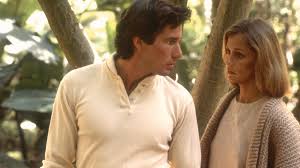
LGBTQ+ CHARACTERS
*Leon James (Bill Duke)
*Anne (Nina van Pallandt)
LGBTQ+
COSTUME DESIGNER: Giorgio Armani
VISUAL CONSULTANT: Ferdinando Scarfiotti
Julian Kay (Richard Gere) is a high-end male escort in Los Angeles who caters to wealthy, older women. His work supports his lavish lifestyle, but his emotional detachment and materialism leave him vulnerable to emotional distress.
I DON’T DO FAGS, I DON’T DO KINK
While on a job arranged by his gay male pimp Leon (Bill Duke), Julian is sent to Palm Springs for a sadomasochistic encounter with the wife of a wealthy financier. Soon after, she is found murdered, and Julian becomes the prime suspect. His alibi—another client—refuses to come forward to protect her marriage, leaving Julian exposed. Julian’s gay female pimp, Anne (Nina van Pallandt), is unsympathetic, and he is questioned by a Westwood police detective played by Hector Elizondo. As the investigation intensifies, Julian begins a romantic relationship with Michelle Stratton (Lauren Hutton), the wife of a California state senator. Their emotional connection deepens, but Julian’s world unravels as he realizes he’s being framed.
Julian may have broken half of his cardinal rule in Palm Springs. Still, writer/director Paul Schrader, despite his Calvinist instincts, his innate homophobia (at the time), and his seeing things through a Robert Bresson lens, not only encouraged composer Giorgio Moroder to write one of his most gorgeous electronic scores but also allowed his movie to be a blueprint for societal change. This is why “American Gigolo” is Schrader’s masterpiece.
Courtesy of Giorgio and Nando, two gay Italian men, glamor and fashion had returned to the world, not just Hollywood but THE WORLD.
Watching it for the first time as a teenager, I knew that, courtesy of Giorgio (Armani) and Nando (Scarfiotti), two gay Italian men, glamor and fashion had returned to the world, not just Hollywood but THE WORLD. “American Gigolo” altered the way we perceive our day-to-day existence. Goodbye, 70s. Hello, 80s. Is giving pleasure a crime? No. Hello fashion! Hello life! We will be spending an obscene amount of money in the decade ahead! And the magnificent cinematography by John Bailey didn’t hurt either!
Despite being the number one single of 1980, “Call Me,” with lyrics by Debbie Harry of Blondie and music by Moroder, failed to be nominated for Song of the Year at the 53rd Academy Awards.
Paramount Pictures
NOW STREAMING ON AMAZON PRIME VIDEO, APPLE TV+ and YOUTUBE
84. Times Square (1980)
(B)
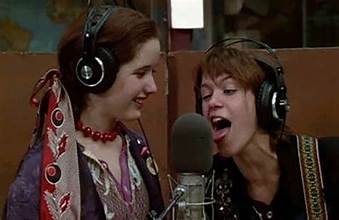
Allan Moyle
LGBTQ+ CHARACTERS
*Pamela (Trini Alvarado)
*Nicky (Robin Johnson)
Sweet coming-of-age lesbian movie. Director Allan Moyle’s Times Square is a gritty, punk‑infused coming‑of‑age drama set in pre‑Disneyfied Manhattan, where the city’s chaos becomes a refuge for two teenage girls who don’t fit anywhere else. Pamela Pearl (Trini Alvarado), the lonely daughter of a moralizing politician, is placed in a psychiatric hospital for “behavioral evaluation.” There she meets Nicky Marotta (Robin Johnson), a street‑smart, magnetic punk runaway. Their connection is immediate—intense, protective, and unmistakably queer‑coded.
The girls start writing songs together and, with the help of Radio DJ Johnny LaGuardia (Tim Curry in one of his first roles after Rocky Horror made him famous) they form an underground punk rock band named The Sleez Sisters. Their version of Your Daughter Is One (Billy Mernit/Norman Ross and Jacob Brackman) where the CHORUS goes – Spic, nigga, faggot, bum/Your daughter IS one – is one of the movie’s highlights.
The soundtrack, which is a who’s who of punk rock/new wave in 1980, has become a cult favorite:
TIMES SQUARE SOUNDTRACK -TRACKLIST
| A1 | Suzi Quatro– | Rock Hard | 3:18 |
| A2 | The Pretenders– | Talk Of The Town | 3:16 |
| A3 | Roxy Music– | Same Old Scene | 3:54 |
| A4 | Gary Numan– | Down In The Park | 4:20 |
| A5 | Marcy Levy & Robin Gibb– | Help Me! | 3:37 |
| B1 | Talking Heads– | Life During Wartime | 3:40 |
| B2 | Joe Jackson– | Pretty Boys | 3:21 |
| B3 | XTC– | Take This Town | 4:07 |
| B4 | The Ramones– | I Wanna Be Sedated | 2:29 |
| B5 | Robin Johnson– | Damn Dog | 2:40 |
| C1 | Robin Johnson & Trini Alvarado– The Sleez Sisters | Your Daughter Is One | 2:10 |
| C2 | The Ruts– | Babylon’s Burning | 2:34 |
| C3 | D.L. Byron– | You Can’t Hurry Love | 3:04 |
| C4 | Lou Reed– | Walk On The Wild Side | 4:12 |
| C5 | Desmond Child & Rouge– | The Night Was Not | 3:08 |
| D1 | Garland Jeffreys– | Innocent, Not Guilty | 2:13 |
| D2 | The Cure– | Grinding Halt | 2:49 |
| D3 | Patti Smith Group– | Pissing In The River | 4:41 |
| D4 | David Johansen & Robin Johnson– | Flowers In The City | 3:58 |
| D5 | Robin Johnson– | Damn Dog (Reprise – The Cleo Club) | 2:40 |
Both Alvarado and Johnson are wonderful, with Johnson giving what should have been a star-making performance. It wasn’t, which is a pity. The film was badly managed, and she was under a personal contract to the Robert Stigwood Organization (RSO) which, as the 1970s became the 1980s, begun to lose its magic touch. By the late 1980s she had given up on acting. Alvarado did somewhat better, her most prominent role being Meg March in the 1994 Gillian Armstrong version of Little Women. She continues to work today. Director Allan Moyle went on to make another cult classic, Pump Up the Volume, with Christian Slater and Samantha Mathis in 1990.
RSO
Streaming on Apple TV+, Amazon Prime Video and YouTube.
85. Dressed to Kill (1980)
A-

Brian De Palma
LGBTQ+ CHARACTER:
*Dr. Robert Elliott (Michael Caine)
“Dressed to Kill” (1980) is Brian De Palma‘s stylish homage to Alfred Hitchcock’s Psycho and Vertigo. Thanks to Ralph D. Bode’s cinematography and Pino Donaggio’s haunting score, it is both a visual and an aural feast.
The movie begins with Angie Dickinson in the shower, as most of Hollywood debated whether she was using a body double – she was! Angie plays Kate Miller, a sexually frustrated housewife who seeks excitement outside her marriage. After a brief affair with a stranger, she is brutally murdered in an elevator by a mysterious blonde woman. The only witness is Liz Blake (Nancy Allen, Mrs. Brian De Palma at the time), a high-end prostitute who becomes entangled in the investigation. With the help of Kate’s teenage son, Peter (Keith Gordon), Liz tries to uncover the killer’s identity. The prime suspect is Dr. Robert Elliott (Michael Caine), Kate’s psychiatrist, who may be hiding a dangerous secret involving split personality disorder.
A stunning sequence in a museum mirrors the early scenes in Hitchcock’s masterpiece Vertigo.
The LGBTQ+ link here is the Caine character. Like Tony Perkins in “Psycho,” he is most definitely Queer.
NOW STREAMING ON AMAZON PRIME VIDEO, APPLE TV+ and YOUTUBE
86. NIJINSKY (1980)
C–

HERBERT ROSS
LGBTQ+ CHARACTERS
*Vaslav Nijinsky (George de la Pena)
*Sergei Diaghilev (Alan Bates)
*Mikhail Fokine (Jeremy Irons)
LGBTQ+
DIRECTOR: Herbert Ross
WRITER: Hugh Wheeler
ACTOR: Alan Bates
Director Herbert Ross returns, showcasing the power dynamics within the Ballet Russes and the tragic story of the renowned ballet dancer Vaslav Nijinsky. He is played by American ballet dancer George de la Pena, who is not quite up to the task, even if the ballet sequences are sometimes breathtaking. Alan Bates is shortchanged as his mentor, Sergei Diaghilev, who was a genius; however, in Hugh Wheeler’s script, he is pigeonholed into the role of a jealous lover.
Why does a renowned artist go crazy? Not a simple question to answer. Ross and Wheeler, however, take a reductive approach, blaming everything on the woman, Rolola de Pulsky (Leslie Browne from “The Turning Point”), who steals him from Diaghilev. With Jeremy Irons, making his movie debut as the great ballet teacher and choreographer, Mikhail Fokine.
The movie was co-produced by Ross’s wife, the ballerina Nora Kaye.
Cinematography by Douglas Slocombe.
After a series of mediocre but, in some cases, phenominally successful movies like “The Goodbye Girl” and “The Turning Point,” Herbert Ross delivered a masterpiece in 1981: his adaptation of Dennis Potter’s BBC series “Pennies from Heaven”. Although it was not a commercial success, it is thrilling, featuring some of the best musical numbers ever produced. Outside of the purview of this essay, it will be reviewed separately.
NOW STREAMING ON APPLE TV+ and YOUTUBE
87. Paul’s Case (1980)
(A)

Lamont Johnson
LGBTQ+ Character
Paul (Eric Roberts)
First shown on PBS on February 11, 1980. Adapted for the short story of the same name by Willa Cather, published in 1905.
Paul (Eric Roberts), a high‑school student in Pittsburgh, is artistic, dreamy, and painfully out of place. He works as an usher at the symphony and idolizes the world of music, elegance, and refinement. At home, he lives with his strict, unimaginative father. At school, teachers view him as insolent and “unnatural.” His mannerisms and aestheticism mark him as different—coded queer in both Cather’s text and the film’s interpretation.
Paul is fired from his usher job after being accused of inappropriate behavior and lying. Desperate to escape, he steals a large sum of money from his employer and flees to New York City, where he checks into the Waldorf-Astoria, buys fine clothes, and lives for a few days as the person he believes he was meant to be. He befriends a young Yale student and experiences a fleeting sense of belonging in a world of sophistication and possibility. When the theft is discovered, Paul realizes his fantasy life is collapsing. Rather than return to Pittsburgh and face disgrace, he walks into the snow and takes his own life—a tragic, lyrical ending that mirrors the story’s themes of beauty, alienation, and the impossibility of escape.
Beautifully realized by director Lamont Johnson, the film preserves Cather’s delicate psychological shading and queer-coded subtext. Eric Roberts’ performance is luminous—romantic, brittle, and heartbreaking. A star is born.
Highly rated by Pauline Kael.
One of three TV movies that made the list – the others are That Certain Summer, from 1973 and The Naked Civil Servant, from 1975.
Now streaming on DOVE (through AMAZON)
88. Taxi zum Klo (1980)
A-

FRANK RIPPLOH
LGBTQ+ CHARACTERS
*Frank (Frank Ripploh)
*Bernd (Brend Broaderup)
LGBTQ+
ACTOR: Frank Ripploh
ACTOR: Bernd Broaderup
DIRECTOR Frank Ripploh
SCREENWRITER: Frank Ripploh
In the city late tonight
Double feature, black and white (sic)
Bitter Tears and Taxi to the Klo
Find a bar, avoid a fight
Show your papers, be polite
Walking home with nowhеre else to goTom Robinson “Atmospherics” from the 1984 album “War Baby”
Singer/songwriter Tom Robinson immortalized this movie in his song “Atmospherics: ListentotheRadio” co-written with Peter Gabriel) from his 1984 album “Hope and Glory.” He pairs it with Fassbinder’s “The Bitter Tears of Petra von Kant.” Presumably, for rhyming, Gabriel and Robinson say that both movies are in black and white. Sorry, guys, they are both in color.
Written, directed by, and starring Frank Ripploh, Taxi zum Klo (“Taxi to the Toilet”) is a groundbreaking semi-autobiographical German film that candidly explores the dual life of a gay man in West Berlin at the dawn of the 1980s.
Similar in theme and storyline to “Nighthawks” (see above), the protagonist Frank (played by Ripploh) is a dedicated and charismatic schoolteacher by day and an openly gay man by night, navigating the tension between his professional respectability and his uninhibited personal life. In keeping with the ethos of his time and place his nocturnal freedom of expression is highly sexual, as he cruises public toilets, bars, and sex clubs for anonymous sexual encounters and Ripploh, the director, films these scenes with a sense of documentary-like realism.
GERMAN PREMIERE AT THE HOF INTERNATIONAL FILM FESTIVAL IN WEST GERMANY IN NOVEMBER OF 1980.
He begins a relationship with Bernd (Bernd Broaderup), a more domestically inclined man who desires monogamy and stability. Frank, however, struggles with fidelity and the constraints of a conventional relationship. The film is both a celebration of queer desire and a critique of the emotional isolation that can accompany sexual liberation. Its sexual candor was shocking at the time.
Unfortunately, the film marked, not the beginning, but the end of an era. By the time it was shown at the New York Film Festival in 1981, several cases of AIDS (or as it was known then, GRID: gay-related immune deficiency) had already been reported. Seen through this new lens, Ripploh’s leading character (himself) seemed grossly irresponsible. This incredible piece of bad timing, together with the death of Fassbinder and with him, the New German Cinema in 1982, put a massive strain on Ripploh’s career. He only made two more films – one of which was a poorly received sequel – before dying of cancer in 2002 at the age of 51.
NOW STREAMING ON ROKU and TUBI
QUEER CINEMA: HIGHLY RATED
Queer‑coded films often distinguish themselves through sophistication and intellectual depth. Because audiences approach them with heightened attentiveness—always searching for subtext or coded meaning—these works place significant demands on the viewer but also deliver exceptional rewards. This dynamic helps explain the consistently strong ratings, as reflected in my subjective opinions, across the 85 films examined, with an average rating of B.
ESSAY TWO – TABLE 3
88 QUEER FILMS FROM THE NEW HOLLYWOOD -RATED
| All That Jazz | A+ | If… | A- | La Cage aux Folles | C+ |
| The Bitter Tear of Petra Von Kant | A+ | Next Stop Greenwich Village | A- | California Suite | C+ |
| Cabaret | A+ | The Private Life of Sherlock Holmes | A- | Car Wash | C+ |
| Carrie | A+ | Sleeper | A- | The Damned | C+ |
| The Conformist | A+ | Suspiria | A- | Female Trouble | C+ |
| Deliverance | A+ | Taxi zum Klo | A- | In Celebration | C+ |
| Diary of a Mad Housewife | A+ | That Certain Summer | A- | Ode to Billy Joe | C+ |
| Dog Day Afternoon | A+ | Fox and His Friends | B+ | Once Is Not Enough | C+ |
| Grey Gardens | A+ | The Great Gatsby | B+ | The Ritz | C+ |
| Jean Dielman | A+ | The Lion in Winter | B+ | The Sergeant | C+ |
| Manhattan | A+ | Performance | B+ | The Turning Point | C+ |
| Picnic at Hanging Rock | A+ | The Rose | B+ | The Goodbye Girl | C |
| 2001: A Space Odyssey | A | There Was a Crooked Man | B+ | Norman, Is That You? | C |
| American Gigolo | A | To Forget Venice | B+ | Pink Flamingos Female Trouble | C C+ |
| Barry Lyndon | A | The Warriors | B + | The Rocky Horror Picture Show | C |
| The Boys in the Band | A | Who Has Been Killing Off the Great Chefs of Europe? | B+ | Teorema | C |
| The Day of the Jackel | A | The Killing of Sister George | B | The Boston Strangler | C- |
| Going Places | A | The Last of Sheila | B | Midnight Express | C- |
| Little Big Man | A | Nighthawks | B | Nijinsky | C- |
| Midnight Cowboy | A | Time Square | B | Play It as It Lays | C- |
| The Naked Civil Servant | A | Butley | B- | Save the Tiger | C- |
| Paul’s Case | A | Entertaining M. Sloane | B- | Sebastian | C- |
| A Special Day | A | Fame | B- | Something for Everyone | C- |
| Sunday Bloody Sunday | A | Goodbye Columbus | B- | Staircase | C- |
| Les Biches | A | No Way to Treat a Lady | B- | A Touch of Class | C- |
| Death in Venice | A- | Pete n’ Tillie | B- | The Detective | D+ |
| Dressed to Kill | A- | Rachel, Rachel | B- | A Very Natural Thing | D |
| Everything You Always Wanted to Know About Sex – *What is Ejaculation? | *A- | Satyricon | B- | ||
| Farewell My Lovely | A- | Summer Wishes, Winter Dreams | B- | ||
| The Garden of the Finzi-Continis | A- | Women in Love | B- |
MY MAJOR INFLUENCES IN WRITING THESE TWO ESSAYS
- The Celluloid Closet: Homosexuality in the Movies: Vito Russo’s landmark 1981 non-fiction book.
- Queer & Now & Then: Michael Koresky’s series of articles on Queer Cinema in the magazine Film Comment.
- Homosexuality in Film Noir: Richard Dyer’s seminal 1977 article on Homosexuality in Film Noir in the magazine JUMP CUT
- I Lost It at the Movies (1965), Kiss Kiss Bang (1968) and When the Lights Go Down (1980): Three essential collections of film criticism by my favorite film critic, Pauline Kael.
- Lost Gay Novels: Anthony Slide’s 2003 Reference Guide to Fifty Works from the First Half of the Twentieth Century.
| ESSAY TWO – TABLE 5 88 Queer Films from the New Hollywood DIRECTORS | ACTORS | SCREENWRITERS The directors, actors and screenwriters associated with THE QUEER HALL OF SHAME are not listed here. They are listed in Table 2. | |||
| DIRECTORS OF THE 88 FEATURED FILMS. GAY DIRECTORS HIGHLIGHTED | ACTORS PLAYING GAY CHARACTERS. GAY ACTORS HIGHLIGHTED | ACTORS PLAYING GAY CHARACTERS. GAY ACTORS HIGHLIGHTED | Gay Screenwriters and Writers of Source Material |
| Herbert Ross (5) | Alan Bates (2) | Harvey Jason (1) | Rainer Werner Fassbinder (2) |
| Woody Allen (3) | Helmut Berger (2) | Barney James (1) | Luchino Visconti (2) |
| Lindsay Anderson (2) | Michael Caine (2) | Robert Joel (1) | Chantal Akerman (1) |
| Brian De Palma (2) | Rod Steiger (2) * | Robin Johnson (1) | Giorgio Bassani (1) |
| Rainer Werner Fassbinder (2) | Antonio Vargas (2) | Erland Josephson (1) | Lawrence D. Cohen (1) |
| Bob Fosse (2) | Michael York (2) | Hiram Keller (1) | Mart Crowley (1) |
| Lamont Johnson (2) | F. Murray Abraham (1) | Robert La Tourneaux (1) | John Dyer (1) |
| Stanley Kubrick (2) * | Trini Alvarado (1) | Anne-Louise Lambert (1) | Christopher Gore (1) |
| Alan Parker (2) | Harry Andrews (1) | Frank Langella (1) | Paul Hallam (1) |
| Frank Perry (2) | Rene Auberjonois (1) | Robert Little Horse (1) | Christopher Isherwood (1) |
| John Schlesinger (2) * | Stephane Audran (1) | Laurence Luckinbill (1) | Larry Kramer (1) |
| Luchino Visconti (2) | Bob Balaban (1) | Sandra McCabe (1) | Arthur Laurents (1) * |
| John Waters (2) | Paul Benedict (1) | Paul McCrane (1) | Ron Peck (1) |
| Chantal Akerman (1) | Richard Benjamin (1) | Peter McEnery (1) * | Frank Ripploh (1) |
| Robert Aldrich (1) * | Joan Bennett (1) | David Margulies (1) | John Van Druten (1) |
| Dario Argento (1) | Robby Benson (1) | Marcello Mastroianni (1) | Hugh Wheeler (1) |
| John G. Avildsen (1) | Dirk Bogarde (1) * | Michael Meyers (1) | |
| Max Baer (1) | Karlheinz Böhm (1) | Melina Mercouri (1) | |
| Bernardo Bertolucci (1) | James Bolam (1) | Bette Midler (1) | |
| Bertrand Blier (1) | Max Born (1) | Robert Morley (1) | |
| John Boorman (1) | Bernd Brauderup (1) | Kenneth Nelson (1) | |
| Franco Brusati (1) | Carol Browne (1) * | Margaret Nelson (1) | |
| Donald Cammell (1) | Betty Buckley (1) | Richard O’ Callaghan (1) | |
| Gilbert Cates (1) | Richard Burton (1) | Anita Pallenberg (1) | |
| Claude Chabrol (1) | Michael Byrne (1) | Estelle Parsons (1) | |
| Jack Clayton (1) | Margit Carstensen (1) | George de la Pena (1) | |
| Vittorio De Sica (1) | Jack Cassidy (1) | Anthony Perkins (1) * | |
| Stanley Donen (1) | Jonathan Cecil (1) | David Pontremoli (1) | |
| Gordon Douglas (1) | Peter Chatel (1) | Martin Potter (1) | |
| Federico Fellini (1) * | Lois Chiles (1) | Paul Price (1) | |
| Richard Fleischer (1) * | Pierre Clementi (1) | Keith Prentice (1) | |
| John Flynn (1) | Eve Collyer (1) | Douglas Rain (voice only) (1) | |
| Melvin Frank (1) | Frederick Combs (1) | John Randolph (1) | |
| William Friedkin (1) | Hume Cronyn (1) * | Robert Redford (1) | |
| Guy Green (1) | Tim Curry (1) | Beryl Reid (1) | |
| Anthony Harvey (1) | Timothy Dalton (1) | Ron Rickards (1) | |
| Douglas Hickox (1) | Brad Davis (1) | Frank Ripploh (1) | |
| Walter Hill (1) | Anthony Daws (1) | Eric Roberts (1) | |
| Derek Jarman (1) | Gerard Depardieu (1) | Rachel Roberts (1) | |
| Ted Kotcheff (1) | Patrick Deweare (1) | Ken Robertson (1) | |
| Christopher Larkin (1) | Divine (1) | Anton Rodgers (1) | |
| Richard Lester (1) | Gwyda Donhowe (1) | Dominique Sanda (1) | |
Sidney Lumet (1) * | Dennis Dugan (1) | Chris Sarandon (1) | |
Joseph L. Mankiewicz (1) * | Bill Duke (1) | Jacqueline Sassard (1) | |
| Paul Mazursky (1) | Rainer Werner Fassbinder (1) | Hanna Schygulla (1) | |
| Albert Maysles (1) | Peter Finch (1) | Michel Serrault (1) | |
| David Maysles (1) | James Fox (1) * | Martin Sheen (1) | |
| Edouard Molinaro (1) | Leonard Frey (1) | Tom Skerritt (1) | |
| Allen Moyle (1) | Cliff Gorman (1) | Robert Stephens (1) | |
| Paul Newman (1) | Vivean Gray (1) | Vladek Sheybal (1) | |
| Reuben Greene (1) | Alexis Smith (1) | ||
| Pier Paolo Pasolini (1) | Helmut Griem (1) | Terence Stamp (1) | |
| Ron Peck (1) | Rex Harrison (1) | Meryl Streep (1) | |
| Larry Peerce (1) | Hurd Hatfield (1) * | Ugo Tognazzi (1) | |
| Arthur Penn (1) | Murray Head (1) | Leonardo Treviglio (1) | |
| Harold Pinter (1) | Irm Hermann (1) | Jean-Louis Trintignant (1) | |
| Harold Prince (1) | Anthony Higgins (1) | Alida Valli (1) | |
| Dick Richards (1) | Dustin Hoffman (1) | Nina van Pallandt (1) | |
| Frank Ripploh (1) | Hal Holbrook (1) | Jon Voight (1) | |
| Martin Ritt (1) | Jason Holliday (1) | Michael Warren (1) | |
| Nicholas Roeg (1) | Anthony Holland (1) | Richard Warwick (1) | |
| Ken Russell (1) | Anthony Hopkins (1) | Sam Waterston (1) | |
| Michael Sarne (1) | Bernard Hughes (1) | Rupert Webster (1) | |
| George Schlatter (1) | John Hurt (1) | Norbert Weisser (1) | |
| Paul Schrader (1) | Jeremy Irons (1) | Beryl Reid (1) | |
| Michael Schultz (1) | Mick Jagger (1) | Susannah York (1) | |
| Ettore Scola (1) | **Timothy Carlton (uncredited) (1) | ||
| Jim Sharman (1) | |||
| Jack Smight (1) | |||
| Peter Weir (1) | |||
| Billy Wilder (1)* | |||
| Fred Zinnemann (1) | |||
*This director, actor or screenwriter was also mentioned in the previous Essay: 85 Queer Films Made Under The Hays Code
** Uncredited


