

DIRECTOR: Michael Curtiz
Joan Crawford plays Mildred, and Ann Blyth plays Veda—the most ungrateful daughter in cinema history—in Mildred Pierce, director Michael Curtiz’s masterful adaptation of James M. Cain’s 1941 novel, from an Oscar‑nominated screenplay by Ranald MacDougall (with several uncredited contributors). It was Crawford’s first starring role for Warner Bros. after leaving MGM, and she deservedly won the 1945 Academy Award for Best Actress.
Mildred Pierce is the centerpiece of the mid‑1940s Cain triptych, flanked by Billy Wilder’s Double Indemnity (Paramount, 1944) and Tay Garnett’s The Postman Always Rings Twice (MGM, 1946). All three films hook you instantly with their propulsive plots and showcase some of the decade’s finest acting and direction—making Cain one of the best‑served novelists in Hollywood history.
The film opens on the Malibu (or possibly Santa Monica) pier with the murder of Monte Beragon (Zachary Scott), Mildred’s second husband. The sequence ends with a magnificent close‑up: Crawford’s Mildred reflected in a window, swathed in fur. The police inform her that her first husband, Bert Pierce (Bruce Bennett), is the prime suspect—he owns the gun, has a motive, and doesn’t deny the crime. Mildred insists he is too gentle to kill anyone and begins recounting her story in flashback.
Mildred and Bert are an unhappily married couple in Glendale. After Bert’s business collapses—thanks to his oily partner Wally Fay (Jack Carson)—Mildred must sell her baked goods to support the family. Bert accuses her of loving their daughters more than him. When his mistress, Maggie Biederhof (Lee Patrick), calls during a quarrel, the marriage collapses.
Mildred keeps custody of sixteen‑year‑old Veda, a bratty social climber, and ten‑year‑old Kay (Jo Ann Marlowe), a genial tomboy. Because they live in working‑class Glendale rather than adjacent, aristocratic Pasadena, Veda lives in a state of perpetual shame. Mildred tries to appease her with material comforts, taking a job as a waitress and eventually parlaying her skills into a wildly successful chain of chicken‑and‑waffle restaurants. She runs the business with her friend Ida—played by Eve Arden in her only Oscar‑nominated role. Arden’s dry, queer‑coded delivery makes Ida the film’s voice of reason, and her scenes with Mildred carry a subtle emotional charge that suggests feelings deeper than friendship.
Mildred meets Pasadena playboy Monty Beragon and, though she doesn’t love him, marries him to ease Veda’s entry into high society. Monty, however, is not wealthy; Mildred begins embezzling from her own business to cover his family’s debts and Veda’s extravagances. None of it satisfies Veda, whose appetite for status is bottomless.
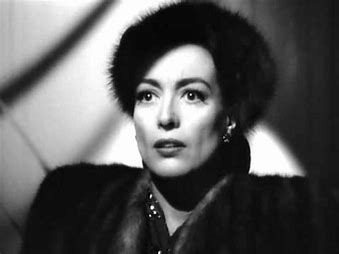
LIKE MOST OF THE GREAT FILM NOIRS FROM THE FORTIES, “MILDRED PIERCE” THEN PROCEEDS WITH CRAWFORD’S NARRATION, AND THE NARRATIVE UNFOLDS IN FLASHBACK
Brilliantly filmed in high Germanic style by a cadre of Viennese émigré geniuses—Curtiz, production designer Anton Grot and composer Max Steiner, in addition to cinematographer Ernest Haller, and art director George James Hopkins—Mildred Pierce is one of the great noirs of the 1940s. Curtiz’s blend of high melodrama and near‑camp makes the film a queer classic. In addition to Arden’s Ida, there is another queer‑coded presence: Zachary Scott’s Monty, whose languid feyness constantly raises the possibility that his sexual interests extend beyond women.
And then there is the film’s magnificent lack of subtlety in the health department. In pre‑1960 Hollywood, a single cough is a death sentence. Poor Kay coughs once—just once—and we know she’s doomed. She survives the family trip to Lake Arrowhead only to return to Glendale in an oxygen tent, setting up one of the film’s most unforgettable scenes. When Kay takes her final breath, the nurse rushes to turn off the oxygen before Mildred or Veda can react. It’s both heartbreaking and, in its abruptness, darkly hilarious.
Like Robert Aldrich’s Whatever Happened to Baby Jane? Mildred Pierce plays as drama and camp simultaneously, with no contradiction between the two. That’s part of its enduring magic.
And yes—Butterfly McQueen appears in a brief but peerless burst of high camp as Mildred’s maid, hired and costumed (of course) by Veda. Delicious doesn’t begin to cover it
Warner Bros.
Remade for HBO Max by writer/director Todd Haynes in 2011, starring Kate Winslet, Evan Rachel Wood, and Guy Pierce.
NOW STREAMING ON AMAZON PRIME VIDEO, APPLE TV+, YOUTUBE


