

Bradley Cooper’s “Maestro,” his peripatetic biopic of Leonard Bernstein, leaves out vast chunks of the great composer/conductor’s life, including:
- His deep friendship with composer Aaron Copland – they were probably lovers.
- The famous bet made between Bernstein and his clarinetist boyfriend, David Oppenheim (Matt Bomer), that one of them would make actress Judy Holliday their beard. Eventually, Oppenheim married her. In one of the film’s early scenes, Judy and her baby, Jonathan Oppenheim (they are never identified), briefly encounter Leonard and David.
- The famous radical chic party that Bernstein and his wife threw for the Black Panthers at their fabulous Park Avenue apartment in 1970
- And above all, his Judaism and his deep connection to the young state of Israel, which, given the current horrific situation in the Middle East, can only be considered a kaddish that is shared with his audience.
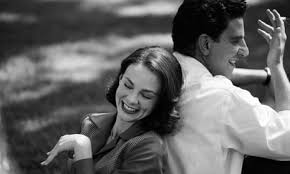
Cooper co-wrote (with Josh Singer), co-produced the movie, and stars as Bernstein. His performance is a vain impersonation of an arrogant man. This genuflection comes to the fore in his overtly reverential recreation of Bernstein’s direction of Mahler’s Second Symphony in Ely Cathedral in England in 1973. Cooper had been practicing directing this masterpiece for years, and the result is a genuine tour de force on its own merits. You feel like giving Cooper’s recreation of one of Bernstein’s most incredible triumphs (recorded for television) a standing ovation, even if you think that it is a massive piece of self-indulgence on Cooper’s part.
Cooper does not shy away from Bernstein’s homosexuality and the pain that this caused his Costa Rican-Chilean wife, Felicia Montealegre. Carey Mulligan’s performance as Felicia, who converted from Catholicism to Judaism to marry Bernstein and knew of his attraction to men when she married him, anchors the film. Happy at first, she began to unravel as her husband had one affair after another, although she always stood by him and stayed married to him until she died of breast/lung cancer at the age of 56.
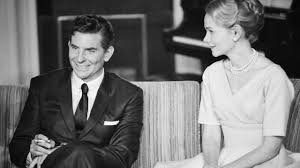
Mulligan has the two best sequences in the film. One is at Bernstein’s “Mass” premiere in September 1971. Bernstein is seated between Felicia and his latest young lover in their box. As the concert proceeds, we see her focusing on their hands, which eventually intertwine. Years of suffering and anger wash over her face.
The second is a master class in great acting by Mulligan. In a single take, Felicia finally confronts her husband, telling him that he will end up a bitter old queen.
Otherwise, the film is a mixed bag with a vast supporting cast given nothing to do (Sarah Silverman is utterly wasted as Bernstein’s sister) and introduced and disposed of at such frequency (hmm, was that Comden and Green!?) that things become confusing. On the other hand, Matthew Libatique’s cinematography is luminous, transitioning from immaculate black and white to rich color as the years pass.


