
Casablanca (1942-1943) Queer Film A+

I think this is the beginning of a beautiful friendship

Humphrey Bogart to Claude Rains in “Casablanca”
DIRECTOR: Michael Curtiz
Casablanca unfolds in the Moroccan port city of the same name, with most of the action centered at Rick’s Café Américain, the nightclub owned by the film’s reluctant hero, Rick Blaine (Humphrey Bogart). The plot ignites when an old flame, Ilsa Lund (Ingrid Bergman), arrives unexpectedly with her husband, Victor Laszlo (Paul Henreid), the Resistance leader the Nazis are desperate to capture. Rick must decide whether to put aside his lingering heartbreak and help Victor escape so he can continue the fight against fascism.
But Casablanca contains not one love story, but three: Ilsa and Rick, Ilsa and Laszlo, and—running quietly beneath the surface—the charged, conspiratorial bond between Rick and Captain Renault (Claude Rains). By the time they walk off together into the mist and Rick delivers that immortal final line, it’s clear the tension has been there from the beginning. Their “honeymoon,” we are told, will be in Camp Brazzaville—a notorious homosexual haven in the colonial imagination, the Palm Springs of its day.
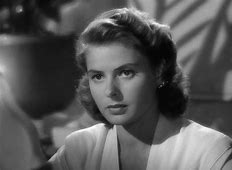
Dooley Wilson provides the film’s emotional heartbeat as Sam, the piano player whose rendition of Herman Hupfeld’s “As Time Goes By” becomes the movie’s leitmotif. Max Steiner wove the melody into his score, though the song itself predated the film by over a decade, having been written for the 1931 Broadway musical Everybody’s Welcome.
Written on the fly by the fabulous Epstein twins—Philip and Julius—along with Howard Koch, and directed by Michael Curtiz with what can only be described as divine precision, Casablanca remains one of Hollywood’s most romantic and enduring achievements.
The film premiered in New York on November 26, 1942, timed to coincide with the Allied invasion of North Africa. Its Los Angeles and national release followed on January 23, 1943, aligning with the Churchill–Roosevelt Casablanca Conference. Under AMPAS rules, this made the film eligible for the 1943 Academy Awards. At the 16th Oscars, held at Grauman’s Chinese Theatre on March 2, 1944, it won Best Picture (Hal B. Wallis, producer), Best Director (Curtiz), and Best Adapted Screenplay (the Epstein brothers and Koch).
When Best Picture was announced, Jack Warner famously rushed to the stage to accept the award, leaving Wallis—its actual producer—stranded in the aisle. Wallis never forgave him. He soon resigned from Warner Bros. and established his own production company under the Paramount banner.
Adapted from the unproduced play Everybody Comes to Rick’s by Murray Burnett and Joan Alison, Casablanca remains a miracle of studio-era alchemy: accidental, improvised, and somehow perfect.
CINEMATOGRAPHY:
Arthur Edeson
Warner Bros.

NOW STREAMING ON AMAZON PRIME VIDEO, APPLE TV+, Max (YOUTUBE)

https://thebrownees.net/85-queer-films-made-under-the-hays-code-1934-1968/
https://thebrownees.net/85-queer-films-from-the-new-hollywood-1968-1980/
https://thebrownees.net/the-great-cinematographers-of-hollywoods-golden-age/
https://thebrownees.net/the-great-tunesmiths-of-hollywoods-golden-age/
https://thebrownees.net/the-great-lyricists-of-hollywoods-golden-age/
Notorious (1946) Film Review A+ – TheBrownees
Pete ‘n’ Tillie (1972) Film Review B- TheBrownees

Popular Articles

Subscribe for the latest reviews right in your inbox!