
| Hidden in Plain Sight | ||
| ESSAY ONE – 86 Queer Films Made Under the Hays Code (1934-1968): 306 pages | ||
| CHAPTER | TABLE OF CONTENTS | PAGES1 |
| – | TITLE PAGE | 2 |
| – | INTRODUCTION | 3 |
| – | MY MAJOR INFLUENCES | 302 |
| – | URLs | 303-306 |
| 1 | Joseph Breen and the Hays Code | 4-5 |
| 2 | 28 Queer Films vs the Hays Office – Seven Possible ScenariosTable 1 (7-13) | 6-16 |
| 3 | 17 Landmark Queer Films at the Hays Code – MPAA Transition (1964-1969)Table 2 (19-26) | 17-26 |
| 4 | LGBTQ+ IN HOLLYWOOD – The Actors | 27-32 |
| 5 | LGBTQ+ IN HOLLYWOOD – Behind the CameraTable 3 (38-39) | 33-39 |
| 6 | STUDIO BREAKDOWN | SOURCE MATERIAL | 86 MOVIES RATED | GLOSSARY Table 4 (43-44) | 40-44 |
| 7 | 1935-1939: QUEER FILMS 1-6 (6)The Bride of Frankenstein – The Wizard of Oz | 45-60 |
| 8 | 1940s: QUEER FILMS 7-26 (20)Rebecca – Adam’s RibTable 5 (78-82), Table 6 (83), Table 7 (120-121) | 61-122 |
| 9 | 1950s: QUEER FILMS 27-53 (27)All About Eve – North By Northwest | 123-199 |
| 10 | 1960-1967: QUEER FILMS 54-86 (33)Oscar Wilde – Reflections in a Golden EyeTable 8 (205-206) and Table 9 (296-301) | 200-301 |
HIDDEN IN PLAIN SIGHT
Queer Cinema from the Hays Code to the New Hollywood
1934-1980
A Book Proposal
Submitted by
Patrick Browne, MD PhD
thebrownees.net
1 (323) 3763657
ESSAY ONE
86 QUEER FILMS MADE UNDER THE HAYS CODE
ESSAY TWO
108 QUEER FILMS FROM THE NEW HOLLYWOOD
ESSAY ONE
86 QUEER FILMS MADE UNDER THE HAYS CODE
INTRODUCTION.
Essay One: 86 Queer Films Made Under the Hays Code (1934-1968) examines Queer Film under the notorious Hays Code, spanning the years from 1934 to 1968. A second essay, entitledEssay Two: 108 Queer Films from the New Hollywood (1968-1980), covers Queer Cinema from the introduction of the MPAA rating system in 1968 to the end of the New Hollywood era in 1980.
These essays reflect my perspective on the portrayal of the LGBTQ+ community on the big screen over two contrasting eras. A gay man who, although a medical doctor by profession, fell in love with movies at a young age. A gay man who grew up and went to college and medical school in Ireland and, by chance, got the opportunity to review movies in the mid-nineteen-eighties, first for In Dublin and then for The Irish Times. A gay man who followed his dreams to California and has lived in Los Angeles since the nineteen-nineties.
What is Queer Cinema? It can have different meanings for different people. If there is a gay character that is a character and not a prop for straight people to laugh at, then, in my opinion, it’s Queer Cinema. It’s also a sensibility. A sensibility that would bring movies likeThe Bride of Frankenstein, The Women, andAuntie Mameunder the queer umbrella, even if they didn’t have gay supporting characters. The fact that gay men directed all these movies completes the picture!
CHAPTER 1.
Joseph Breen and the Hays Code.
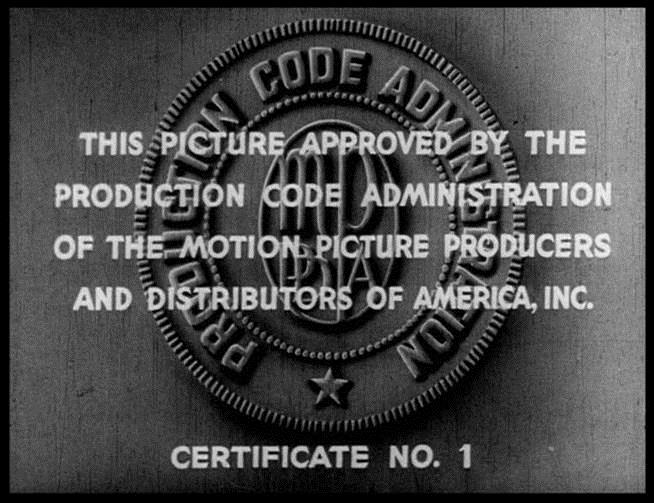
The notorious Hays Code, which, although formulated in the early twenties, was only enforced, in earnest, with the arrival of Joseph Breen at the Hays Office in 1934. Under Breen, overt references to sexuality, particularly homosexuality, were frowned upon. As a result, gay or straight directors, writers, and actors had to be more creative in presenting while, at the same time, disguising a gay character. This dichotomy, however, led to thirty-four years of movie classics in which queer characters were not only present in memorable supporting roles but also featured in leading roles.
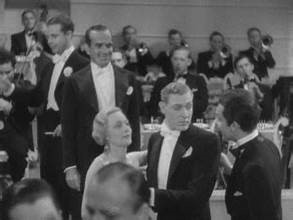
Wonder Bar (Lloyd Bacon, 1934)
A revealing glimpse into Joseph Breen’s mindset emerges from the last pre‑Code—or more precisely, the only film that straddles the transition from the pre‑Code era to full Hays enforcement—Lloyd Bacon’s Wonder Bar. Starring Al Jolson, with songs by Harry Warren and Al Dubin and musical staging by Busby Berkeley, it’s another breathless Warner Bros. revue. Blink and you’ll miss it but tucked inside is a brief comic moment in which a man dances with another man. That tiny gag so infuriated Breen—especially because it had slipped past him just two months before he assumed office—that he successfully pressured the state censor boards in Ohio and Pennsylvania to excise the scene. What’s striking is not only the intensity of his reaction but the selectivity of it. The film’s finale, “Goin’ to Heaven on a Mule,” features white performers in Blackface, including Jolson, surrounded by grotesque caricatures of Black life—watermelons included. Yet this sequence, appallingly racist by any standard, drew no comment from Breen at all. His outrage was reserved entirely for the fleeting hint of same‑sex humor.
CHAPTER 2.
28 Queer Films vs the Hays Office
- Seven Possible Scenarios!
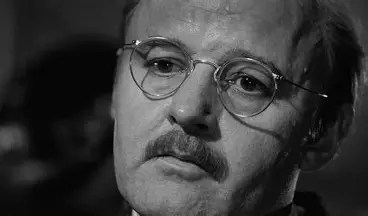
The Pawnbroker (Sidney Lumet, 1965): Rod Steiger.
It says something about the ingenuity of Hollywood, and other sources, that during this period, only two queer films – the British drama Victim (1961), directed by Basil Dearden and starring Dirk Bogarde and Sidney Lumet’s 1965 film The Pawnbroker – were denied a seal, outright.
Victim’s sympathetic treatment of an English lawyer who is being blackmailed because of a gay affair in his past, doomed it immediately. Unfazed, Pathé America pressed ahead with a US release, where, thanks to some good reviews and arthouse cinema screenings, it generated modest box-office returns. When Victim was released on VHS in the US in 1986, it received a PG-13 rating by the MPAA.
Three years later, Sidney Lumet’s The Pawnbroker was also submitted to the Hays Office and was also rejected outright. Producer Ely Landau and Allied Artists APPEALED the verdict to the MPAA – meanwhile, the film was released in New York state without a Code Seal – and the MPAA board voted 6-3 to overturn the PCA’s decision. The film was released in the US in 1965 with the Code Seal of approval. The ruling was one of a series of injuries to the Production Code that would prove fatal within three years.
Imagine yourself as a producer sending a film into the American marketplace under the Hays Code: Table 1 maps the seven routes your picture might be forced to travel.
ESSAY ONE – TABLE 1*86 Queer Films Made Under the Hays Code
28 QUEER FILMS vs THE HAYS OFFICE – SEVEN POSSIBLE SCENARIOS!
*The terms HAYS CODE, HAYS OFFICE, SEAL OF APPROVAL, CODE SEAL, PRODUCTION CODE ADMINISTRATION (PCA) and JOSEPH BREEN are all used interchangeably.
YEAR FILM US DISTRIBUTOR
- YOU IGNORE THE HAYS OFFICE AND DO NOT SUBMIT YOUR MOVIE-
YOUR MOVIE IS RELEASED WITHOUT THE CODE’S SEAL OF APPROVAL-
(QUEER FILMS 1-7)
1955 1.
Les Diaboliques
(France) United Motion Picture Organization (UMPO)
1959 2.
Some Like It Hot
(US)
LANDMARK The Mirisch Company –
United Artists
1960-1961
France/Italy,
US 3.
Purple Noon
(France) Times Film Corporation
1961-1962
UK, US
4.
A Taste of Honey
(UK) Continental Distributing
1965 5.
My Hustler
(US)
LANDMARK Andy Warhol Films
1967 6.
Portrait of Jason
(US)
LANDMARK Film-Makers’ Distribution Center
1967-1968
Canada, US 7.
The Fox
(Canada-US)
LANDMARK Claridge Pictures – Warner Bros. – Seven Arts - YOU DEFER TO THE HAYS OFFICE AND SUBMIT YOUR MOVIE –
YOUR MOVIE IS APPROVED WITHOUT CUTS –
(QUEER FILMS 8-15)
1953-1956-
1957
Italy,
New York,
Los Angeles 8.
I Vitelloni
(Italy) Associated Producers Inc.-Janus Films
1960 9.
Oscar Wilde
(UK)
Framed as a moral tragedy, the downfall of a homosexual. TCF
(20th Century Fox)
1960 10.
The Trials of Oscar Wilde
(UK)
Framed as a moral tragedy, the downfall of a homosexual. Columbia Pictures
1962-1963
UK, US 11.
The L-Shaped Room
(UK)
The character of Johnny, who is gay in the book, is not portrayed as queer in the movie. Columbia Pictures
1963-1964
UK, US 12.
The Servant
(UK)
Like Psycho, The Servant quietly gutted the Code by getting past it.
LANDMARK Ely Landau – The Landau
Company
1964 13.
The Leather Boys
(UK)
One of only two overtly queer movies to be approved by the PCA without cuts.
LANDMARK Columbia Pictures
1967-1968 14.
The Producers
(US) Embassy Pictures
(Avco)
1967 15.
Reflections in a Golden Eye
(US)
One of only two overtly queer movies to be approved by the PCA without cuts.
LANDMARK Warner Bros. – Seven Arts - YOU DEFER TO THE HAYS OFFICE AND SUBMIT YOUR MOVIE –
YOUR MOVIE IS APPROVED WITH MINOR CUTS –
(QUEER FILMS 16-18)
1949-1950
UK, US 16.
Kind Hearts and Coronets
(UK)Fully Restored
Measured in seconds rather than minutes. A subtle toning down of immorality, with intimations that Louis’ crimes would not go unpunished.
Eagle-Lion Films
1957 17.
The Strange One
(US)Mostly Restored – Some Small Gaps Remain
Measured in seconds rather than minutes. Several lines of dialogue in the script, that more directly implied same-sex attraction, were removed. Columbia Pictures
1966-1967
Sweden, US 18.
Persona
(Sweden)Restored to Director-Approved Version
Measured in seconds rather than minutes. A few frames of nudity were removed, with some dialogue tightening. Bibi Andersson’s sexual monologue was left largely intact. Lopert/United Artists
- YOU DEFER TO THE HAYS OFFICE AND SUBMIT YOUR MOVIE –
TO GET THE PRECIOUS SEAL – YOU HAVE TO GIVE YOUR MOVIE AN ENTIRELY NEW ENDING!
(QUEER FILMS 19 and 20)
1951 19.
A Streetcar Named Desire
(US)
A RAPIST COULD NOT BE SEEN TO GO UNPUNISHED. STANLEY’S VICTORY IN THE PLAY WAS THEREFORE UNACCEPTABLE. THE PCA DEMANDED A REWRITTEN ENDING THAT WOULD PUNISH HIM AND REDEEM STELLA.
STELLA REFUSES TO STAY WITH STANLEY AFTER BLANCHE IS TAKEN AWAY. SHE FLEES THE APARTMENT WITH THE BABY. STANLEY CALLS AFTER HER: STELLA! STELLA!
THE FILM ENDS WITH STELLA ASCENDING THE STAIRS. TO EUNICE’S APARTMENT — A SYMBOLIC REJECTION OF STANLEY’S POWER.
LANDMARK Warner Bros.
1956 20.
The Bad Seed
(US)
RHODA COULD NOT GO UNPUNISHED FOR KILLING LITTLE CLAUDE DAIGLE. AS A RESULT, A COMPLETELY NEW ENDING – ACTUALLY TWO NEW ENDINGS – WAS FORCED UPON DIRECTOR/PRODUCER MERVYN LEROY.
LANDMARK Warner Bros. - YOU DEFER TO THE HAYS OFFICE AND SUBMIT YOUR MOVIE –
YOUR MOVIE IS REJECTED, OUTRIGHT, BECAUSE OF ITS THEME
YOU DECIDE TO RELEASE IT ANYWAY
(QUEER FILM 21)
1961-1962
UK, US
21.
Victim
(UK)
SUMITTED TO THE HAYES OFFICE BUT REFUSED A SEAL BECAUSE OF THE THEME.
GOOD REVIEWS, AND SCREENINGS BY SOME BOUTIQUE CINEMAS, RESULTED IN A MODEST BOX-OFFICE RETURN.
LANDMARK Pathé-America - YOU DEFER TO THE HAYS OFFICE AND SUBMIT YOUR MOVIE –
YOUR MOVIE IS REJECTED, OUTRIGHT, BUT YOU APPEAL TO THE MPAA.
THIS IS USUALLY AN UPHILL BATTLE, BUT WITH QUEER FILM 22…
1964-1965 22.
The Pawnbroker
(US)
SUBMITTED TO THE HAYES OFFICE BUT REFUSED A SEAL.
RELEASED IN NEW YORK STATE WITHOUT A CODE SEAL IN 1964.
ALLIED ARTISTS MAKE AN APPEAL TO THE MPAA.
ALLIED ARTISTS WIN THE APPEAL (6-3).THE MOVIE GOES ON GENERAL RELEASE IN THE US IN 1965 WITH THE FULL SEAL OF APPROVAL.
LANDMARK Allied Artists - YOU ENTER INTO A DIALOGUE WITH THE PCA –
- AS THE PCA ENTERED ITS FINAL DECADE, SOME HOLLYWOOD MOVIES WERE GRANTED A DIALOGUE – THE MOVIE WAS CAREFULLY HANDLED/TRIMMED WHILE IN PRODUCTION AND THEN SUBMITTED TO THE CODE.
(QUEER FILMS 23-28)
1955 23.
The Big Combo(US)
DIALOGUE
SINGLED OUT BECAUSE OF ITS VIOLENCE, RATHER THAN ITS QUEERNESS, THE PCA WAS COMPLETERLY HOODWINKED BY FANTE AND MINGO, ONE OF THE SILVER SCREEN’S GREAT QUEER-CODED COUPLES.
THE SUBMITTED PRODUCT WAS APPROVED BY THE PCA WITHOUT ADDITIONAL CUTS. Allied Artists
1958 24.
Touch of Evil
(US)
DIALOGUE
THIS METHOD ALSO STRUCK GOLD WITH ORSON WELLES MONUMENTALLY QUEER MASTERPIECE, TOUCH OF EVIL. THE CODE-APPROVED RELEASE REMAINED TRUE TO THE MASTER’S VISION.
THE SUBMITTED PRODUCT WAS APPROVED BY THE PCA WITHOUT ADDITIONAL CUTS. Universal International
1960 25.
Spartacus
(US)
DIALOGUE
STANLEY KUBRICK AND KIRK DOUGLAS WERE NOT AS LUCKY. THE INFAMOUS OYSTERS AND SNAILS SCENE, BETWEEN SIR LAURENCE OLIVIER AND TONY CURTIS, ENDED UP ON UNIVERSAL’S CUTTING ROOM FLOOR BECAUSE OF THE NEGATIVE REACTION OF PREVIEW AUDIENCES. THE SCENE WAS RESTORED IN 1991.
THE SUBMITTED PRODUCT WAS APPROVED BY THE PCA WITHOUT ADDITIONAL CUTS. Universal
1960 26.
Psycho
(US)
DIALOGUE
HITCHCOCK SUBMITTED JOSEPH STEFANO’S SCREENPLAY FIRST, WHICH, NOT SURPRISINGLY, GOT A LITANY OF OBJECTIONS FROM THE HAYS OFFICE. HE THEN SHOT THE FILM VERY PRECISELY, USING EDITING, SOUND AND MONTAGE. THE RESULT WAS THAT ALMOST NOTHING EXPLICIT WAS TECHNICALLY ON SCREEN. THE BLOOD SWIRLING COUNTER-CLOCKWISE DOWN THE DRAIN FROM JANET LEIGH’S LIFELESS BODY WAS CHOCOLATE SAUCE!
THE SUBMITTED PRODUCT WAS APPROVED BY THE PCA WITHOUT ADDITIONAL CUTS. Paramount
1965 27.
Inside Daisy Clover
(US)
DIALOGUE
A DIALOGUE WAS SET BETWEEN THE PCA AND WARNER BROS. REGADING THE NATLAIE WOOD AND ROBERT REDFORD CHARACTERS. SCREENWRITER GAVIN LAMBERT EVICERATED HIS OWN NOVEL, CHANGING REDFORD’S CHARACTER FROM GAY TO BISEXUAL AT THE ACTOR’S INSISTENCE.
THE SUBMITTED PRODUCT WAS APPROVED BY THE PCA WITHOUT ADDITIONAL CUTS. Warner Bros.
1967 28.
Valley of the Dolls
(US)
DIALOGUE
ALTHOUGH THE PCA RAISED QUESTIONS ABOUT THE DOLLS OF THE TITLE AND SOME QUEER THEMATICS, THE CUTS THAT WERE DECIDED UPON AT TCF HAD MORE TO DO WITH RATING AND PACING THAN CENSORSHIP PER SE. AS A RESULT, WHAT WE SEE TODAY IS ESSENTIALLY WHAT AUDIENCES SAW BACK IN 1967.
THE SUBMITTED PRODUCT WAS APPROVED BY THE PCA WITHOUT ADDITIONAL CUTS. TCF
(20th Century Fox)
Only three of our 86 queer films from 1934 to 1968 were released with PCA-imposed cuts. Director Robert Hamer’s masterpiece Kind Hearts and Coronets (England, 1949) and Ingmar Bergman’s masterpiece Persona (Sweden, 1966), required minimal cutting before their US releases. As shown in Table I, these scenes have since been restored. In 1957, producer Sam Spiegel submitted Columbia Pictures’ queer film The Strange One, starring then-unknown Ben Gazzara, to The Hays Office. The not-so-subtle queer themes and violent hazing rituals almost guaranteed a showdown. And yes, the PCA did insist that few lines of script, which more directly implied same-sex attraction, be removed. Although the cuts amounted to seconds rather than minutes of screen time, the resulting movie had less impact than the Calder Willingham book and play on which it was based. All of these lines have now been restored.
It is a measure of the Hays Office’s extraordinary power in the 1950s that it could demand altered endings for both Elia Kazan’s A Streetcar Named Desire (1951) and Mervyn LeRoy’s The Bad Seed (1956). Stanley Kowalski (Marlon Brando) had to be explicitly punished for the rape and psychological torment he inflicted on Blanche DuBois (Vivien Leigh). Likewise, Rhoda Penmark (Patty McCormack) could not go unpunished for killing little Claude Daigle. In the new Hollywood ending, dictated by the PCA, she not only receives a severe spanking but is ultimately dispatched by a bolt of lightning—moral retribution delivered with all the subtlety of a sledgehammer. Both movies were Warner Bros. Productions – see CHAPTER SIX: STUDIO BREAKDOWN.
During this period, some of the Hollywood studios began dialoguing with the PCA during the production of films with risqué or problematic themes. Movies like Universal’s Touch of Evil (1958) and Spartacus (1960) and Allied Artists’ The Big Combo (1955) were trimmed while still in production and the finished product was then approved, outright. This resulted, on the one hand, in the preservation of Welles’ vision and the survival of the gay couple Fante and Mingo and, on the other, in the cutting of the famed Oysters and Snails scene from Spartacus due to negative reactions from preview audiences. The scene was later reinstated in the 1991 restoration. Dialoguing also resulted in a triumph for Alfred Hitchcock’s Psycho and, by contrast, the evisceration of Gavin Lambert’s novel Inside Daisy Clover. In 1966 and 1967, there was significant back-and-forth between 20th Century Fox (TCF) and the Hays Office regarding Valley of the Dolls (1967). However, although the PCA raised questions about the dolls of the title and some queer thematics, the cuts that were decided upon at 20th Century Fox (TCF) had more to do with rating and pacing than censorship per se – the MPAA was less than a year away. As a result, what we see today is essentially what audiences saw back in 1967.
As the fifties gave way to the sixties, American cinema audiences were becoming younger and better educated. The PCA was slowly dying, and, as a result, a slew of queer films that only a few years before would have been censored were given a free pass (see Table 1). At the same time, boutique distribution networks were established specifically to manage British and Foreign-language films, as well as American arthouse fare, destined for repertory cinemas. What follows is a list of some of the best-known examples and the films they distributed:
• The Red Shoes (UK 1948), EAGLE-LION (US 1948)
• Kind Hearts and Coronets (UK 1949), EAGLE-LION (US 1950)
• I Vitelloni (Italy 1953), ASSOCIATED PRODUCERS INC.-JANUS FILMS (US New York 1956) , (US Los Angeles 1957)
• The Big Combo Allied Artists (US 1955)
• Les Diaboliques (France 1955) United Motion Picture Organization (UMPO) (US 1955)
• Purple Noon (France/Italy 1960) Times Film Corporation (US 1961)
• A Taste of Honey (UK 1961) Continental Distributing (US 1962)
• Victim (UK 1961) Pathé-America (US 1962)
• Billy Bud (UK 1962) Allied Artists (US 1962)
• The Servant (UK 1963) Ely Landau – The Landau Company (US 1964)
• The Pawnbroker Ely Landau – Allied Artists (US, 1964-1965)
• Darling (UK 1965) Embassy Pictures (Joseph E. Levine) (US 1965)
• My Hustler Andy Warhol Films (The Factory) (US 1965)
• Persona (Sweden 1966) Lopert – United Artists (US 1967)
• Portrait of Jason Film-Makers’ Distribution Center (US 1967)
• The Producers Embassy Pictures (Joseph E. Levine) (US, 1967-1968)
• The Fox (Canada/US 1967-1968) Claridge Pictures – Warner Bros. – Seven Arts (US 1968)
Catering to more sophisticated audiences, the boutique distribution firms couldn’t give a toss about the Hays office. Of the 28 movies listed in Table 1, seven were NOT submitted to the PCA. These movies were often edgier in tone, sometimes openly queer, and naturally at home in the boutique art‑house circuit. Their success with educated urban audiences carved a path for other filmmakers to challenge, and ultimately erode, the authority of the Code.
In 1959, writer/director/producer Billy Wilder, following in the footsteps of director/producer *Otto Preminger’s spectacular success with The Moon is Blue six years earlier, decided not to submit his outrageous gender – and genre – bending queer comedy Some Like It Hot to the PCA. Like Preminger, Wilder financed the movie himself, in conjunction with the Mirisch Corporation, and distributed it through United Artists. Released with a big fuck you to the Hays Office, the Marilyn Monroe classic was an instant smash, and many regard Wilder’s decision not to submit his film as the Code’s death knell.
*Famously BANNED IN BOSTON The Moon is Blue was financed by Preminger and screenwriter F. Hugh Herbert, who also wrote the original play, and was also distributed by United Artists.
CHAPTER 3.
17 Landmark Queer Films at the
Hays Code – MPAA Transition (1964-1969).
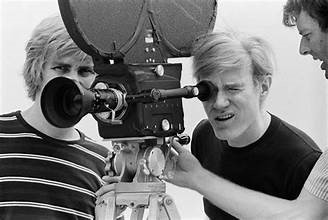
Chuck Wein, Andy Warhol and Paul Morrissey on the set of My Hustler.
As the 1960s progressed, queer cinema played a crucial role in undermining the Code.
The release of two queer films with overt homosexual themes – Sidney J. Furie’s The Leather Boys (British Lion-Columbia) in 1964 and John Huston’s Reflections in a Golden Eye (Warner Bros.-Seven Arts) in 1967 – without any cuts, signaled to everyone in the industry that the Hays Office was now a crippled animal waiting to be put out of its misery. Meanwhile, another UK import, Joseph Losey and Harold Pinter’s The Servant, distributed by Ely Landau and the Landau Company in 1964, did what Alfred Hitchcock’s Psycho did four years before – it quietly gutted the Code just by getting past it.
In 1964, the PCA refused outright to grant director Sidney Lumet’s The Pawnbroker, starring Rod Steiger, a seal of approval – the movie’s bleak post-Holocaust setting, two female characters’ bare breasts on camera, and a queer African American character were all too much! The film’s Producer, Ely Landau, and his distributor, Allied Artists, were having none of this. They decided on a two-pronged approach: they would make arrangements for the film to be released without Hays Code approval – it was originally released in New York state under these conditions in 1964 – and they would appeal the PCA’s verdict to the Motion Picture Association of America (the same MPAA that would take over the rating system after the PCA’s dissolution in 1968). They won. The MPAA voted 6 to 3 to reverse the PCA’s verdict. The film was given the Hays Code seal of approval on its general US release in 1965. The ruling was one of a series of injuries to the Production Code that would prove fatal within three years.
In early 1966, the Filmmaker’s Cinematheque and later the Hudson Theatre in New York began showing the Andy Warhol-produced, Warhol and Chuck Wein-directed film My Hustler. With screenings first advertised in The Village Voice and eventually spreading through word of mouth, the movie became an underground sensation, running continuously despite occasional police raids, at both theaters for over two years. Public demand was high, and Regional runs were arranged between 1966 and 1969 in Los Angeles, Chicago, Tucson, San Bernardino, Albuquerque, Akron and Indianapolis. To this day, it remains the only Factory film to turn a profit and is the only Factory film to be available on digital media.
A few months later, financiers Shirley Clarke and Graeme Ferguson, along with Film-Makers Distribution, decided to release Clarke’s documentary, Portrait of Jason, independently, bypassing the Code entirely by concentrating on film festivals, college campuses, and independent cinemas. The plan worked. Although it had its detractors, the film was quickly recognized as a groundbreaking example of cinema verité.
In 1967, producer Raymond Stross (who also produced The Leather Boys) and his wife, actress Anne Heywood, sought to market a small Canadian movie with an explicit lesbian theme, based on a D.H. Lawrence novel. Rather than risk rejection, The Fox (1967) bypassed the PCA entirely and was never submitted for a Code seal. Instead, Warner Bros.-Seven Arts slipped the movie into theaters through a subsidiary shell company, Claridge Pictures, slapped a temporary Suggested for Mature Audiences advisory sticker on the promotional materials, and let adult-only independent theaters handle the rest. Once the modern MPAA letter-rating system launched in late 1968, the film was officially brought into the fold and assigned an R rating. Playing at film festivals, arthouses, and college campuses, it found an audience, and Lalo Schifrin’s Oscar-nominated score gave the film a second wind in the Spring of 1969 – the movie was not shown in LA until 1968.
Mel Brooks’ debut feature, The Producers, was released by Embassy Pictures in the fall of 1967. Producer Joseph E. Levine nevertheless chose to submit the film to the Hays Office, fully aware that the Production Code’s authority was rapidly eroding. He also understood that the film’s flamboyantly gay characters—written as broad comic figures—were unlikely to provoke meaningful pushback from a system that was already losing its grip on Hollywood. He was correct. The film received the seal of approval without a single cut. These 8 films, together with an additional nine films from the MPAA side of the transition, are listed in Table 2.
ESSAY ONE – TABLE 2
86 Queer Films made Under the Hays Code
17 LANDMARK QUEER FILMS AT THE HAYS → MPAA TRANSITION.
The Servant
Produced by Joseph Losey and Norman Priggen for Springbok Productions.
Distributor: Bryanston Films in the UK.
Distributor: Ely Landau and the Landau Company in the US.
1963-1964
Hays Code Era. Submitted to the Hays Code. Approved without cuts.Released with a Code seal.
The Servant did what Alfred Hitchcock’s Psycho did four years earlier – it quietly gutted the Code just by getting past it.
The Leatherboys British Lion Columbia Produced by Raymond Stross 1964
Hays Code Era. Submitted to the Hays Code. Approved without cuts.Released with a Code seal.Only one of two, PCA-approved, overtly queer-themed films to be screened in the US before the Code’s collapse in 1968. An early queer cinema landmark and a sign of the Production Code’s waning power in the mid-1960s.
The Pawnbroker Allied Artists Producer: Ely Landau – The Landau Company 1964 – 1965
Hays Code Era. Submitted to the Hays Code. Rejected outright by the PCA.
Released in New York State without a seal in 1964, Ely Landau and Allied Artists appeal the verdict to the MPAA. The MPAA board votes 6-3 to overturn the PCA’s decision. Released with a Code seal.
The ruling was one of a series of injuries to the Production Code that would prove fatal within three years.
My Hustler Andy Warhol’s The Factory1965
Hays Code Era Not submitted. Bypassed the Hays Code. Released independently with no seal of approval.Screened at the Filmmaker’s Cinematheque and the Hudson Theatre in New York City and in various arthouse cinemas across the country.
The Producers Embassy Pictures (Avco in 1968)Produced by Joseph E. Levine 1967 – 1968
Hays Code Era. Submitted and approved without cuts. Released with a Code seal.The Producers arrived in late 1967 with benign queens Roger De Bris and Carmen Ghia. Producer Joseph E. Levine nevertheless chose to submit the film to the Hays Office, fully aware that the Production Code’s authority was rapidly eroding.
The FoxClaridge Pictures, in conjunction with Warner-Seven Arts Produced by Raymond Stross1967-1968
Hays Code Era Bypassed the Hays Code. Released independently with no seal of approval. Explicit lesbian relationship. Independent release. Marketed Adults Only.
Later retro-rated R under the MPAA.
Reflections in a Golden Eye Warner Bros.-Seven Arts
1967
Hays Code Era. Submitted and approved without cuts. Released with a Code seal.
Only one of two, PCA-approved, overtly queer-themed films to be screened in the US before the Code’s collapse in 1968. An early queer cinema landmark and a sign of the Production Code’s waning power in the late 1960s.
Portrait of Jason Film-Markers Distribution 1967
Hays Code Era: Not submitted, bypassed Code. Released independently with no seal of approval.
Shirley Clarke’s avant-garde documentary of Jason Holliday. Independent release, no Code seal.
The Detective (Covered in Essay Two) TCF1968
MPAA Era
M (Mature audiences) (PG-13 in today’s language)Frank Sinatra crime drama openly depicts homosexuality, which was impossible under the Code.
The Sergeant (Essay Two)
Warner Bros.- Seven Arts1968MPAA EraM (Mature audiences) (PG-13 in today’s language)
Rod Steiger as a closeted officer. One of the first studio films to address homosexuality.
The Killing of Sister George (Essay Two)Cinerama Releasing Corporation1968
MPAA EraX (17 and under not admitted) (NC-17 in today’s language). Explicit lesbian relationship; one of the first films to receive an X rating.
No Way to Treat a Lady (Essay Two)Paramount1968
MPAA EraM (Mature audiences) (PG-13 in today’s language)
Dark comedy/thriller.
The Boston Strangler (Essay Two)TCF1968
MPAA EraR (Restricted) (R in today’s language)Under-17s only admitted with a parent or guardian in attendance. Violence and overt references to homosexuality in the Boston demimonde. A release would have been impossible under the Hays Code.
Rachel, Rachel (Essay Two)Warner Bros-Seven Arts1968
MPAA EraM (Mature audiences) (PG-13 in today’s language)Themes of repression and sexuality- including homosexuality.
2001: A Space Odyssey (Essay Two)MGM1968
MPAA EraG (later PG in today’s language)Major studio release.
HAL 9000’s queer-love for Dave usually goes under the radar.
Midnight Cowboy (Essay Two)United Artists1969
MPAA EraRatred X on its 1969 release in the United States. In 1971, this was changed to R without anything being changed or removed. The movie was REEVALUATED according to the standards of the new decade!Male hustler’s relationship. Won Best Picture; a landmark in the MPAA era.
The Damned (Essay Two)Warner Bros.-Seven Arts1969
MPAA Era
Due to themes of violence, incest, overt homosexuality, Helmut Berger in drag and a climactic, explicitly-staged, “Night of the Long Knives” massacre sequence, Visconti’s film, like Midnight Cowboy, and The Killing of Sister George, received an X-rating from the MPAA on its released in the United States in 1969. In 1970, it was released with an R rating, after 12 minutes of offending footage were removed, leaving the eviscerated version that audiences saw over the succeeding decades.
Visconti’s complete 154-minute vision is now the standard for screenings, DVD/Blu-ray editions and streaming presentations.
A 2026 Translation
M no longer exists. Today’s equivalent is parental guidance suggested PG or PG-13PG-13 is a stronger warning to parents than PG
R remains the same; Under 17 accompanied by a parent or guardian.
NC-17 (17 or under, not admitted) has now replaced the dreaded X rating of the early MPAA.
Today’s X signifies ADULT CONTENT or PORNOGRAPHY.
CHAPTER 4.
LGBTQ+ in Hollywood – The Actors.
The METHOD triumvirate of Marlon Brando , James Dean and Montgomery Clift.
As the years have passed and numerous biographies and memoirs have been written, more and more celebrities are now known to have been gay. So-called lavender marriages abounded, particularly at MGM, where the studio’s contract players had an iron-clad social clause in their contracts.
Fred Astaire may have been in a long-term relationship with choreographer and doppelganger, Hermes Pan. However, unlike say, Spencer Tracy, whose history of sex with men comes from numerous sources, there is not enough evidence to come down definitively on Fred Astaire as being gay. Astaire’s life has never been portrayed on film. He always refused permission for such portrayals. Astaire’s will included a clause requesting that no such portrayal ever take place.
In the late Fifties and early Sixties, Tony Randall starred in three romantic comedies with Doris Day and Rock Hudson, in which his character is a queer-coded foil for Hudson’s hetero lead. Because Randall leaned into this archetype throughout his career there have always been gay rumors.
Gene Kelly’s dancing and choreography, especially when co-directing with a queer-friendly titan like Stanley Donen, is balletic, lyrical, emotionally transparent and rooted in queer dance linages such as Jack Cole’s modern dance. And again, there have been gay rumors.
The other LGBTQ+ Hollywood personalities mentioned in these essays are known to have had same-sex trysts and relationships going back decades.
• Jean Arthur was the most private actress in Hollywood.
• Four-time Oscar nominee Agnes Moorehead.
• Margaret Hamilton, the Wicked Witch of the West.
• Claudette Colbert was romantically linked to fashion executive Helen Wilken O’Hagan and socialite Vernal Hull. She was in a lavender marriage to actor/director Norman Foster from 1928 to 1935.
• Tallulah Bankhead’s longtime lover, actress Patsy Kelly – best known as the wisecracking sidekick to Thelma Todd in a series of short comedy films produced by Hal Roach in the 1930s, and a small but memorable part in Rosemary’s Baby – posed as her personal assistant when they were on the road together. In addition to being linked with both Dietrich and Garbo, Bankhead was rumored to have had romantic liaisons with actresses Hattie McDaniel, Alla Nazimova, Blythe Daly, and Eva Le Gallienne, as well as writer Mercedes de Acosta and singer Billie Holiday.
• Marlene Dietrich had numerous romantic female relationships, including one with Greta Garbo in mid-1920s Berlin, where Garbo was making Joyless Street (1925). Her other female lovers included Bankhead, de Acosta, Dolores del Rio, French novelist Colette, Anna May Wong and Ona Munson.
• Actress and fashion icon Lilyan Tashman, who was in a lavender marriage to queer actor Edmund Lowe from 1927 to her death in 1934, had a close romantic four-year relationship with Garbo and was also involved with fellow actress/fashion icon Kay Francis.
• Greta Garbo. Her relationships with Tashman and Dietrich are well documented, as is her affair with de Acosta.
• Barbara Stanwyck was in a lavender marriage with Robert Taylor. The marriage was arranged by Taylor’s studio, MGM, to squash rumors of his homosexuality. Stanwyck’s most enduring relationship was with her publicist and live-in companion Helen Ferguson, who was described as her Girl Friday.
• Joan Crawford is known to have had romantic entanglements with several leading women of her era, most notably Stanwyck and director Dorothy Arzner.
• Sandy Dennis
• Kay Ballard
• Marjorie Main, who was in a long-term relationship with Spring Byington.
• The homes of Alla Nazimova (Garden of Alla) and Lilyan Tashman (LiLowe) were famous for hosting numerous soirees devoted to the queer Hollywood sewing circle. These parties included such luminaries as Billie Dove and Ann Dvorak, actresses who moved in these circles but who have never been definitively labeled as queer.
• Actor and interior designer William Haines and actor and interior designer Jimmy Shields. In 1933, Haines, who was rumored to have had an affair with Clark Gable and may have been indirectly responsible for gay director George Cukor’s being fired from Gone with the Wind, was arrested in a Los Angeles YMCA with a sailor he had picked up in LA’s notorious Pershing Square. Louis B. Mayer, the head of MGM, offered Haines an ultimatum: choose between the sailor, a lavender marriage or Shields. Haines chose the latter. He gave up his acting career and, with Shields, founded the highly successful William Haines Designs, with Cukor, Crawford and Jack Warner being among his earlier clients. Their partnership – personal and professional – lasted until Haines’ death in 1973. Shields followed a year later. Crawford described them as “the happiest married couple in Hollywood.”
• Tyrone Power
• Tom Hulce
• Christopher Walkin
• Nick Adams
• Earl Holliman
• Silent movie star Ramon Navarro
• Caesar Romero
• Actor, singer and Route 66 star George Maharis, the inspiration for Steely Dan’s song Gaucho.
• William Eythe and Lon McCallister met sometime in the early 1940s at 20th Century Fox Studios (TCF) where Eythe was under contract, and McCallister was filming. Darryl Zanuck, the head of TCF, insisted that they not be seen in public and, when they defied him, he released Eythe from his contract. They lived together until Eythe’s death from hepatitis in 1957 aged 38 – he had been an alcoholic for the last decade of his life.
• Van Johnson and Tom Drake, the gay boys-next-door at MGM, both had arranged marriages imposed on them by the studio. Johnson’s 1947 marriage to Eve Abbott Wynn, who, at the time, was married to his best friend, gay actor Kennan Wynn, whose life was, obviously, judged to be utterly disposable, was arranged by MGM to protect his image and suppress rumors about his sexuality. Tom Drake was also pressured into a 1945 sham marriage with singer Isabelle Dunn. These represent two of the clearest examples of studio-engineered heterosexual marriage in old Hollywood. Drake’s marriage lasted only a few months, while Johnson’s lasted over 20 years.
• Also at MGM, gay actor Richard Cromwell was in an arranged lavender marriage with a then 19-year-old Angela Lansbury. It lasted less than a year.
• Paul Winfield was one of the first Black actors to come out publicly. However, during the making of Sounder in the early 1970s, he lived with his co-star, Cicely Tyson, for 18 months, so people might have thought they were a straight couple. They never publicly corrected the misconception. His partner of 30 years, the architect Charles Gillan Jr., predeceased him by two years.
• The METHOD triumvirate of Montgomery Clift, James Dean and Marlon Brando.
• The TOP HAT triumvirate of Erik Rhodes, Eric Blore and Edward Everett Horton.
• Alan Ladd, the Paramount star who hid his queerness under a career-long addiction to alcohol. He died, aged 50, in 1964, of cerebral edema caused by an acute overdose of alcohol, barbiturates and antidepressants.
• Walter Pidgeon, the man who gave famed procurer for the stars, prostitute Scotty Bowers, his first trick when Bowers was working as a gas station attendant on Hollywood Boulevard.
• Clifton Webb, Cole Porter and Monty Wooley were at the center of queer life in roaring twenties New York. They were lifelong close friends and all three had major Hollywood careers. Webb became a star at 50 with Laura while Wooley played himself opposite Cary Grant’s portrayal of Porter in Night and Day (1946) – a Cole Porter so scrubbed of sexuality that Grant might as well be playing a gifted mannequin – a queer icon rewritten as a heterosexual fantasy with the volume turned way down.
• Laird Cregar was a closeted gay man in the 1940s studio system. Large-bodied and coded as a cultured villain, he died at 31 after crash-dieting to become a romantic lead. His death is the hinge point where queerness, body pressure, and mortality converge.
• What Laird Creger was to the 1940s, large-bodied, Oscar-nominated, Whatever Happened to Baby Jane actor Victor Buono was to the 1960s – the rotund queer-coded villain.
• The large-bodied queer trope has continued to the present day thanks to such stars as Divine (Harris Glenn Milstead), James Coco, Harvey Fierstein and Bruce Vilanch.
• Cary Grant had a long-term relationship with actor Randolph Scott – they shared a home in the Los Feliz area of LA for two years (1932-1934). Grant also had an affair with Oscar-winning costume designer Orry-Kelly.
• Laurence Olivier had a long-term relationship with Danny Kaye.
• Jeremy Brett was in a in a long-term relationship with American actor Paul Shenar during the 1970s.
• Gay actor Robert Stephens was in a lavender marriage with actress Maggie Smith from 1967 to 1975.
• Anthony Perkins had a relationship with fellow actor Tab Hunter in the late 1950s. They double-dated some of Hollywood’s most beautiful actresses during this period.
• Husband and wife Vincent Price and Coral Browne.
• Alan Bates was romantically linked with British actors Peter Wyngarde and Nickolas Grace, as well as with British Olympic Figure Skating champion John Curry.
• Katherine Hepburn and Spencer Tracy. cared deeply for one another, but their relationship was a scam set up by their studio, MGM, to squash rumors of their homosexuality. The couple lived in a cottage on gay director George Cukor’s estate during their time in Hollywood.
• Dirk Bogarde gradually evolved to a more OUT persona as his career developed, although he never officially broached the subject.
• Alec Guinness, Dennis Price, Charles Laughton, John Gielgud, and Laurence Harvey were all known to be gay throughout their careers. Their adoring public may have sensed something. Still, hey, they were English (by way of Lithuania and South Africa in Harvey’s case), so like Olivier, a bit of affectation came with the territory.
• Rock Hudson, the classic Hollywood closet case. Everyone in town knew the story – including the sham marriage – but the public was clueless until a diagnosis of advanced AIDS forced his hand in coming out, with only a few more weeks to live, in the summer of 1985. His case, though, was a milestone in exposing the double standards at work in Hollywood and is in no small way responsible for the strides that gay actors have made in the film world today.
• Director Alfred Hitchcock liked to cast queer actors such as Judith Anderson, Anthony Perkins, Farley Granger and John Dall as queer villains. Only queer actor Raymond Burr did not have a queer-coded part as the villain Lars Thorwald in Rear Window.
CHAPTER 5.
LGBTQ+ in Hollywood – Behind the Camera
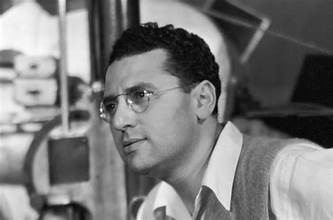
.
George Cukor
• GAY DIRECTORS: James Whale, George Cukor, Irving Rapper, Edmund Goulding, Mitchell Leisen, Vincente Minnelli, Charles Waters and Dorothy Arzner all showcased their gay sensibilities to varying degrees. Their careers took divergent paths.
• Arzner, the lone lesbian in the group and ahead of her time, played a pivotal role in establishing the queer Katherine Hepburn persona with the 1933 movie Christopher Strong. She also had a romantic relationship with Joan Crawford. However, her film legacy is mostly pre-code, and she retired in 1940.
• Minnelli, who was married to gay icon Judy Garland, managed to have a stellar Hollywood career with little to no interference from his studio (MGM). The fact that he was known primarily as a director of musicals and directed what may be the greatest of all – Meet Me in St. Louis – helped his cause. Whale and Cukor, however, suffered for their sexual preferences.
• Waters, who also directed musicals at MGM, was Minnelli without the style. However, he did give Grace Kelly a nice sendoff in High Society, and he received a best director nomination for the 1953 Leslie Caron vehicle Lili.
• Cukor was fired from Gone with the Wind after a few weeks of filming. We will never know the real reason, but no matter how many times Olivia de Havilland vehemently denied it, the rumors about William Haines and Clark Gable, and Cukor’s knowledge of what happened between them, still carry an air of truth today.
• As for Whale, being the most OUT of the great Hollywood directors and being in a well-known relationship with Warner Bros. producer David Lewis didn’t help, especially when tastes changed, and his penchant for high camp lost favor with the public as the thirties progressed.
• Like George Cukor, Leisen, Goulding, and Rapper were often labeled women’s directors, a term that was both derogatory and frequently used as a coded reference to homosexuality. Goulding and Rapper each made numerous films with Bette Davis during their years at Warner Bros., while over at Paramount, Leisen—formerly a production designer for Cecil B. DeMille—brought a distinctive visual elegance to his work and directed Olivia de Havilland in two of her five Oscar‑nominated performances – she won for the second.
• Leisen was both fortunate and unfortunate in being entrusted with some of the finest original screenplays Hollywood produced during this era. Easy Living (1937) and Remember the Night (1940) were written by Preston Sturges, while Billy Wilder and Charles Brackett penned Midnight (1939). At this point in their careers, both Sturges and Wilder were eager to direct their own scripts, and they were openly critical of Leisen’s handling of their material. Sturges’ favorite complaint was that Leisen was “fussy.” At the same time, Wilder dismissed him as a “window dresser,” a jab at what he saw as Leisen’s overly precious attention to costume and art direction. Two decades later, when film critic Andrew Sarris put forward his auteur theory – where the director is king of the castle – he followed Wilder’s lead and downgraded Leisen, together with Goulding and Rapper, to the verge of ignominy. Fortunately, in the new millennium, these directors have seen their fortunes rise as younger, more enlightened and more sympathetic film historians have championed their cause.
• The 1950s and 1960s gave us gay directors such as Nicholas Ray, Tony Richardson, Andy Warhol, Chuck Wein, John Schlesinger and Lindsay Anderson. Ray directed two of the seminal 1950s (and Los Angeles) queer movies, In a Lonely Place (1950) and Rebel Without a Cause (1955), the latter of which featured Sal Mineo’s Plato as Hollywood’s first adolescent gay character.
• Meanwhile, Broadway theatre director Morton DaCosta showered his meager (three) Hollywood films with a very gay theatrical style, so much so that his feature debut, Auntie Mame, is regarded by many as a camp classic.
• Ironically, it was straight director Stanley Donen who, throughout the last three decades of the studio era, made more films that are structurally, tonally and visually queer-friendly – urbane, camp-adjacent, gender-playful, anti-macho and deeply invested in style and artifice than any gay director working during that period.
• GAY COMPOSERS: From MGM’s orchestral genius, Roger Edens, to songwriter Hugh Martin’s (with his songwriting partner Ralph Blane) timeless songs for Judy Garland in Meet Me in St. Louis, gay composers during the Hays Code mostly thrived in their musical closets. Other notable queer milestones from this era include Aaron Copland’s Oscar-winning score for William Wyler’s The Heiress and Leonard Bernstein’s only foray into film scoring in On the Waterfront. Edens was in a long-term relationship with playwright and screenwriter Leonard Gershe – they were Hollywood’s first gay power couple – and, in 1957, they wrote and scored the deliciously urbane and witty Audrey Hepburn-Fred Astaire- Stanley Donen helmed film Funny Face.
During the Hays Code years, there were two branches of filmmaking where being gay, if not an advantage, was undoubtedly the norm, and a third branch, where, well, it’s difficult to know:
• GAY COSTUME DESIGNERS: It may surprise you that the allure of the Costume Department to the gay sensibility applies to both sexes. Edith Head and Irene Sharaff, Hollywood’s most outstanding female costume designers, were gay. As for the men, well, you can just run through the list: Gilbert Adrian, Milo Anderson, Travis Banton, Bill Blass, Howard Greer, Charles Le Maire, Jean Louis, Moss Mabry, Anthony Mendleson (in London), Bernard Newman, Orry-Kelly, Walter Plunkett, Howard Shoup, Bill Thomas, William Travilla, Arlington Valles and many, many more. Some were in lavender marriages – Adrian and queer actress Janet Gaynor being the most famous – but all expressed their gayness in their on-screen work.
• GAY CHOREOGRAPHERS: While Fred Astaire and his longtime companion Hermes Pan choreographed the unforgettable dance sequences in Top Hat (1935), Fred’s career was bookended by the stunning work of another gay choreographer, Eugene Loring, in Funny Face (1957). Meanwhile, gay choreographer Jack Cole’s contribution to the musical numbers Put the Blame on Mame and Amado Mio from Gilda and Diamonds are a Girl’s Best Friend from Gentlemen Prefer Blonds is the essential ingredient in making these movies immortal.
• GAY PRODUCTION DESIGNERS: Gay historians have often found it easy to trace the sexual histories of Hollywood’s more glamorous professions — actors, writers, costume designers, composers, songwriters, and choreographers. By contrast, the behind‑the‑scenes world of production design, art direction, and set decoration, though long infused with queer sensibility, has remained more elusive. Many of its practitioners led discreet, private lives, leaving little documentation of their sexuality.
• There are notable exceptions. In 1965, three legendary art directors — Cecil Beaton, George James Hopkins, and Gene Allen — shared the Academy Award for their work on My Fair Lady (1964). All three were openly gay men – Allen towards the end of his life.
• Hopkins was in an intimate relationship with director William Desmond Taylor and was in the deceased’s apartment, for questioning, on Alvarado Street, on the morning after Taylor’s unsolved 1922 murder. He had a long career at Warner Brothers (1941-1967), his name appearing on such films as Casablanca, Mildred Pierce, A Streetcar Named Desire, Strangers on a Train, Auntie Mame, and the aforementioned My Fair Lady. He was nominated for 13 Oscars and won four.
• Legendary British stage designer and Princess Margaret’s confidante, Oliver Messel (he designed her Caribbean island getaway in Mustique), was Oscar-nominated for one of his few forays into film, Suddenly Last Summer. He was also responsible for the film’s costume designs, having done so on a handful of previous films, such as Romeo and Juliet (1936) and The Thief of Bagdad (1940).
• Likewise, it is widely acknowledged that Cedric Gibbons, despite three lavender marriages (including one to queer actress Dolores del Río), was queer. As head of MGM’s art department from 1924 to 1956, Gibbons not only helped define the studio’s visual identity but also co-founded the Academy of Motion Picture Arts and Sciences and designed the Oscar statuette itself. Fittingly, he remains — excluding Walt Disney’s short‑subject record — the most honored individual in Oscar history, with 39 nominations and 11 wins.
• Rumors have long surrounded Hans Dreier, who led Paramount’s art department from 1927 to 1950, and Van Nest Polglase, head of RKO’s art department from 1932 to 1942 and later at Columbia until 1946. Dreier, working with director Josef von Sternberg and cinematographer Lee Garmes, helped craft the iconic Marlene Dietrich look of the early 1930s, as seen in films such as Morocco (1930) and Shanghai Express (1932).
• Polglase, meanwhile, oversaw Carroll Clark’s sleek Art Deco designs for the Astaire–Rogers musicals (1933–1939) and supervised Perry Ferguson’s groundbreaking work on Citizen Kane (1941). His career, however, was tragically curtailed by struggles with alcoholism.
AND…GAY CINEMATOGRAPHERS! Among the many branches of filmmaking, cinematography has historically been dominated by the straight white male – David Watkin, who won an Oscar for Out of Africa and is mentioned in these essays for his work on The Boyfriend, was one of the few OUT gay cinematographers. Yet, examining the studio era through the lens of queer-coded films reveals intriguing patterns as shown in TABLE 3.
ESSAY ONE – TABLE 3
86 QUEER FILMS MADE UNDER THE HAYS CODE – CINEMATOGRAPHERS – SUMMARY
Cinematographers listed more than once are shown in red.
David Abel 1 Ernest Haller 3 Russell Metty 4
John Alton 2 Russell Harlan 1 Victor Milner 1
Arthur E. Arling 1 Otto Heller 1 Ted Moore 1
Joseph H. August 1 Kenneth Higgins 1 Paul Morrissey (Credit to Warhol) 1
George Barnes 1 Jack Hildyard 1 Nicholas Musuraca 1
Davis Boulton 1 Ray June 1 Sven Nykvist 1
Robert Burks 2 Boris Kaufman 2 Georges Perinal 1
Jack Cardiff 1 Robert Krasker 1 Franz Planer 1
Wilfred M. Cline 1 Milton Krasner 1 Harold Rosson 2
Joseph Coffey 1 Joseph LaShelle 1 John L. Russell 1
William Daniels 3 Charles Lang 3 John F. Seitz 1
Robert De Grasse 1 Walter Lassally 1 Douglas Slocombe*
*See ESSAY TWO 3
Henri Decae 1 Sam Leavitt 1 Jeri Sopanen 1
Arthur Edeson 2 Joseph MacDonald 1 Harry Stradling 6
George Folsey 2 Oliver T. Marsh & Joseph Ruttenberg 1 Robert Surtees 1
William A. Fraker 1 Rudolph Mate 1 Armansd Thirard 1
Tony Gaudio 1 Ted McCord 1 Aldo Tonti 1
Gerald Gibbs 1 Otello Martelli 1 Joseph Valentine: Color consultant: William Skall 1
Burnett Guffey 3 William C. Mellor 1 Haskell Wexler 1
Carl E. Guthrie 1 John J. Mescall 1 Harry J. Wild 2
Freddie Young 1
For most of the cinematographers listed (see Table 3), their involvement with queer cinema was limited to a single film. However, a few standouts emerge: At Warner Bros., Harry Stradling (who began his career at MGM) and Ernest Haller distinguished themselves, contributing to six and three queer-coded films, respectively. Their prominence reflects Warner Bros.’ significant role in this arena, accounting for 22% of the queer movies identified. Russell Metty, at Universal, clocks in at four. Other notable figures include Charles Lang at Paramount, Burnett Guffey at Columbia and William Daniels at MGM and Universal, each of whom is credited with three queer-coded works.
In England, Douglas Slocombe achieved the same tally, and he would go on to photograph four additional queer-coded movies in the New Hollywood (1968-1980) era covered in Essay Two, bringing his total to seven. John Alton, Arthur Edeson, George Folsey, Boris Kaufman, Harold Rosson, Harry J. Wild and Hitchcock’s favorite cameraman, Robert Burks, are mentioned twice – the latter for Strangers on a Train and North by Northwest. This distribution suggests that while queer-coded cinema was not a consistent focus for most cinematographers, specific individuals—often tied to studios with a higher output of such films—played a more sustained role in shaping its visual language.
CHAPTER 6.
STUDIO BREAKDOWN | SOURCE MATERIAL
ALL 86 QUEER FILMS – RATED | GLOSSARY
STUDIO BREAKDOWN
86 Queer Films Made Under the Hays Code
Among the Hollywood Studios, Warner Bros. is the clear winner in producing and distributing LGBTQ+ movies under the Hays Code, accounting for 22% of the films listed. MGM comes in second with 12%, followed by Columbia with 9% and Universal with 8%. Seventy-one (total: 82%) of the movies are from the US, with 11 (13%) from the United Kingdom, 2 from France, 1 from Sweden, and 1 from Italy.
• Warner Bros (including Claridge Pictures and Transatlantic (Alfred Hitchcock and Sidney Bernstein): 19
• MGM: 10
• Columbia (including Horizon-Sam Spiegel) 8
• Universal (including Universal-International): 7
• 20th Century Fox (TCF): 5
• RKO: 5
• Paramount: 5
• United Artists (including The Mirisch Company {with Wilder and Wyler}, Howard Hawks’ Monterey Pictures and Sidney Buchman-Famous Artists Productions): 4
• Allied Artists: 2
• Embassy Pictures (Avco): 1
• Film-Makers Distribution: 1
• Filmways: 1
• Andy Warhol (The Factory): 1
• Republic Pictures: 1
• Selznick International: 1
• Springbok Films – Joseph Losey and Norman Priggen (Ely Landau and the Landau Company in the US): 1
• Anglo-Allied Pictures (Allied Artists in the US): 1
• The Archers (Eagle Lion Films in the US):1
• British Lion- including Romulus Films (Columbia in the US): 2
• Ealing (Eagle Lion Films in the US): 1
• Joseph Janni Productions (Embassy Pictures (Avco) in the US): 1
• Rank (Pathé America in the US): 1
• Vantage Films (TCF in the US): 1
• Warwick Films (Columbia in the US): 1
• Woodfall Films (Continental Distributors in the US): 1
• Janus Films (Associated Producers Inc.-Janus Films in the US): 1
• Cinédis (UMPO in the US): 1
• Titanus – CCFC Films (Times Film Corporation in the US): 1
• AB Svensk Filmindustri (Lopert-United Artists in the US): 1
SOURCE MATERIAL
Of the 86 movies listed, one is a cinema verité film, and the rest are narrative features. Of these, 15 (20%) are original screenplays, while 59 (80%) were adapted from another medium. The source material during this period came from a rich collection of gay playwrights and novelists: Carson McCullers, Gavin Lambert, Tennessee Williams, William Inge, Patricia Highsmith, Oscar Wilde, Patrick Dennis, and Herman Melville.
86 QUEER FILMS MADE UNDER THE HAYS CODE -RATED
Queer‑coded films often distinguish themselves through sophistication and intellectual depth. Because audiences approach them with heightened attentiveness—always searching for subtext or coded meaning—these works place significant demands on the viewer but also deliver exceptional rewards. This dynamic helps explain the consistently strong ratings, as reflected in my subjective opinion, across the 86 films examined, with an average rating of B+. Six of the movies listed won BEST PICTURE, while a further 10 were nominated in the BEST PICTURE category. All 86 queer films and their rating are listed in TABLE 4.
ESSAY 1-TABLE 4
ALL 86 QUEER FILMS MADE UNDER THE HAYS CODE – RATED
FILM R FILM R FILM R FILM R
All About Eve A+ King Rat A The Bad Seed B+ Auntie Mame B-
Casablanca A+ The Loved One A Brute Force B+ The Big Combo B-
Double Indemnity A+ The Picture of Dorian Gray A Cat on a Hot Tin Roof B+ Compulsion B-
Funny Face A+ Portrait of Jason A Cat People B+ Darling B-
Kind Hearts and Coronets A+ The Red Shoes A The Fox B+ Oscar Wilde B-
Laura A+ Rope A Gentlemen Prefer Blonds B+ The Strange One B-
Lawrence of Arabia A+ The Servant A The L-Shaped Room B+ Sylvia Scarlett B-
Meet Me in St. Louis A+ The Strange Love of Martha Ivers A Murder My Sweet B+ The Uninvited B-
Mildred Pierce A+ My Hustler B+
My Fair Lady A+ The Producers B+
North By Northwest A+ Advice and Consent A- Purple Noon B+ Inside Daisy Clover C+
Persona A+ The Bride of Frankenstein A- Victim B+ Suddenly Last Summer C+
Psycho A+ The Dark at the Top of the Stairs A- Young Man with a Horn B+ That Touch of Mink C+
Rebecca A+ Les Diaboliques A- The Trials of Oscar Wilde C+
Rebel Without a Cause A+ I Vitelloni A- Ben-Hur B
Reflections in a Golden Eye A+ The Maltese Falcon A- Calamity Jane B Billy Budd C
Some Like it Hot A+ The Man Who Came to Dinner A- Johnny Guitar B The Children’s Hour C
A Streetcar Named Desire A+ The Pawnbroker A- The Leather Boys B The Group C
Top Hat A+ Red River A- Pillow Talk B
Touch of Evil A+ Stage Door A- Spartacus B Caged C-
Whatever Happened to Baby Jane? A+ Strangers on a Train A- Walk on the
Wild Side C-
A Taste of Honey A-
Adam’s Rib A Tea and Sympathy A-
Gilda A The Wizard Of Oz A- The Valley of the Dolls D+*
The Haunting A The Women A-
In a Lonely Place A Written on the Wind A-
*The sky is the limit at a GAY MIDNIGHT SCREENING
GLOSSARY:
• Each of the 86 film reviews is structured as follows:
• FILM TITLE and YEAR OF RELEASE
• The films are NUMBERED and listed CHRONOLOGICALLY
• Each CHAPTER consists of a DECADE of films
• Each film is rated as (A+A A-) (B+B B-) (C+C C-) (D+D D-) and F, the latter being a fail. There is also a special category dubbed MIDNIGHT SCREENING WITH A GAY AUDIENCE
• THE FILM’S DIRECTOR
• THE FILM’S STANDING WITH HAYS OFFICE: +/-SUBMITTED and +/- APPROVED
• *LGBTQ+ CHARACTER (ACTOR): the QUEER CHARACTER in the movie and, in parentheses, the ACTOR who plays him/her
• LGBTQ+ is anyone in FRONT of (actor) or BEHIND (director, producer, screenwriter etc.) THE CAMERA who is/was known to be queer in real life
• REVIEW – TEXT
• SCREENWRITER AND SOURCE MATERIAL IF ADAPTED
• CINEMATOGRAPHER
• STUDIO
STREAMING PLATFORM | DVD | Blu-ray (BD)
CHAPTER 7 (1935-1939): 6 QUEER FILMS
- The Bride of Frankenstein (1935)
A-
James Whale
(APPROVED)
LGBTQ+ CHARACTER
*Dr. Pretorius (Ernest Thesiger)
LGBTQ+
DIRECTOR: James Whale
ACTOR: Ernest Thesiger
Susan Sontag: Notes on Camp: 1964:
You thought it (camp) meant a swishy little boy with peroxided hair, dressed in a picture hat and a feather boa, pretending to be Marlene Dietrich? Yes, in queer circles they call that camping. … You can call [it] Low Camp…
Susan Sontag: The Partisan Review 1964
High Camp is the whole emotional basis for ballet, for example, and of course of baroque art … High Camp always has an underlying seriousness. You can’t camp about something you don’t take seriously. You’re not making fun of it;
you’re making fun out of it. You’re expressing what’s basically serious to you in terms of fun and artifice and elegance. Baroque art is basically camp about religion. The ballet is camp about love …
Susan Sontag: The Partisan Review 1964
James Whale’s Bride of Frankenstein remains one of the cinema’s purest expressions of what Susan Sontag would later define as high camp. Elsa Lanchester becomes an instant icon in the title role, crowned with the most inventive coiffure in film history. Opposite her, the wonderfully mannered Ernest Thesiger—openly gay and once sketched by John Singer Sargent in 1911—delivers his definitive performance as Dr. Pretorius, the slyly queer mentor who coaxes Frankenstein back into forbidden creation.
Whale arrived in Hollywood on the strength of R. C. Sherriff’s Journey’s End, and Carl Laemmle quickly signed him to a five‑year Universal contract. What followed was one of the studio’s most artistically fertile eras. In rapid succession, Whale directed Waterloo Bridge, Frankenstein, The Old Dark House, The Invisible Man, and ultimately The Bride of Frankenstein—a run that helped define Universal’s golden age of horror and elevated the genre’s visual and thematic sophistication.
His momentum faltered with The Road Back (1937), Erich Maria Remarque’s sequel to All Quiet on the Western Front. The film’s troubled reception marked a turning point, and by 1941 Whale’s Hollywood career had effectively concluded.
The premise of Bride of Frankenstein draws from Mary Wollstonecraft Shelley’s 1818 novel Frankenstein and serves as a direct continuation of Whale’s own 1931 adaptation, expanding the myth with wit, melancholy, and unmistakable queer sensibility.
Cinematography: John J. Mescall
Music: Franz Waxman
Universal Pictures
NOW STREAMING ON AMAZON PRIME VIDEO, APPLE TV+, YOUTUBE
- Top Hat (1935)
A+
Mark Sandrich
(APPROVED)
LGBTQ+ CHARACTERS
Horace Hardwick (Edward Everett Horton)Bates (Eric Blore)
LGBTQ+*
ACTOR: Eric Blore
ACTOR: Edward Everett Horton
ACTOR: Erik Rhodes
CHOREOGRAPHER: Hermes Pan
COSTUME DESIGNER: Bernard Newman
The jury is still out on Fred Astaire*
The jury is still out on production designer Van Nest Polglase*
More plural personalities
HORACE HARDWICK (EDWARD EVERETT HORTON) ON FIRST MEETING BATES (ERIC BLORE) in “TOP HAT”
The Best of the Astaire-Rogers movies.
Of the nine films Fred Astaire and Ginger Rogers made at RKO in the 1930s, Top Hat is their finest—and easily their most unabashedly queer. Eric Blore gives his butler that trademark air of superior fussiness, while Edward Everett Horton, not yet overusing his patented double take, supplies the sort of fluttery exasperation that became a queer‑coded Hollywood staple.
Irving Berlin contributes one of his strongest scores, and the “Cheek to Cheek” number—choreographed by Astaire with his longtime collaborator, and alleged lover, Hermes Pan—captures the pair at their absolute peak. Gay actor Erik Rhodes, returning after The Gay Divorcee (1934), steals every scene as Alberto Beddini, the preening Italian couturier whose malapropisms are as flamboyant as his wardrobe. Rhodes spent most of his career on Broadway; his Hollywood work outside these two films is largely forgettable, but here he’s indelible.
The production design, executed by Carroll Clark under the supervision of Van Nest Polglase, represents Hollywood Art Deco at its most extravagant and aspirational. The original screenplay by Allan Scott and Dwight Taylor (from a story by Taylor) gives the whole confection its airy scaffolding, while David Abel’s cinematography bathes it in a luminous, impossible elegance.
OSCAR NOMINATION: BEST PICTURE (RKO)
SONGS (IRVING BERLIN)
• No Strings (I’m Fancy-Free)
• Isn’t This a Lovely Day (to be Caught in the Rain)
• Top Hat, White Tie and Tails
• Cheek to Cheek
• The Piccolino
ASTAIRE-ROGERS AT RKO
• Flying Down to Rio (1933)
• The Gay Divorcee (1934)
• Roberta (1935)
• Top Hat (1935)
• Follow the Fleet (1936)
• Swing Time (1936)
• Shall We Dance (1937)
• Carefree (1938)
• The Story of Vernon and Irene Castle (1939)
RKO
NOW STREAMING ON AMAZON PRIME VIDEO, APPLE TV+, YOUTUBE
- Sylvia Scarlett (1935)
B-
George Cukor
(APPROVED)
LGBTQ+ CHARACTER
Sylvia/Sylvester Scarlett (Katherine Hepburn) LGBTQ+
DIRECTOR: George Cukor
ACTOR: *Cary Grant
ACTOR: *Katherine Hepburn
COSTUME DESIGNER: Bernard Newman
The jury is still out on production designer Van Nest Polglase*
Depressed after his wife’s death and drowning in gambling debts, Henry Scarlett (Edmund Gwenn) flees France for England with his teenage daughter, Sylvia (Katharine Hepburn), in tow. Because Henry intends to resume his petty smuggling—this time sneaking bolts of lace into England to dodge import taxes—Sylvia disguises herself as a boy, christening the persona “Sylvester” to throw the authorities off their trail. On the Channel ferry, they encounter Jimmy Monkley (Cary Grant), a charming grifter whose survival instincts are so sharp that he promptly turns Henry in to save his own skin. By the time they reach Southampton, the duo has become a trio.
This is the first film in which Grant’s Cockney persona truly registers, and he nearly walks off with the picture. Its themes of gender play and sexual fluidity were far ahead of their time, and audiences didn’t know what to make of it; RKO reportedly lost $363,000, and Hepburn was swiftly branded “box office poison,” a stigma she wouldn’t shake until signing with MGM in 1940.
The film’s reputation has steadily improved, and today it wears its queerness with pride. Hepburn continues her drag performance long after the plot no longer requires it, and in one memorable moment she is kissed by a woman. It remains the only film in which Hepburn—a gay actress—so overtly channels her own sexuality on screen.
It was the first of four Hepburn–Grant pairings, followed by Howard Hawks’s Bringing Up Baby (1938), George Cukor’s Holiday (also 1938), and the triumphant Philadelphia Story (1940), which revitalized Hepburn’s career and showcased all three artists at their peak.
Adapted from Compton Mackenzie’s 1918 novel, the film also features Brian Aherne as an Englishman briefly smitten with “Sylvester,” only to lose interest the moment the boy reverts to Sylvia. Mel Berns, head of RKO’s makeup department, created Hepburn’s striking hair and makeup design—work of a piece with the sophistication he later brought to Citizen Kane and Notorious.
Cinematography: Joseph H. August
RKO
NOW STREAMING ON AMAZON PRIME VIDEO AND ON APPLE TV+
Coda: *Grant and *Hepburn would next star in Howard Hawks’s Bringing Up Baby, where Grant answers the front door wearing a flimsy negligée because Hepburn has hidden all his clothes. When Hepburn’s aunt (May Robson) demands an explanation, he throws up his hands and exclaims, Because I just went gay all of a sudden!—leaping into the air on the word gay. The film never again suggests that Grant’s character is gay, queer, or homosexual, which raises the linguistic question: how common was gay as a synonym for homosexuality in 1938?
The answer is that the usage existed but was not yet mainstream. By the late 1930s, gay, meaning “homosexual,” circulated widely in queer subcultures but remained largely unknown to the general public, who still heard the word as “carefree” or “frivolous.” Grant’s line, therefore, functions as a sly double entendre—innocent enough to slip past censors, unmistakable to those in the know.
Bringing Up Baby (1938) Queer Film A- TheBrownees
- Stage Door (1937)
A-
Gregory La Cava
(APPROVED)
LGBTQ+ CHARACTER
*Jean (Ginger Rogers)
*Kay (Andrea Leeds)
*Linda (Gail Patrick)
*Eve (Eve Arden)
LGBTQ+*
ACTOR: Katherine Hepburn
The jury is still out on production designer Van Nest Polglase*
Adapted by Morrie Ryskind and Anthony Veiller from the play by Edna Ferber and George S. Kaufman, and directed by Gregory La Cava, Stage Door follows a group of aspiring actresses living at the Footlights Club, a shabby New York boarding house crackling with ambition and wisecracks. At the center are Katharine Hepburn’s Terry, the privileged newcomer whose arrival unsettles the house’s fragile equilibrium, and Ginger Rogers’s Jean, the sharp‑tongued, streetwise lodestar of the group—and Terry’s reluctant roommate. Andrea Leeds provides the film’s emotional core as Kay, a once‑promising actress whose career has stalled and whose hope is wearing thin.
The supporting ensemble is a delight: Constance Collier as Miss Luther, the club’s grandly outdated acting coach; Gail Patrick, sleek and sardonic; Eve Arden, forever draped in a cat; and early turns from Lucille Ball and Ann Miller, all playing young women clawing for a break.
In this intensely homosocial world, it’s easy to detect threads of queer coding—particularly in the tenderness between Rogers and Leeds, and in the wry, conspiratorial dynamic between Arden and Patrick. La Cava, fresh off My Man Godfrey (1936), directs with a light, improvisatory touch, and Hepburn and Rogers spark beautifully off each other. Leeds’s performance is the only element that feels rooted in an older, more declamatory 1930s style—ironically, she was the film’s sole acting Oscar nominee, earning a Best Supporting Actress nod. The film itself was also nominated for Best Picture, Best Director, and Best Adapted Screenplay.
And presiding over the theatrical chaos is Adolphe Menjou as Anthony Powell, the suave impresario whose charm is matched only by his opportunism.
Cinematography: Robert De Grasse
RKO
STREAMING ON APPLE TV+, AMAZON PRIME AND YOUTUBE
- The Women (1939)
A-
George Cukor
(APPROVED)
LGBTQ+ CHARACTER
*Nancy Blake (Florence Nash)
LGBTQ+
DIRECTOR: George Cukor
ACTOR: Joan Crawford
ACTOR: Marjorie Main
COSTUME DESIGNER: Gilbert Adrian
ART-SET DIRECTION: Cedric Gibbons
The Women is the first American studio film with an entirely female cast, and its commitment to that conceit runs deep: every piece of artwork on screen was created by women, and the screenplay—by Anita Loos and Jane Murfin—was adapted from Claire Boothe Luce’s 1936 Broadway hit. Even the animals are female! Behind the camera, however, 1939 Hollywood reasserts itself: the crew is almost entirely male, though the production is steered by the industry’s most accomplished gay director, George Cukor, working just a month after his dismissal from Gone with the Wind for, as some contemporaries whispered, being “too gay” for David O. Selznick’s comfort.
The film’s only overtly lesbian figure—an “old maid” who lives in slacks and radiates a dry, knowing independence—is played by Florence Nash, not Katharine Hepburn, though the costume might suggest otherwise. Nash’s presence adds a sly, subversive note to a film otherwise devoted to the romantic and social entanglements of Park Avenue women.
Cinematography: Joseph Ruttenberg and Oliver T. Marsh
MGM
NOW STREAMING ON AMAZON PRIME, APPLE TV+, YOUTUBE
- The Wizard of OZ (1939)
A-
Victor Fleming
(APPROVED)
LGBTQ+ CHARACTER
*Cowardly Lion (Bert Lahr)
LGBTQ+
ACTOR: Margaret Hamilton
COSTUME DESIGN: Gilbert Adrian
ART-SET DIRECTION: Cedric Gibbons
Adapted from the novel by L. Frank Baum, The Wizard of Oz (1939) tells the story of Dorothy Gale, a Kansas farm girl swept away by a tornado to the magical Land of Oz. With her adorable little dog Toto and three companions—a Scarecrow, a Tin Man, and a Cowardly Lion—she follows the Yellow Brick Road to the Emerald City, hoping the Wizard can send her home. Along the way, they confront the Wicked Witch of the West, only to discover that the power to return was within Dorothy all along.
Judy Garland’s Dorothy is the mother of us all. Before Barbra, before Liza, before Madonna, before Lady Gaga—there was Judy. Her performance in Oz struck a chord that transcended orientation: vulnerable yet resilient, innocent yet knowing, and anchored by that miraculous voice. Over the Rainbow, written by Harold Arlen and E. Y. “Yip” Harburg, remains the greatest movie song ever written, and Garland delivers it with a purity that still feels like a lifeline.
The film’s visual splendor—shot in Technicolor by Harold Rosson, framed by sepia‑toned Kansas bookends—was shaped under director Victor Fleming, who took over Gone with the Wind after George Cukor’s dismissal. Queer cinema can be a small world. And yes, Bert Lahr’s Cowardly Lion reads unmistakably gay; it’s almost a wonder MGM didn’t hand him a lavender mane.
With Jack Haley as the Tin Man, Ray Bolger as the Scarecrow and queer actress Margaret Hamilton making an indelible impression as both the Wicked Witched of the West AND her black-and-white Kansas counterpart Almira Gulch the harsh, wealthy Kansas neighbor who wants to have Toto euthanized. She hits Toto with a rake for chasing her cat and later produces a sheriff’s order to take him away to be destroyed. During the tornado scene, Dorothy sees Miss Gulch on her bicycle transforming into the Wicked Witch on a broomstick. Dorothy’s flying farm house lands in Munchkinland full-force splat on top of the Wicked Witch of the East – sister of the WWOTW – killing her instantly.
As for the phrase Friends of Dorothy its origins are murky, but the logic is clear enough. Garland wasn’t gay, but queer men recognized something in her: a shared sense of outsiderness, a capacity for survival, a voice that could lift you out of whatever Kansas you were stuck in. Dorothy’s longing for a place “over the rainbow” became a metaphor for a life not yet possible—but desperately hoped for.
Billie Burke played Glinda the Good Witch with an airy, almost self-parodying sweetness that became her signature screen persona. The widow of impresario Florene Ziegfeld, his death in 1932 left her in considerable debt, which partly drove her prolific film career. In later years she became something of a camp figure—her fluttery, scatterbrained characters were beloved—and she worked steadily in film and television well into the 1950s and 60s. We will meet her again in Film number 8 – The Man Who Came to Dinner.
Frank Morgan is one of the great unsung pleasures of classic Hollywood. He played five roles in The Wizard of Oz—the Wizard himself, Professor Marvel, the Emerald City door attendant, the cabbie, and the guard—and brought a wonderful blend of bluster and vulnerability to each of them. He was a character actor of the highest order, Oscar-nominated for The Affairs of Cellini (1934) and again for Tortilla Flat (1942). He had a long MGM contract and appeared in dozens of films throughout the 30s and 40s. He died in1949, aged 59, and is less celebrated than he deserves to be, given the sheer range and warmth he brought to his work. His performance as the father in Frank Borzage’s The Mortal Storm (1940) is one of the decade’s best.
Just one dog played Toto – a female Cairn Terrier named Terry. She was trained by legendary Hollywood animal trainer, Carl Spitz, and earned $125 per week on the production, reportedly more than many of the human actors. Terry later had her name officially changed to Toto after the film’s success.
In addition to Over the Rainbow, Arlen and Harburg’s song suite includes Follow the Yellow Brick Road/Were Off to See the Wizard, If I Only Had a/the Brain/Heart/Nerve, If I Were King of the Forest, The Merry Old Land of OZ, and Ding Dong the Witch is Dead.
In 1939, AMPAS was still sorting things out – it still is! MGM’s court composer Herbert Stothart ‘s arrangements of Harold Arlen’s music should have been nominated in the BEST ADAPTED SCORE category. Instead, he ended up being nominated for BEST ORIGINAL SCORE and WON defeating Max Steiner’s immortal score for GWTW.
Production design by Cedric Gibbons, costumes by Adrian.
MGM
NOW STREAMING ON AMAZON PRIME VIDEO, APPLE TV+, MAX (YOUTUBE)
CHAPTER 8 (1940s): 20 QUEER FILMS
- Rebecca (1940)
A+
Alfred Hitchcock
(APPROVED)
LGBTQ+ CHARACTER
*Mrs. Danvers (Judith Anderson)
LGBTQ+
ACTOR: Laurence Olivier
ACTOR: Judith Anderson
REBECCA IS ONE OF HITCHCOCK’S SEVEN PERFECT FILMS.
Hitchcock often cast gay actors in LGBTQ+ roles, such as Judith Anderson in Rebecca, Anthony Perkins in Psycho, and John Dahl and Farley Granger in Rope.
While working as a paid companion to the formidable Mrs. Van Hopper (Florence Bates) in Monte Carlo, a shy young woman (Joan Fontaine) meets the aristocratic widower Maxim de Winter (Laurence Olivier). After a whirlwind courtship, he proposes, and the two marry before returning to his ancestral estate, Manderley. There, the new Mrs. de Winter finds herself overshadowed by the memory of Maxim’s first wife, Rebecca, whose death remains shrouded in mystery. Presiding over the house is Mrs. Danvers (Judith Anderson), the glacial, obsessive housekeeper who worships Rebecca’s memory and undermines her successor at every turn.
Rebecca marked the Hollywood arrival—courtesy of Gone with the Wind producer David O. Selznick—of the man who was, or would soon become, the greatest director in the history of cinema. Hitchcock’s touch is everywhere: the psychological unease, the shifting power dynamics, the sense of a heroine swallowed by a house that remembers more than it reveals.
Fontaine gives a superb performance, proving she shared the same deep well of talent as her sister, Olivia de Havilland. The supporting cast is equally rich: George Sanders as the insinuating Jack Favell, Rebecca’s cousin, Reginald Denny as Frank Crawley, Maxim’s estate manager and Gladys Cooper as Maxim’s sister.
Selznick International
Oscar-winning cinematography by George Barnes.
Music by Franz Waxman.
Adapted from the novel by Daphne du Maurier.
Hitchcock’s cameo: 2:06:57 He is the man in a bowler hat and trenchcoat who crosses paths with George Sanders.
NOW AVAILABLE FOR STREAMING ON YOUTUBE (Cine Moi)
- The Maltese Falcon (1941)
A-
John Huston
(APPROVED)
LGBTQ+ CHARACTERS
*Joel Cairo (Peter Lorre)
*Kasper Gutman (Sydney Greenstreet)
*Wilmer Cook (Elisha Cook Jr)
LGBTQ+
COSTUME DESIGNER : Orry-Kelly
After several years as a screenwriter, John Huston made a smashing directorial debut with his adaptation of Dashiell Hammett’s 1930 novel. The story had already been filmed once, in 1931, as a pre‑Code vehicle for Ricardo Cortez and Bebe Daniels, but Huston’s version quickly eclipsed it and is now considered the definitive take. Humphrey Bogart got his breakthrough role as Sam Spade, the hard‑boiled San Francisco private detective navigating a trio of unscrupulous adventurers—Mary Astor, Sydney Greenstreet, and Peter Lorre—all in pursuit of a jewel‑encrusted falcon statuette.
The film’s queer coding is unmistakable. Peter Lorre’s Joel Cairo is openly gay by 1941 standards—perfumed, fastidious, and treated by Spade with a mixture of contempt and wary amusement. Sam will slap Cairo, but never punch him; the distinction is deliberate. Wilmer (Elisha Cook Jr.) is repeatedly called “the gunzel,” a term that originally meant a kept boy or homosexual, marking him as Kasper Gutman’s (Sydney Greenstreet) protégé in more ways than one. If Wilmer is Gutman’s boy, then Gutman himself is hardly straight. Splendid, dear boy.
Bogart would remain a major star until his death in 1957.
One of the quintessential film noirs, The Maltese Falcon hasn’t aged quite as gracefully as some of its contemporaries—largely because its plot is a glorious tangle that barely holds together. But the performances are a feast: Mary Astor gives a superb turn as Brigid O’Shaughnessy, a Celtic Tiger avant la lettre, and the queer triumvirate of Lorre, Greenstreet, and Cook Jr. brings up the rear with style.
Cinematography
Arthur (Casablanca) Edeson.
Warner Bros.
NOW STREAMING ON AMAZON PRIME VIDEO, APPLE TV+, YOUTUBE
- The Man Who Came to Dinner (1942)
A-
William Keighley
(APPROVED)
LGBTQ+ CHARACTER
*Sheridan Whiteside (Monty Wooley)
LGBTQ+
ACTOR: Monty Wooley
SOURCE MATERIAL: Alexander Woollcott
The character of Whiteside is modeled on the famously acerbic gay theatre critic.
COSTUME DESIGNER: Orry-Kelly
I am not only walking out on this case, Mr. Whiteside, I am leaving the nursing profession. I became a nurse because all my life, ever since I was a little girl, I was filled with the idea of serving a suffering humanity. After one month with you, Mr. Whiteside, I am going to work in a munitions factory. From now on, anything I can do to help exterminate the human race will fill me with the greatest of pleasure. If Florence Nightingale had ever nursed YOU, Mr. Whiteside, she would have married Jack the Ripper instead of founding the Red Cross! (sic)
Nurse Preen (Mary Wickes) in THE MAN WHO CAME TO DINNER
Monty Woolley delights both himself and his audience as the impossibly pompous Sheridan Whiteside in William Keighley’s excellent 1941 adaptation of the George S. Kaufman–Moss Hart play The Man Who Came to Dinner. While passing through small‑town Ohio on a cross‑country lecture tour, Whiteside slips on the icy steps of the Stanley home—where he is meant to dine as a publicity gesture—and promptly breaks his hip. He then commandeers their house for the entire Christmas season, terrorizing the family with his demands, insults, and parade of eccentric visitors.
Whiteside is famously modeled on Kaufman and Hart’s friend, the acerbic—and very gay—theatre critic Alexander Woollcott, and Woolley plays him with a delicious blend of hauteur and malicious glee. Bette Davis is perfection as his long‑suffering yet deeply loyal secretary, one of her rare comedic turns and a reminder of how deft she could be when allowed to play light.
The supporting cast is a joy: Ann Sheridan, slyly parodying her own star persona; Richard Travis as the earnest newspaperman who captures Davis’s heart; the irrepressible Jimmy Durante, belting out Did You Ever Have the Feeling That You Wanted to Go, And Still Have the Feeling That You Wanted to Stay?; Mary Wickes as Nurse Preen, who endures Whiteside’s abuse with mounting martyrdom; Reginald Gardiner doing a wicked parody of Noël Coward; and Billie Burke and Grant Mitchell as the hapless Mr. and Mrs. Stanley, whose home becomes a battleground of theatrical chaos.
Cinematography: Tony Gaudio
Warner Bros.
NOW STREAMING ON AMAZON PRIME VIDEO, APPLE TV+, YOUTUBE
- Cat People (1942)
B+
Jacques Tourneur
(APPROVED)
LGBTQ+ CHARACTER
*Irena Dubrovna (Simone Simone)
*The Cat Woman (Elizabeth Russell, uncredited)
LGBTQ+
SCREENWRITER: DeWitt Bodeen
The finest achievement of producer Val Lewton’s legendary RKO horror cycle, Cat People (1942) occupies a foundational place in queer film history because it mobilizes horror not as spectacle but as a grammar of deviance, repression, and embodied otherness. The film’s central figure, Irena Dubrovna (Simone Simon), a Serbian fashion illustrator newly arrived in New York, meets and marries Oliver Reed (Kent Smith) and becomes legible as a queer subject through her refusal of heterosexual consummation. She refuses physical intimacy because she is convinced that she descends from an ancient tribe of “cat people” who metamorphose when aroused, jealous, or emotionally overwhelmed. This folkloric dread governs her inner life and becomes the central fracture in the marriage. Oliver—well‑meaning but obtuse—pushes her toward psychiatric treatment with Dr. Louis Judd (Tom Conway), whose interventions only deepen the film’s exquisite ambiguity: is Irena delusional, or is the curse real?
As Oliver grows closer to his coworker Alice Moore (Jane Randolph), Irena’s fear curdles into jealousy. Alice begins to sense a predatory presence stalking her, and torn fabric hints at an attack.
As in *The Seventh Victim and Billy Budd, screenwriter DeWitt Bodeen—himself a gay man—threads queer coding throughout the narrative. Nowhere is it more explicit than in the famous “sister” scene at Irena and Oliver’s wedding dinner. A striking, predatory woman (Elizabeth Russell, uncredited) approaches Irena, looks her over, and murmurs “Moja sestra” (“my sister”). The tone is unmistakably intimate, even flirtatious. It reads as queer recognition—one of the “cat people” identifying another. In that moment, Irena is symbolically “outed” in public, her difference exposed.
Jacques Tourneur’s direction, paired with Nicholas Musuraca’s masterful chiaroscuro cinematography, creates a cinema of suggestion, shadow‑soaked stalking sequences and the shimmering terror of the justly famous swimming‑pool scene: alone in a darkened pool, Alice hears Irena’s unseen presence circling her. The interplay of echo, shadow, and rippling light creates one of the most erotically charged moments in horror history—a female‑on‑female menace that feels both intimate and transgressive.
And then there is the iconic “Lewton Bus” jump scare. Named for the film’s producer, the film builds unbearable tension only to puncture it with a mundane intrusion—a city bus screeching into frame—establishing the template for the Hollywood jump scare.
Remade, rather badly, by Paul Schrader in 1982 with Nastassja Kinski, Malcolm McDowell, John Heard and Annette O’Toole.
RKO Music by Roy Webb. Editor: Mark Robson.
NOW STREAMING ON YOUTUBE, APPLE TV+ AND AMAZON PRIME VIDEO.
Coda: *The Seventh Victim (1943), despite a loyal cult following, is a pale imitation of Cat People with numerous queer-coded characters, again, courtesy of queer screenwriter DeWitt Bodeen, in a plot that oscillates between the baroque and the faintly ridiculous. With Tom Conway reprising his role as the psychiatrist Dr. Judd, the film marked the screen debut of actress Kim Hunter and the directorial debut of Mark Robson. *Billy Bud is discussed later in this essay: Chapter 10, Film 67.
The Seventh Victim (1943) Queer Film C- TheBrownees
- Casablanca (1942-1943)
A+
Michael Curtiz
(APPROVED)
LGBTQ+ CHARACTERS
*Rick (Humphrey Bogart)
*Captain Renault (Claude Rains)
LGBTQ+
COSTUME DESIGN: Orry-Kelly
ART-SET DIRECTION: George James Hopkins
THIS IS GOING TO BE THE BEGINNING OF A BEAUTIFUL FRIENDSHIP
RICK TO CAPTAIN RENAULT CASABLANCA
After Ilsa (Ingrid Bergman) and Victor Laszlo (Paul Henreid) are safely airborne and Major Strasser (Conrad Veidt) lies dead on the tarmac, Rick (Humphrey Bogart) and Captain Renault (Claude Rains) walk off together into the mist. It’s the moment when the film shifts from romantic tragedy to something more quietly heroic, and Rick turns to Louis to deliver one of the most famous closing lines in cinema history—a benediction, a farewell, and the beginning of a new alliance. But is it Love?
THREE LOVE STORIES ARE GOING ON IN CASABLANCA: ILSA-RICK AND ILSA-VICTOR, AND THEN THERE IS THE LOVE STORY BETWEEN RICK AND CAPTAIN RENAULT.
Casablanca unfolds in the Moroccan port city of the same name, with most of the action centered at Rick’s Café Américain, the nightclub owned by the film’s reluctant hero, Rick Blaine (Humphrey Bogart). The plot ignites when an old flame, Ilsa Lund (Ingrid Bergman), arrives unexpectedly with her husband, Victor Laszlo (Paul Henreid), the Resistance leader the Nazis are desperate to capture. Rick must decide whether to put aside his lingering heartbreak and help Victor escape so he can continue the fight against fascism.
But Casablanca contains not one love story, but three: Ilsa and Rick, Ilsa and Laszlo, and—running quietly beneath the surface—the charged, conspiratorial bond between Rick and Captain Renault (Claude Rains). By the time they walk off together into the mist and Rick delivers that immortal final line, it’s clear the tension has been there from the beginning. Their “honeymoon,” we are told, will be in Camp Brazzaville—a notorious homosexual haven in the colonial imagination, the Palm Springs of its day.
Dooley Wilson provides the film’s emotional heartbeat as Sam, the piano player whose rendition of Herman Hupfeld’s “As Time Goes By” becomes the movie’s leitmotif. Max Steiner wove the melody into his score, though the song itself predated the film by over a decade, having been written for the 1931 Broadway musical Everybody’s Welcome.
Written on the fly by the fabulous Epstein twins—Philip and Julius—along with Howard Koch, and directed by Michael Curtiz with what can only be described as divine precision, Casablanca remains one of Hollywood’s most romantic and enduring achievements.
The film premiered in New York on November 26, 1942, timed to coincide with the Allied invasion of North Africa. Its Los Angeles and national release followed on January 23, 1943, aligning with the Churchill–Roosevelt Casablanca Conference. Under AMPAS rules, this made the film eligible for the 1943 Academy Awards. At the 16th Oscars, held at Grauman’s Chinese Theatre on March 2, 1944, it won Best Picture (Hal B. Wallis, producer), Best Director (Curtiz), and Best Adapted Screenplay (the Epstein brothers and Koch). When Best Picture was announced, Jack Warner famously rushed to the stage to accept the award, leaving Wallis—its actual producer—stranded in the aisle. Wallis never forgave him. He soon resigned from Warner Bros. and established his own production company under the Paramount banner. Adapted from the unproduced play Everybody Comes to Rick’s by Murray Burnett and Joan Alison, Casablanca remains a miracle of studio-era alchemy: accidental, improvised, and somehow perfect. Cinematography: Arthur Edeson Warner Bros. NOW STREAMING ON AMAZON PRIME VIDEO, APPLE TV+, Max (YOUTUBE) Ingrid Bergman was nominated for the wrong film. Instead of Casablanca, she received her first Oscar nomination for For Whom the Bell Tolls, a prestige adaptation in amber of the Hemingway bestseller, filmed in color, and set during the Spanish Civil War. Bergman was also denied a nomination for her greatest screen performance: as Alicia Huberman in Alfred Hitchcock’s Notorious.
- Meet Me in St. Louis (1944)
A+
Vincente Minnelli
(APPROVED)
LGBTQ+
DIRECTOR: Vincente Minnelli
ACTOR: Tom Drake
ACTOR: Marjorie Main
SONGWRITER: Hugh Martin
MUSICAL ARRANGER: Roger Edens
ART-SET DIRECTION: Cedric Gibbons
COSTUME DESIGN: Irene Sharaff
Produced by Arthur Freed for MGM, this greatest of all movie musicals contains no explicit gay plot, yet it radiates queerness from every frame. With the extraordinarily stylish direction of Vincente Minnelli, three classic songs by gay songwriter Hugh Martin (with his partner Ralph Blane), musical arrangements by the indispensable Roger Edens, and the glorious costumes of Irene Sharaff, the film has GAY written all over it. A favorite of gay men since its December 1944 premiere, it features Judy Garland in her first fully adult role—and she looks breathtaking in Sharaff’s designs, set against Lemuel Ayers’s lovingly detailed early‑20th‑century interiors and George Folsey’s sumptuous Technicolor cinematography.
Structured as a series of seasonal vignettes beginning in the summer of 1903, the film follows a year in the life of the Smith family of St. Louis, leading up to the opening of the 1904 World’s Fair. Irving Brecher and Fred F. Finklehoffe adapted the screenplay from Sally Benson’s stories originally published in The New Yorker. The cast is a dream ensemble: Mary Astor and Leon Ames as the parents; Garland, Lucille Bremer, Joan Carroll, and Margaret O’Brien as the children; Tom Drake as the boy next door; June Lockhart as a neighbor; Harry Davenport as the grandfather; and Marjorie Main as the family’s stalwart cook.
Garland gets to introduce three of her most iconic songs, all by Martin and Blane:
• The Trolley Song
• The Boy Next Door
• Have Yourself a Merry Little Christmas
The last, sung to a luminous Margaret O’Brien, is arguably the greatest Christmas song ever written.
Upon release, Meet Me in St. Louis became the second‑highest‑grossing film of 1944 (after Going My Way) and MGM’s most successful musical of the decade.
Garland and Minnelli married in June 1945, and Liza was born the following year. But this period also marked the beginning of Garland’s struggles with depression and addiction, which strained both her marriage and her career. Minnelli’s numerous affairs with men further destabilized the relationship, and the couple divorced in 1951.
MGM
NOW STREAMING ON AMAZON PRIME VIDEO, APPLE TV+ and YOUTUBE
- The Uninvited (1944)
B-
Lewis Allen
(APPROVED)
LGBTQ+ CHARACTERS
*Pamela Fitzgerald (Ruth Hussey)
*The Ghost of Mary Meredith (Lynda Grey, uncredited)
*Stella Meredith (Gail Russell)
*Miss Holloway (Cornelia Otis Skinner)
LGBTQ+*
ACTOR: Cornelia Otis Skinner
COSTUME DESIGNER: Edith Head
The jury is still out on production designer Hans Dreier*
A queer ghost story with so many lesbian characters it’s hard to keep count—my best estimate is four (three living, one dead). The Uninvited was a major hit in 1944 and remains wonderfully entertaining today. The film opens with lesbian number one, Pamela Fitzgerald, played by Ruth Hussey. Pamela and her brother Rick (Ray Milland, then at the height of his stardom) fall in love with a deserted house on the Cornwall coast. Director Lewis Allen introduces them in a way that initially suggests they’re newlyweds—naughty indeed—until Hussey’s very boyish haircut tips us off. Heavens, no!
Once installed, the siblings discover a room that is several degrees colder than the rest of the house. The chill belongs to the ghost of lesbian number two, Mary Meredith, who—like Hitchcock’s Rebecca four years earlier—died under mysterious circumstances after falling from a nearby cliff. Mary seems determined to lure her daughter Stella (Gail Russell, heartbreakingly luminous before alcoholism took its toll) to the same fate. Yet the connection between mother and daughter feels more erotic than maternal, and Stella responds to it with unsettling pleasure. Good grief: lesbian number three.
It also emerges that Mary had a female lover in life, bringing us to lesbian number four: Miss Holloway, played with deliciously sinister flair by gay writer‑actress Cornelia Otis Skinner. And then there is a second ghost, Carmel, more benevolent and more maternal, whose voice we hear but whose face we never see. She might be lesbian number five, but the evidence is thin.
The film offers occasional shivers, but the real pleasure lies in watching Hussey and Skinner interpret their queer‑coded roles—Hussey with a light, comedic touch, Skinner with a variation on Judith Anderson’s Mrs. Danvers. What dazzles today is Charles Lang’s immaculate, Oscar‑nominated black‑and‑white cinematography and Victor Young’s haunting theme for Stella, later transformed into the standard Stella by Starlight with lyrics by Ned Washington. The costumes, naturally, are by the great gay designer Edith Head.
As for Ray Milland’s Rick—well, he is a music critic. Hmmm.
Adapted by Dodie Smith and Frank Partos from Dorothy Macardle’s novel Uneasy Freehold.
PARAMOUNT
The Uninvited is unavailable for streaming. However, the DVD can be purchased at Amazon.
ESSAY ONE – TABLE 5
86 Queer Films Made Under the Hays Code
THE FOUR GREAT FILM NOIRS OF THE MID-1940s ARE ABLAZE WITH QUEER ENERGY.
LAURA | DOUBLE INDEMNITY | MURDER MY SWEET | MILDRED PIERCE
LAURAOtto Preminger(1944)
20th Century Fox (TCF)
Based on the 1943 novel of the same name by Vera Caspary.
LIKE MOST OF THE GREAT FILM NOIRS FROM THE FORTIES, LAURA BEGINS WITH A NARRATION: CLIFTON WEBB IS OUR CONFIDANT, AND THE NARRATIVE UNFOLDS IN FLASHBACK.
Remade by Burt Reynolds as Sharkey’s Machine in 1981
DOUBLE INDEMNITY
Billy Wilder
(1944)
Paramount
The first James M. Cain masterpiece to be adapted for the screen, based on his 1943 novel of the same title, which appeared as an eight-part serial for Liberty magazine in February 1936.
LIKE MOST OF THE GREAT FILM NOIRS FROM THE FORTIES, DOUBLE INDEMNITY BEGINS WITH A NARRATION: FRED MACMURRAY’S IS OUR CONFIDANT, AND THE NARRATIVE UNFOLDS IN FLASHBACK.
ONE OF THE QUINTESSENTIAL LA MOVIES
THE FIRST MOVIE TO SHOW THE SIGHTS OF LOS ANGELES
The Dietrichson House in Glendale (actually in the Beachwood Canyon area) is where Walter first meets Phyllis (and her ankle bracelet). The Market in Los Feliz, where Walter and Phyllis have clandestine meetings.
Walters’s apartment on Melrose Avenue.
The corner of Franklin and Vermont, where Walter drops off Lola (Jean Heather), Phyllis’s stepdaughter. She suspects that her mother is up to no good.
Walter and Lola are lying on the grass behind the Hollywood Bowl as a concert shimmers in the distance.
Downtown Los Angeles, where the Pacific All-Risk insurance offices are located.
Remade as Body Heat by Lawrence Kasdan in 1981
MURDER MY SWEET
Edward Dmytryk
(1944)
RKO
Based on Raymond Chandler’s 1940 novel, Farewell My Lovely.
The second book and the first movie to feature private detective Philip Marlowe.
LIKE MOST OF THE GREAT FILM NOIRS FROM THE FORTIES, MURDER MY SWEET BEGINS WITH A NARRATION, DICK POWELL IS OUR CONFIDANT, AND THE NARRATIVE UNFOLDS IN FLASHBACK.
ONE OF THE QUINTESSENTIAL LA MOVIES
Remade, under the book’s original title, by director Dick Richards, with Robert Mitchum, in 1975
MILDRED PIERCE
Michael Curtiz
(1945)
Warner Bros.
The second James M. Cain masterpiece to be adapted for the screen, based on his 1941 novel of the same name.
LIKE MOST OF THE GREAT FILM NOIRS FROM THE FORTIES, MILDRED PIERCE BEGINS WITH A NARRATION: JOAN CRAWFORD IS OUR CONFIDANT, AND THE NARRATIVE UNFOLDS IN FLASHBACK.
ONE OF THE QUINTESSENTIAL LA MOVIES
THE SECOND MOVIE TO SHOW THE SIGHTS OF LOS ANGELES
Mildred’s original home, located at 1143 Corvallis Street, where all the houses looked alike, is actually 1143 North Jackson Street, at the intersection of East Stocker Street in Glendale.
Next is Monty Beragon’s house on 26652 Latigo Shore Drive in Malibu. The house was built in 1929 and, at the time of filming, was occupied by director Anatole Litvak. Destroyed during the winter storms of 1983, a new house now sits on the site.
Remade for HBO Max by writer/director Todd Haynes in 2011, starring Kate Winslet, Evan Rachel Wood, and Guy Pierce.
ESSAY ONE – TABLE 6
86 QUEER FILMS MADE UNDER THE HAYS CODE
PHILIP MARLOWE INTERPRETATIONS
1944 Murder My Sweet
(RKO) Dick Powell
1946 The Big Sleep
(Warner Bros.) Humphrey Bogart
1947 Lady in the Lake
(MGM) Robert Montgomery
1969 Marlowe
(MGM) James Garner
1973 The Long Goodbye
(Lions Gate Films – United Artists) Elliott Gould
1975 Farewell My Lovely
(Avco Embassy) Robert Mitchum
2022 Marlowe
(Open Road Films) Liam Nesson
- Laura (1944)
A+
Otto Preminger
(APPROVED)
LGBTQ+ CHARACTER
*Waldo Lydecker (Clifton Webb)
LGBTQ+
ACTOR: Clifton Webb
ACTOR: Vincent Price
ACTOR: Judith Anderson
I shall never forget the weekend Laura died. A silver sun burned through the sky like a huge magnifying glass. It was the hottest Sunday in my recollection. I felt as if I were the only human being left in New York. For with Laura’s horrible death, I was alone. I, Waldo Lydecker, was the only one who really knew her. And I had just begun to write Laura’s story when – another of those detectives came to see me. I had him wait. I could watch him through the half-open door. I noted that his attention was fixed upon my clock. There was only one other in existence, and that was in Laura’s apartment in the very room where she was murdered
Clifton Webb as Waldo Lydecker in Laura.
Detective Mark McPherson (Dana Andrews) is investigating the murder of Laura Hunt (a magnificent Gene Tierney in a star‑making performance), a young advertising executive found dead from a shotgun blast to the face, just inside her apartment door. His first stop is the apartment of newspaper columnist Waldo Lydecker (Clifton Webb, who became a Hollywood star at fifty), an imperious, effete—read: homosexual—older man who has appointed himself Laura’s mentor and gatekeeper. McPherson also questions Laura’s parasitic playboy fiancé, Shelby Carpenter (Vincent Price), a kept man tethered to her wealthy socialite aunt, Ann Treadwell (Judith Anderson).
One night, the detective falls asleep in Laura’s apartment beneath her portrait. He awakens to the sound of a key in the lock—and is stunned to see Laura herself walk in. A dress in her closet, belonging to one of her models, Diane Redfern, reveals the truth: the woman assumed to be Laura was Redfern, lured there for a clandestine rendezvous with the unfaithful Carpenter while Laura was away in the country. With Laura alive, the urgency to unmask the killer intensifies.
One of the reasons often cited for the firing of the film’s original director, Rouben Mamoulian, was his treatment of Webb—his chilly, dismissive attitude toward a seasoned stage actor whose sexuality he reportedly disdained. Hollywood lore has inflated this into the primary cause of his dismissal, but the more likely explanation is that Mamoulian was steering the material in a direction Darryl Zanuck found untenable. Mamoulian is, after all, more famous for the films he was fired from (Laura, Oklahoma!, Cleopatra) than for the ones he completed. Zanuck handed the project to producer Otto Preminger, and the result was a stroke of sheer, unforgettable genius.
Adapted from Vera Caspary’s novel by Jay Dratler, Samuel Hoffenstein, Elizabeth Reinhardt, and an uncredited Ring Lardner Jr., the film features Oscar‑winning cinematography by Joseph LaShelle—trumping even John Seitz’s equally stunning work on Double Indemnity—and a haunting, all‑time‑great score by David Raksin.
TCF
NOW STREAMING ON AMAZON PRIME VIDEO, APPLE TV+, YOUTUBE
- Double Indemnity (1944)
A+
Billy Wilder
(APPROVED)
LGBTQ+ CHARACTERS
*Walter Neff (Fred MacMurray)
*Barton Keyes (Edward G. Robinson)
LGBTQ+*
ACTOR: Barbara Stanwyck
COSTUME DESIGNER: Edith Head
The jury is still out on production designer Hans Dreier*
MY FAVORITE FILM NOIR OF THE FORTIES.
WERE NEFF AND KEYES QUEER FOR EACH OTHER?
Walter Neff, a successful insurance salesman for Pacific All-Risk Insurance, returns to his office building in downtown Los Angeles late one night. Clearly in pain, he sits at his desk and tells the whole story into a Dictaphone for his colleague Barton Keyes, a claims adjuster.
One of the greatest film noirs produced during Hollywood’s mid‑forties–to‑fifties golden age, Double Indemnity (1944) is a crime thriller directed by Billy Wilder, co‑written by Wilder and Raymond Chandler, and produced by Buddy DeSylva. The screenplay adapts James M. Cain’s 1936 serial (later published as a 1943 novel), and the result is a model of hard‑boiled precision.
The film stars Fred MacMurray as Walter Neff, an insurance salesman who falls under the spell of Phyllis Dietrichson (Barbara Stanwyck, in one of her most iconic roles), the platinum‑wigged black widow who lures him into a plot to murder her husband and collect on a policy’s double‑indemnity clause. Edward G. Robinson is superb as Barton Keyes, the claims adjuster whose job is to sniff out fraudulent claims—and whose moral clarity becomes the film’s true compass.
Double Indemnity refers to a clause, in particular life insurance policies, that doubles the payout when the death is accidental.
All three actors are magnificent, with Stanwyck and Robinson giving performances worthy of Oscars. Stanwyck was nominated but lost to Ingrid Bergman in Gaslight, while MacMurray and Robinson were inexplicably overlooked.
Robinson’s absence from the Best Supporting Actor lineup that year is arguably the most egregious snub in Oscar history.
Wilder later said, in multiple interviews, that the real love story in the film is between Walter and Keyes. You can feel their bond in every scene, culminating in that devastating final moment between them. By contrast, the dynamic between Neff and Phyllis is all power, manipulation, and erotic calculation—never love.
The cinematography is by John F. Seitz, who also shot Wilder’s The Lost Weekend and Sunset Boulevard. His work here—venetian‑blind shadows, cigarette‑lit confessionals, and that unforgettable grocery‑store rendezvous—helped define the visual language of noir.
Paramount Pictures
NOW STREAMING ON AMAZON PRIME VIDEO, APPLE TV+, YOUTUBE
- Murder My Sweet (1944)
B+
Edward Dmytryk
(APPROVED)
LGBTQ+ CHARACTER
*Lindsay Marriott (Douglas Walton)
LGBTQ+
COSTUME DESIGNER: Edward Stevenson
HE SMELLS NICE!
(Elevator Boy about Marriott)
YOU’D BETTER PUT YOUR FLAPS DOWN, OR YOU’LL TAKE OFF
(Marlow to Marriott)
I’M NOT IN THE HABIT OF GIVING PEOPLE GROUNDS FOR BLACKMAIL, MR. MARLOWE
(Marriott)
Murder, My Sweet was released under its original book title, Farewell, My Lovely, in the United Kingdom, but was retitled for its United States release. It was the first film to feature author Raymond Chandler’s primary character, the hard-boiled private detective Philip Marlowe and here, I think, is a good time to dig a little deeper and list those actors who have played Marlowe down through the years: (see Table 6)
Dick Powell is in excellent company here, and he acquits himself admirably. He also deserves credit for being the first actor to play Philip Marlowe on screen and for making a surprisingly smooth transition from Warner Bros. crooner to hard‑boiled private eye. It can’t have been easy, especially since director Edward Dmytryk and screenwriter John Paxton twist the plot into knots worthy of Howard Hawks’s The Big Sleep. The supporting cast is uniformly strong—Esther Howard, Anne Shirley, Claire Trevor, Otto Kruger, Miles Mander, and the marvelous Mike Mazurki—but nothing here quite matches Humphrey Bogart’s legendary bookstore flirtation with Dorothy Malone in Hawks’s masterpiece.
Which brings us to the film’s LGBTQ+ character. His name is Lindsay Marriott, played by character actor Douglas Walton. He appears in only two scenes before being dispatched in true queer‑coded fashion. We sense his queerness even before he enters: the elevator boy who has let him up to Marlowe’s office remarks, “He smells nice.” And then Marriott materializes—mincing around the office in a fabulous overcoat and ascot, as jittery as Bette Davis without a cigarette. Despite his protests, he is being blackmailed into making a money‑for‑jewels exchange. It’s all rather sad, and very much of its era.
Dmytryk and the film’s producer, Adrian Scott, were members of the Hollywood Ten and served jail time for their Communist Party affiliations and for refusing to capitulate to HUAC. Blacklisted, Dmytryk eventually reversed course and named names—including that of director Jules Dassin—which allowed his career to recover, though at a steep moral cost. Scott refused to cooperate, moved to England like many in his situation, and never regained his Hollywood footing. Anne Shirley, who married Scott and retired from acting after this film, sent him a “Dear John” letter requesting a divorce, which she obtained in 1948 after four years of marriage. She lived the rest of her life quietly in Los Angeles.
CINEMATOGRAPHY: Harry J. Wild
RKO
NOW STREAMING ON AMAZON PRIME VIDEO, APPLE TV+, YOUTUBE
- Mildred Pierce (1945)
A+
Michael Curtiz
(APPROVED)
LGBTQ+ CHARACTER:
*Ida Corwin (Eve Arden)
*Monte Beragon (Zachary Scott)
LGBTQ+
ACTOR: Joan Crawford
COSTUME DESIGNER: Milo Anderson
ART-SET DIRECTION: George James Hopkins
Joan Crawford plays Mildred, and Ann Blyth plays Veda—the most ungrateful daughter in cinema history—in Mildred Pierce, director Michael Curtiz’s masterful adaptation of James M. Cain’s 1941 novel, from an Oscar‑nominated screenplay by Ranald MacDougall (with several uncredited contributors). It was Crawford’s first starring role for Warner Bros. after leaving MGM, and she deservedly won the 1945 Academy Award for Best Actress.
Mildred Pierce is the centerpiece of the mid‑1940s Cain triptych, flanked by Billy Wilder’s Double Indemnity (Paramount, 1944) and Tay Garnett’s The Postman Always Rings Twice (MGM, 1946). All three films hook you instantly with their propulsive plots and showcase some of the decade’s finest acting and direction—making Cain one of the best‑served novelists in Hollywood history.
The film opens on the Malibu (or possibly Santa Monica) pier with the murder of Monte Beragon (Zachary Scott), Mildred’s second husband. The sequence ends with a magnificent close‑up: Crawford’s Mildred reflected in a window, swathed in fur. The police inform her that her first husband, Bert Pierce (Bruce Bennett), is the prime suspect—he owns the gun, has a motive, and doesn’t deny the crime. Mildred insists he is too gentle to kill anyone and begins recounting her story in flashback.
Mildred and Bert are an unhappily married couple in Glendale. After Bert’s business collapses—thanks to his oily partner Wally Fay (Jack Carson)—Mildred must sell her baked goods to support the family. Bert accuses her of loving their daughters more than him. When his mistress, Maggie Biederhof (Lee Patrick), calls during a quarrel, the marriage collapses.
Mildred keeps custody of sixteen‑year‑old Veda, a bratty social climber, and ten‑year‑old Kay (Jo Ann Marlowe), a genial tomboy. Because they live in working‑class Glendale rather than adjacent, aristocratic Pasadena, Veda lives in a state of perpetual shame. Mildred tries to appease her with material comforts, taking a job as a waitress and eventually parlaying her skills into a wildly successful chain of chicken‑and‑waffle restaurants. She runs the business with her friend Ida—played by Eve Arden in her only Oscar‑nominated role. Arden’s dry, queer‑coded delivery makes Ida the film’s voice of reason, and her scenes with Mildred carry a subtle emotional charge that suggests feelings deeper than friendship.
Mildred meets Pasadena playboy Monty Beragon and, though she doesn’t love him, marries him to ease Veda’s entry into high society. Monty, however, is not wealthy; Mildred begins embezzling from her own business to cover his family’s debts and Veda’s extravagances. None of it satisfies Veda, whose appetite for status is bottomless.
Brilliantly filmed in high Germanic style by a cadre of Viennese émigré geniuses—Curtiz, production designer Anton Grot and composer Max Steiner, in addition to cinematographer Ernest Haller, and art director George James Hopkins—Mildred Pierce is one of the great noirs of the 1940s. Curtiz’s blend of high melodrama and near‑camp makes the film a queer classic. In addition to Arden’s Ida, there is another queer‑coded presence: Zachary Scott’s Monty, whose languid feyness constantly raises the possibility that his sexual interests extend beyond women.
And then there is the film’s magnificent lack of subtlety in the health department. In pre‑1960 Hollywood, a single cough is a death sentence. Poor Kay coughs once—just once—and we know she’s doomed. She survives the family trip to Lake Arrowhead only to return to Glendale in an oxygen tent, setting up one of the film’s most unforgettable scenes. When Kay takes her final breath, the nurse rushes to turn off the oxygen before Mildred or Veda can react. It’s both heartbreaking and, in its abruptness, darkly hilarious.
Like Robert Aldrich’s Whatever Happened to Baby Jane?, Mildred Pierce plays as drama and camp simultaneously, with no contradiction between the two. That’s part of its enduring magic.
And yes—Butterfly McQueen appears in a brief but peerless burst of high camp as Mildred’s maid, hired and costumed (of course) by Veda. Delicious doesn’t begin to cover it.
WARNER BROS.
NOW STREAMING ON AMAZON PRIME VIDEO, APPLE TV+, YOUTUBE
- The Picture of Dorian Gray (1945)
(A)
Albert Lewin
(APPROVED)
LGBTQ+ CHARACTERS
*Dorian Gray (Hurd Hatfield)
*Basil Hallward (Lowell Gilmore)
LGBTQ+
SOURCE MATERIAL: Oscar Wilde:
Adapted from his novel The Picture of Dorian Gray
ACTOR: Hurd Hatfield
ACTOR: Lowell Gilmore
COSTUME DESIGNER: Arlington Valles
ART-SET DIRECTION: Cedric Gibbons
We all know the story: a beautiful young man, Dorian Gray, wishes that his portrait might age in his place. As he plunges into a life of corruption and hedonism, the painting grows monstrous while Dorian himself remains eerily untouched—until the accumulated weight of his sins finally destroys him.
After serving as Irving Thalberg’s closest assistant and winning an Oscar for producing Mutiny on the Bounty, Albert Lewin became a producer at Paramount following Thalberg’s death at 37. A man of pronounced literary ambition, Lewin soon stepped into writing and directing, debuting with a middling adaptation of Somerset Maugham’s The Moon and Sixpence. But back at MGM, he created his masterpiece: a superb adaptation of Oscar Wilde’s The Picture of Dorian Gray, with the impossibly beautiful Hurd Hatfield as Dorian. Hatfield’s performance—so subtle it borders on the mask‑like—has always felt exactly right. He’s like Tyrone Power with the emotional temperature dialed down to zero.
Lewin handles the material with exquisite control, and the film stands as one of MGM’s finest achievements of the 1940s. The production design is sumptuous, and Harry Stradling’s Oscar‑winning black‑and‑white cinematography is breathtaking—erupting into color for the climactic close‑up of Ivan Le Lorraine Albright’s grotesque portrait, now housed at the Art Institute of Chicago.
The cast is superb. George Sanders is perfection as Lord Henry Wotton—Wilde’s heterosexual stand‑in—scattering epigrams like rose petals. Angela Lansbury, in her second Oscar‑nominated performance in as many years, is heartbreaking as Sybil Vane, the young woman whose destruction seals Dorian’s fate. Richard Fraser is excellent as her vengeful brother, and Peter Lawford and Donna Reed look impossibly fresh and luminous.
And then there is Basil Hallward, Dorian’s closest friend and the man who paints the fateful portrait. He is played by gay actor Lowell Gilmore, who—like Hatfield—deserved far better from Hollywood. His quiet ache gives the film its emotional center, the one place where Wilde’s original queer longing still flickers through the studio gloss.
MGM
NOW STREAMING ON AMAZON PRIME VIDEO, APPLE TV+, YOUTUBE
- Gilda (1946)
(A)
Charles Vidor
(APPROVED)
LGBTQ+ CHARACTERS
*Johnny Farrell (Glenn Ford)
*Ballin Mundson (George Macready)
LGBTQ+*
CHOREOGRAPHER: Jack Cole
COSTUME DESIGNER: Jean Louis
The jury is still out on production designer Van Nest Polglase*
WERE FARRELL AND MUNDSON QUEER FOR EACH OTHER?
Feast your eyes on Charles Vidor’s stylish direction, Rudolph Maté’s lush black‑and‑white cinematography (unusual for a noir, and all the more intoxicating for it), the slinky Jean Louis gowns, and—above all—Rita Hayworth as Gilda, one of Hollywood’s most iconic creations.
Although Glenn Ford and George Macready always insisted that they believed their characters were gay, Vidor disagreed. The plot and motivations are so convoluted that Gilda becomes difficult to place neatly on the queer spectrum. But it’s queer enough—emotionally, aesthetically, atmospherically—to contain two of the most significant musical numbers in cinema history: “Put the Blame on Mame” and “Amado Mio.” Hayworth performs both in grand, smoldering style (dubbed by Anita Ellis), with choreography by Jack Cole, the father of theatrical jazz dance. The songs, written by Doris Fisher and Allan Roberts, are pure Hollywood alchemy.
The result is a film that may defy tidy interpretation, but it never fails to seduce. Gilda is noir as fever dream—glamorous, unstable, erotically charged, and impossible to forget.
The original screenplay, written by Jo Eisinger, Marion Parsonnet, and Ben Hecht (uncredited), is based on a story by E.A. Ellington.
COLUMBIA PICTURES
NOW STREAMING ON AMAZON PRIME VIDEO, APPLE TV+, YOUTUBE
- The Strange Love of Martha Ivers (1946)
(A)
Lewis Milestone
(APPROVED)
LGBTQ+ CHARACTERS
*Martha (Barbara Stanwyck)
*Walter (Kirk Douglas)
LGBTQ+*
ACTOR: Barbara Stanwyck
ACTOR: Lizabeth Scott
COSTUME DESIGNER: Edith Head
The jury is still out on production designer Hans Dreier*
One of the great film noirs of the 1940s, The Strange Love of Martha Ivers introduces us to three people bound together by the events of a single violent night—and then shows how that secret warps the rest of their lives. In 1920s Iverstown, young Martha Ivers lives under the tyrannical rule of her wealthy aunt. One stormy night, the aunt is killed. Martha, her timid tutor‑in‑training Walter, and streetwise runaway Sam are all present—but the truth of who struck the fatal blow becomes the film’s central moral fault line. Walter’s ambitious father seizes the moment, crafting a version of events that protects Martha and positions Walter for a future in politics. Sam, the only outsider, flees town.
Years later, Sam (Van Heflin) drifts back into Iverstown by accident. He finds Martha (Barbara Stanwyck) now married to Walter, running the family empire with icy poise. Walter (Kirk Douglas, in his astonishing film debut) is now the district attorney—alcoholic, brittle, and terrified of the secret that underpins his entire life. Sam’s return destabilizes the marriage. Martha sees in him a chance at escape—or rekindled passion. Walter sees a threat that could expose everything. A fourth character, Toni (Lizabeth Scott), a vulnerable ex‑con that Sam befriends, grounds the story emotionally and gives him a moral anchor (see below).
Stanwyck gives one of her most controlled, lethal performances, and Douglas’s debut is remarkable—he plays Walter as a man who has been dying for years, a man whose entire identity has fused itself to Martha’s. His devotion is not heterosexual love but a closeted emotional dependency, a need to be chosen, needed, and kept. Stanwyck’s Martha, meanwhile, is one of the great queer‑coded femmes of the 1940s. Her attraction to Sam is less romantic than territorial—she wants him as a symbol of the freedom she was denied. She is dominant, strategic, emotionally armored. She occupies the “masculine” role in the marriage: she controls the money, the politics, the narrative.
Lizabeth Scot was the quintessential baritone babe, in more ways than one – in addition to having a deep, smoky voice à la Kathleen Turner, she was widely rumored to be gay, and producer Hal Wallis, the producer of this movie, had to spend a fortune to keep her name out of the gutter press. Eventually, in 1955, her peak years behind her, Confidential magazine published a sensational exposé labeling her as a “strange girl, even for Hollywood,” and strongly implied that she had relationships with women—coded in the article as spending her time with “baritone babes,” a euphemism for lesbians. Scott filed a libel lawsuit against the magazine but later dropped the case. Her career never recovered.
Directed with great style by Lewis Milestone.
Screenplay by Robert Rossen based on an original motion picture story by John Patrick.
Cinematography: Victor Milner.
Paramount
NOW STREAMING ON Apple TV+, Amazon Prime and YouTube.
- Brute Force (1947)
B+
Jules Dassin
(APPROVED)
LGBTQ+ CHARACTER
*Captain Munsey (Hume Cronyn)
Brute Force was one of several superb noirs director Jules Dassin made in the postwar years, alongside Thieves’ Highway, The Naked City, and Night and the City—the latter a rare, atmospheric noir set in London. Dassin had gone to England because rumors were circulating that he was about to be investigated by HUAC, the House Un‑American Activities Committee. When he returned to the United States, the worst happened: he was named by a recanting Edward Dmytryk, and his Hollywood career ended almost overnight.
An expertly told prison‑break thriller, anchored by an above‑average original screenplay by future director Richard Brooks – whose novel The Brick Foxhole had been adapted the same year into Crossfire, with screenwriter John Paxton and director Edward Dmytryk shifting the book’s theme of homophobia to antisemitism for the film – taut direction by Dassin, and great work by a breakthrough star and a bunch of reliable character actors.
Our LGBTQ+ character here is the hateful Captain Munsey, a sadist whose queerness is coded through voice, gesture, and obsession. He speaks in a slightly higher octave than the rest of the male cast, is the prison’s lone aesthete, and is fastidious about his appearance—there’s even a beautifully choreographed shaving sequence that borders on erotic ritual. There’s no doubt about it: Munsey is a raving homosexual, and a very nasty one. Hume Cronyn, a consummate actor, plays this queerness to the hilt.
Cronyn has portrayed several gay characters on stage and screen over the years, and even helped gay writer Arthur Laurents adapt Rope for Hitchcock. His performance here is never insulting; instead, it’s chillingly precise. We’re constantly on edge, waiting for him to summon another unfortunate inmate to his office for yet another round of torture.
But Cronyn isn’t the only magnetic presence. A superb Burt Lancaster, fresh off his star‑making turn in producer Mark Hellinger’s The Killers, returns to Hellinger territory as Joe Collins, a prisoner who can no longer endure Munsey’s brutality and begins plotting a breakout. His fellow inmates are played by a remarkable ensemble: Charles Bickford, Sam Levene, Jeff Corey, Whit Bissell, and Art Smith, who—as the prison’s alcoholic doctor—gets to break the fourth wall and deliver a direct appeal to the audience as the closing credits begin to roll.
Brute Force is tough, tense, and unmistakably political, but it’s also one of the most fascinating queer‑coded noirs of the 1940s—its villain a study in repression, sadism, and the dangers of power in the wrong hands.
CINEMATOGRAPHY: William Daniels
UNIVERSAL
NOW STREAMING ON AMAZON PRIME VIDEO, APPLE TV+, MAX (YOUTUBE)
- Red River (1948)
A-
Howard Hawks
(APPROVED)
LGBTQ+ CHARACTERS
*Matt Garth (Montgomery Clift)
*Cherry Valance (John Ireland)
LGBTQ+
ACTOR : Montgomery Clift
One of the greatest Westerns ever made, Red River takes us along the infamous Chisholm Trail on the first cattle drive from Texas to Kansas. Directed by Howard Hawks, it features John Wayne in one of his most emblematic roles as Thomas Dunson, the iron‑willed rancher who launches the drive, and Montgomery Clift as Matt Garth, his adopted son and eventual rival. Their clashes—beautifully shaped in the screenplay by Borden Chase and Charles Schnee—give the film its emotional backbone.
The year was 1948, and Clift was exploding into stardom. In Red River, his film debut, he holds his own against Wayne with astonishing poise. That same year, he dazzled audiences in Fred Zinnemann’s The Search and, soon after, as the enigmatic, charming fortune hunter in William Wyler’s The Heiress. But Red River is where he first announced himself as a new kind of American leading man—sensitive, intelligent, and quietly erotic.
And then there’s the flirtation. Clift’s scenes with John Ireland as gunslinger Cherry Valance are among the most overtly homoerotic moments in any classic Western. Their gun‑comparison scene—Mine’s bigger, Let’s see—is legendary, a moment of queer electricity that Hawks lets play without comment. The two men become inseparable, their bond a sly counterpoint to Dunson’s authoritarian masculinity.
The supporting cast is superb: Walter Brennan, Noah Beery Jr., Joanne Dru, and Coleen Gray. Both Dru and Gray are unusually vivid presences for a Western of this era, giving the film not one but two memorable female characters. The stunning black‑and‑white cinematography is by Hawks’s favorite cameraman, Russell Harlan, whose images of dust, sky, and cattle feel mythic. The rousing score is by Dimitri Tiomkin, and the editing by Christian Nyby gives the film its muscular rhythm.
Adapted from Borden Chase’s 1946 story The Chisholm Trail in The Saturday Evening Post, Red River remains a towering achievement—part epic, part psychological drama, and part queer Western avant la lettre.
MONTEREY PRODUCTIONS (Howard Hawks)
UNITED ARTISTS
NOW STREAMING ON AMAZON PRIME VIDEO, APPLE TV+, YOUTUBE
- Rope (1948)
(A)
Alfred Hitchcock
(APPROVED)
Filmed in 8 x 10-minute takes.
LGBTQ+ CHARACTERS
*Rupert Cadell (James Stewart)
*Brandon Shaw (John Dall)
- Phillip Morgan (Farley Granger)
LGBTQ+
ACTOR: John Dall
ACTOR: Farley Granger
SCREENWRITER: Arthur Laurents
COSTUME DESIGNER: Gilbert Adrian
HITCHCOCK’S FIRST FILM IN COLOR
Hitchcock’s famous experiment feels like an idea that could have been sketched on a napkin over coffee with Eisenstein. Two masters of cinema, having reinvented the medium more than once, understood that film is a marriage of two complementary forces:
- Mise‑en‑scène — production design, costume, camera placement and movement, and the choreography of actors within the frame.
- Editing — the sculpting of that mise‑en‑scène into meaning.
But Hitchcock wanted to know: What happens if you remove editing altogether? What if a film were built almost entirely from mise‑en‑scène—no montage, no rhythmic cutting, just the camera gliding through space like an omniscient guest at a party? Would it feel like a filmed stage play? A voyeur with a movie camera sitting in the audience?
There was, of course, a technical problem: a reel of film only lasted ten minutes. Hitchcock solved this by gliding the camera into the back of an actor’s jacket or an inanimate object—furniture, a dark corner—allowing for a hidden cut and a fresh reel. The illusion of a single, continuous take was preserved.
Adapted from Patrick Hamilton’s play by actor‑writer Hume Cronyn, with a screenplay by gay writer Arthur Laurents, the story draws on the infamous Leopold and Loeb case of the early 1920s. Farley Granger and John Dall, both queer actors, are perfect as Phillip Morgan and Brandon Shaw, two young aesthetes—read: a homosexual couple—who strangle a former prep‑school classmate in their Manhattan penthouse. They do it as an intellectual exercise, a Nietzschean demonstration of superiority. After hiding the body in a large antique chest, they host a dinner party, using the chest as the buffet table. The Manhattan skyline glows behind them like a silent accomplice.
The guests, blissfully unaware, include the victim’s father (Sir Cedric Hardwicke) and aunt (Constance Collier). His mother is home with a cold. Also present are David’s fiancée (Joan Chandler) and her former lover (Douglas Dick), who was once David’s closest friend. The boys’ inspiration for the murder comes from their prep‑school housemaster, publisher Rupert Cadell—played by James Stewart, excellent in a role that darkens his usual persona. Rupert once discussed Nietzsche’s Superman with them, which they interpreted as approval. Brandon, in particular, believes Rupert will admire their “work of art.” The film strongly hints that Rupert was also their former lover.
The result is an astonishing achievement—one of Hitchcock’s most daring films. And yet, for all its brilliance, you can feel the constraint: half the language of cinema is off‑limits. Hitchcock is working with only the right (spatial) side of his brain, denying himself the left (temporal) side that montage provides. The tension between those two impulses—freedom and restriction—gives Rope its strange, hypnotic power.
CINEMATOGRAPHY: Joseph Valentine and William Skall
Transatlantic Pictures (Hitchcock and Sidney Bernstein)
Distributed by Warner Bros.
Cameo one: 0:01:51: Just after Hitchcock’s credit towards the end of the opening sequence, walking alongside a woman.
Cameo two: 0:55:00 Through the window, we see a red flashing neon sign of his trademark profile
The Rope trailer is notably one of Hitchcock’s most ingenious, as it contains an entire specially-shot outdoor prologue absent from the film itself, in which the murder victim, David Kentley (played by Dick Hogan) appears with his fiancée (Joan Chandler, as in the movie) on a bench in Central Park where they discuss their impeding engagement. They then kiss each other goodbye and he sets off he sets off to meet his maker. David’s corpse appears briefly at the beginning of the movie – you first hear his death scream from outside the widows of Philip and Brandon’s apartment with the blinds drawn. David has no dialogue in the movie but he does in the trailer, giving actor Dick Hogan a unique place in movie history.
Although composed of just 8×10 minute long takes, in 2012, Rope was voted by the Motion Picture Editors Guild as the 36th Best-Edited Movie of all time. The honor goes to William Zeigler who also edited Rebel Without a Cause and My Fair Lady.
NOW STREAMING ON AMAZON PRIME VIDEO, APPLE TV+, YOUTUBE
- Editing — the sculpting of that mise‑en‑scène into meaning.
- The Red Shoes (1948)
(A)
Directors:The Archers (Michael Powell and Emeric Pressburger)
(APPROVED)
LGBTQ+ CHARACTERS
*Boris Lermontov: Queer Impresario (Anton Walbrook)
*Grischa Ljubov: Queer Ballet Master (Léonide Massine)
*Ivan Boleslawsky: Queer Male Lead (Robert Helpmann )
LGBTQ+
ACTOR: Anton Walbrook
ACTOR: Léonide Massine
ACTOR: Robert Helpmann
QUEER MASTERPIECE HIDDEN IN PLAIN SIGHT
“The Red Shoes” (1948) tells the story of a gifted young ballerina forced to choose between absolute devotion to her art and the man she loves, a conflict that leads to one of cinema’s most tragic finales.
At the center is Victoria Page (Moira Shearer), an aspiring dancer whose talent catches the eye of Boris Lermontov (Anton Walbrook), the autocratic impresario of the world‑renowned Ballet Lermontov. Lermontov believes that great art demands total sacrifice, and he grooms Vicky for stardom with near‑religious intensity. Vicky is cast as the lead in a new ballet, “The Red Shoes,” adapted from the Hans Christian Andersen tale about a girl compelled to dance until death. The ballet becomes a metafictional mirror of Vicky’s own life: the more she succeeds, the more she is consumed by the demands of her art. Complicating this is her growing love for Julian (Marius Goring), the young composer who writes the ballet’s score. Their romance threatens Lermontov’s rigid belief that love and art cannot coexist. He forces Vicky into an impossible choice: abandon Julian or abandon the stage.
The Red Shoes is also one of the richest queer‑coded films of the 1940s, and a queer‑theory framing doesn’t just “fit”; it clarifies the film’s emotional architecture. An introduction to the major players:
- ANTON WALBROOK’S Boris Lermontov: QUEER IMPRESARIO –
Anton Walbrook’s Boris Lermontov is one of the most unmistakably queer-coded figures in mid‑century British cinema. His celibate, aestheticized existence, his intense emotional investment in beautiful young men and women, his monastic devotion to art, and his rage at heterosexual coupling align him with what writer Richard Dyer calls the queer maestro archetype — the artist whose sexuality is sublimated into aesthetic control.
Walbrook himself was a gay, closeted Austrian émigré, and his performance carries the emotional precision of someone who knows what it means to live a life of sublimated desire. Lermontov’s fury at Vicky’s romance with Julian is not heterosexual jealousy; it is queer jealousy — the jealousy of a man whose erotic and emotional energies are invested in the creation of art, not in normative domesticity.
He wants Vicky not as a lover but as a vessel for his artistic ideal, a dynamic that mirrors the queer mentor‑muse relationship of Diaghilev/Nijinsky.
Walbrook is magnificent in the role, and his performance is the major reason to see The Red Shoes. Along with George Sanders’ Addison DeWitt in All About Eve (see Chapter 9, number 27, below) Walbrook’s Lermontov is one of the perfect queer-coded villains. - LEONIDE MASSINE’S Grischa Ljubov: QUEER BALLET MASTER – CHOREOGRAPHER
Léonide Massine’s Grischa, the Ballet Master, is coded as queer through
his flamboyant physicality, his camp humor, his disdain for heterosexual melodrama, and his devotion to the all‑male spaces of rehearsal and discipline.
Massine— himself gay— a real‑life star of the Ballets Russes, brings with him the queer lineage of Diaghilev’s company — a world where male beauty, male bodies, and male mentorship were central. Grischa’s relationship to Lermontov is that of a long‑term queer collaborator: they share a world, a language, and a set of values that exclude heterosexual romance as a distraction. - ROBERT HELPMANN’S Ivan Boleslawsky: QUEER MALE LEAD –
Robert Helpmann — himself gay — plays Ivan, the company’s male lead.
His presence brings the unmistakable aura of queer theatrical culture. - The Ballet Company: A QUEER SPACE
The Lermontov Ballet is a queer utopia in the sense of José Esteban Muñoz: a chosen family, a world governed by aesthetic values rather than heteronormative ones, a space where beauty, discipline, and devotion replace marriage and reproduction. Within this world, heterosexuality is the disruptive force. Julian’s love for Vicky is treated not as natural but as a threat to the queer order. - MOIRA SHEARER’S Vicky: QUEER SUBJECT
Though not queer in orientation, Vicky is queer in structure: She is torn between two incompatible worlds. She cannot inhabit the heterosexual domestic sphere without losing her identity. She cannot remain in the queer artistic sphere without sacrificing her emotional life.
Her tragedy mirrors the queer experience of the era: to choose authenticity is to choose exile; to choose belonging is to choose self‑erasure.
The ballet’s fairy‑tale structure — the girl who must dance until she dies — becomes a metaphor for the queer artist whose identity is inseparable from performance. When you learn that the original story and screenplay by Powell and Pressburger was originally written about Nijinsky and Diaghilev, but was later changed to The Red Shoes, the blocks begin to fall into place.
Helpmann= the body
Massine = the mind
Walbrook = the will
Together they form the queer artistic world Vicky enters
— and ultimately cannot survive.
Shearer is also exceptionally good, not just as a ballet dancer but in the character of Vicky. She is the only one in the cast who give a naturalistic performance and, in the midst of all that camp, she manages to carry it off.
- MARIUS GORING’s Julian: VICKY’S ALLEGEDLY STRAIGHT HUSBAND GIVE’S OFF MAJOR GAY VIBES
Julian loves opera, camp, and long flowing scarves. He always seems queer. If the movie was made today, he would be having an affair with Lermontov, who is clearly obsessed with him.
The Red Shoes is not simply a film about art versus love. It is a film about queer artistic lineage, queer mentorship, queer spaces, and the queer cost of devotion. At least three characters — Lermontov, Grischa, and Ivan — are explicitly queer-coded, and the entire ballet company operates as a queer micro‑society whose values clash fatally with heterosexual romance.
OSCAR NOMINATIONS: BEST FILM (The Archers: Michael Powell and Emeric Pressburger), BEST STORY (Emeric Pressburger), BEST ORIGINAL SCORE (Brian Easdale – Won) BEST ART DIRECTION (Hein Heckroth and Arthur Lawson- Won), BEST EDITING (Reginald Mills).
CINEMATOGRAPHY: Jack Cardiff
The Archers
General Film Distributers (GFD) – Rank Organization: UK and Europe
Eagle-Lion Films: US
NOW STREAMING ON YOUTUBE, APPLE TV+ AND AMAZON PRIME VIDEO.
- Adam’s Rib(1949)
(A)
George Cukor
(APPROVED)
LGBTQ+ CHARACTER
*Kip Lurie (David Wayne)
LGBTQ+
DIRECTOR: George Cukor
ACTOR: Spencer Tracy
ACTOR: Katherine Hepburn
ACTOR: Hope Emerson
COSTUME DESIGNER: Walter Plunkett
ART-SET DIRECTION: Cedric Gibbons
MY FAVORITE TRACY-HEPBURN MOVIE
Spencer Tracy and Katharine Hepburn—Adam and Amanda Bonner—play married lawyers who find themselves on opposite sides of a sensational case. Doris Attinger (Judy Holliday) has shot her unfaithful husband (Tom Ewell) after catching him with his mistress. What follows is a courtroom duel that becomes a referendum on gender, marriage, and equality. One of the film’s most memorable moments comes when Amanda calls a female weightlifter (Hope Emerson) to the stand and has her hoist Adam into the air, a literal demonstration of female strength. By the end, the Bonners reconcile, acknowledging that equality in law and love is far more complicated than either wanted to admit.
Screenwriters Ruth Gordon and Garson Kanin populate their comedy with a gallery of unforgettable supporting players—Holliday, Emerson, Ewell, Jean Hagen—and, as Amanda’s best friend, David Wayne as Kip Lurie, the Bonners’ next‑door neighbor and a Broadway composer.
Kip is one of the great queer‑coded characters of the Hays Code era. With his closely cropped hair (so fashionable today) and flamboyant manner, he is the constant target of Adam’s barbed put‑downs, such as Adam’s statement that it would not be hard to turn Kip into a woman since he is halfway there already. Yet Kip pursues Amanda with dogged determination, even composing a song for her—“Farewell, Amanda,” written by Cole Porter, no less. Thanks to Wayne’s inspired performance, Kip stands as one of Hollywood’s most memorable gay characters of the period, coded but unmistakable.
The screenplay earned an Oscar nomination for Gordon and Kanin.
There’s also a wonderful bit of Hollywood lore woven into the film’s production. Hepburn, Cukor, Gordon, and Kanin deliberately shaped Judy Holliday’s scenes to showcase her comedic brilliance—essentially turning Adam’s Rib into an audition reel for Harry Cohn, the powerful head of Columbia Pictures. Their gambit worked. Cohn relented and cast Holliday as Billie Dawn in Born Yesterday, the role she originated on Broadway. Two years later, under Cukor’s direction, she won the Academy Award for Best Actress.
CINEMATOGRAPHY: George Folsey
MGM
NOW STREAMING ON AMAZON PRIME VIDEO, APPLE TV+, YOUTUBE
- Kind Hearts and Coronets (1949-1950)
A+
Director Robert Hamer
SUBMITTED FOR APPROVAL
APPROVED WITH MINOR CUTS
The PCA demanded cuts when the movie was released in US in 1950. These were measured in seconds rather than minutes, and involved a subtle toning down of immorality in addition to intimations that Louis’ crimes did not go unpunished. The cuts have been fully restored.
Produced by: Michael Balcon and Michael Relph
Production Company: Ealing Studios
US Distributor: Eagle-Lion Films
LGBTQ+ CHARACTER
*Lady Agatha D’Ascoyne (Alec Guinness)
LGBTQ+
DIRECTOR: Robert Hamer
ACTOR: Alec Guinness
ACTOR: Dennis Price
SCREENWRITER: Robert Hamer
COSTUME DESIGNER: Anthony Mendleson
MY ALL-TIME FAVORITE BRITISH MOVIE
Kind Hearts and Coronets (1949) is the most delicious confection ever produced by Michael Balcon and Michael Relph’s Ealing Studios, and it remains my favorite British film. Robert Hamer’s exquisitely intelligent, razor‑dry direction—paired with the screenplay he co‑wrote with John Dighton (The Man in the White Suit, Roman Holiday)—flows like dark chocolate over a perfectly constructed sundae.
At its center is the sublimely urbane Dennis Price as Louis Mazzini, a lowly draper’s assistant who discovers he is distantly in line for a dukedom. Enraged by the aristocratic D’Ascoyne family’s cruel treatment of his mother—she eloped with a mere musician—Louis becomes a serial killer of the most elegant variety, systematically eliminating all eight D’Ascoynes who stand between him and the title of Duke of Chalfont, up to and including the sitting 8th Duke, Ethelred.
ESSAY ONE – TABLE 786 Queer Films Made Under the Hays Code
Kind Hearts and CoronetsAlec Guinness plays all eight D’Ascoynes.
The names of Louis’s eight victims and their method
of dispatch are as follows:
The House of D’Ascoyne Chalfont Cause of Death
Ethelred D’Ascoyne, the 8th Duke of Chalfont. Hunting accident.
The Reverend, Lord Henry D’Ascoyne. Poisoned.
The General, Lord Rufus D’Ascoyne. Bomb.
The Admiral, Lord Horatio D’Ascoyne. Goes down with his ship.
The Banker, Lord Ascoyne D’Ascoyne. Louis’s employer, and final victim.He dies of shock on learning that he is the last D’Ascoyne standing.
Lady Agatha D’Ascoyne, Ethelred’s sister, a militant lesbian suffragette. Louis shoots down her hot air balloon while she is distributing leaflets over London. Death by blunt force trauma.
Young Ascoyne D’Ascoyne, a philanderer. Death by drowning – after Louis tampers with the floodgates.
Young Henry D’Ascoyne, an amateur photographer and the only good egg in the basket. Death by Explosion – after Louis tampers with his darkroom chemicals.
Alec Guinness, of course, has the time of his life playing all eight D’Ascoynes. In a brief flashback involving the elopement of Louis’s parents, he even appears as a ninth – Duke Ethelred’s the 8th’s father, Ethelred the 7th – giving us three generations and both sexes, each rendered with a sly, affectionate mockery of Edwardian upper‑class professions and pretensions. By the time Louis is employed by the banker Lord Ascoyne D’Ascoyne—the first of his casualties—the banker’s son, Young Ascoyne, has already died in a boating accident.
Guinness’s virtuosity is dazzling, but Price remains the film’s true star. He is aided immeasurably by his two magnificent leading ladies. Joan Greenwood, with that incomparable plum‑rich voice, is dazzling as Sybella, a minx whose every utterance is simultaneously an aphrodisiac and a condemnation. Valerie Hobson, never better, plays Edith D’Ascoyne—the pure‑hearted widow of Young Henry—whom Louis coolly sets his sights on marrying. And then there is the great Miles Malleson, who steals scenes as the hangman, fretting over how one ought to behave in the presence of a duke.
The screenplay was adapted from Roy Horniman’s 1907 novel Israel Rank: The Autobiography of a Criminal, with its strong antisemitic elements wisely excised.
Douglas Slocombe’s black‑and‑white cinematography marks a visual high point for Ealing—crisp, elegant, and perfectly attuned to the film’s tone of genteel savagery.
Kind Hearts and Coronets is a masterpiece of style, irony, and moral mischief—an immaculate blend of charm and cruelty that has never lost its bite.
POINTS OF INTEREST
Both Robert Hamer and Dennis Price suffered from alcoholism, and both of their careers peaked with this movie.
Valerie Hobson found herself in a life-imitating art scenario when she stood by her husband, the disgraced politician John Profumo, during the 1963 scandal.
Leeds Castle in Kent was used as the family home of Chalfont.
The film’s title comes from the antepenultimate stanza of the poem Lady Clara Vere de Vere by Lord Alfred Tennyson, published in 1842: However it be / it seems to me, / ‘Tis only noble to be good. / Kind hearts are more than coronets, / And simple faith than Norman blood,
Ealing Studios
General Film Distributers GFD) – Rank Organization: UK and Europe
Eagle-Lion Films: US
NOW STREAMING ON AMAZON PRIME VIDEO, APPLE TV+, YOUTUBE


